|
Getting your Trinity Audio player ready...
|
During World War II, the United States forced its own citizens into concentration camps. Japanese Americans were subjected to forced internment in the name of national security.
More than 60 years later, it remains a chapter of American history that is often overlooked.
Who: Tom Ikeda and Daniel James Brown
When: Wednesday, Feb. 18, 10:30 a.m.
Where: Saroyan Theatre, downtown Fresno
Tickets: Available online
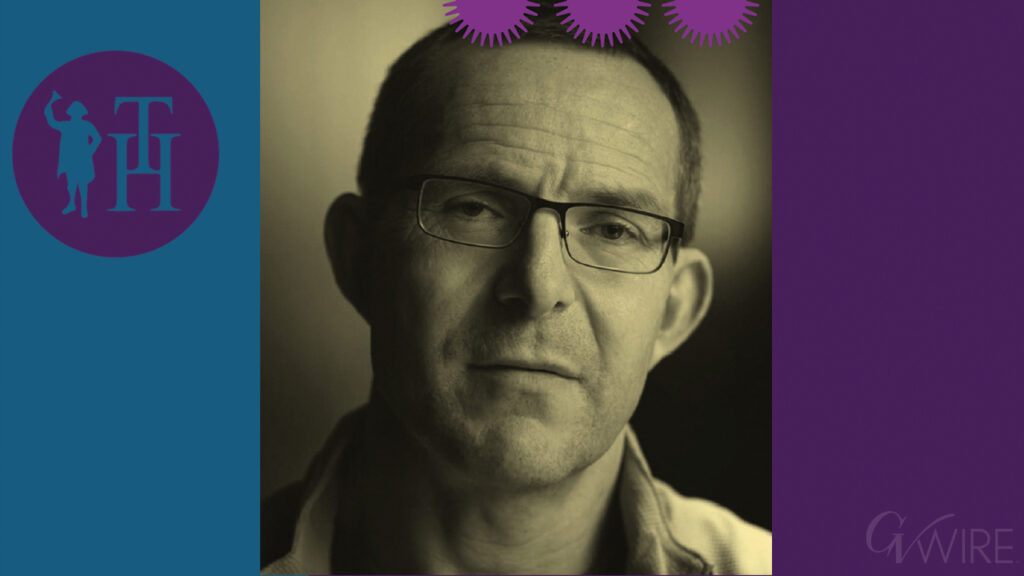
Tom Ikeda and Daniel James Brown hope people do not forget. They will speak Wednesday, Feb. 18, at the San Joaquin Valley Town Hall series on the theme “Resilience and Resistance.”

As Ikeda sees it, the past in repeating itself with the Trump administration’s aggressive immigration enforcement.
“Some of the things we hoped to avoid after World War II are happening again,” Ikeda said. “That is one reason I want to come to Fresno — to speak out about what is happening now.”
Preview of Town Hall Talk
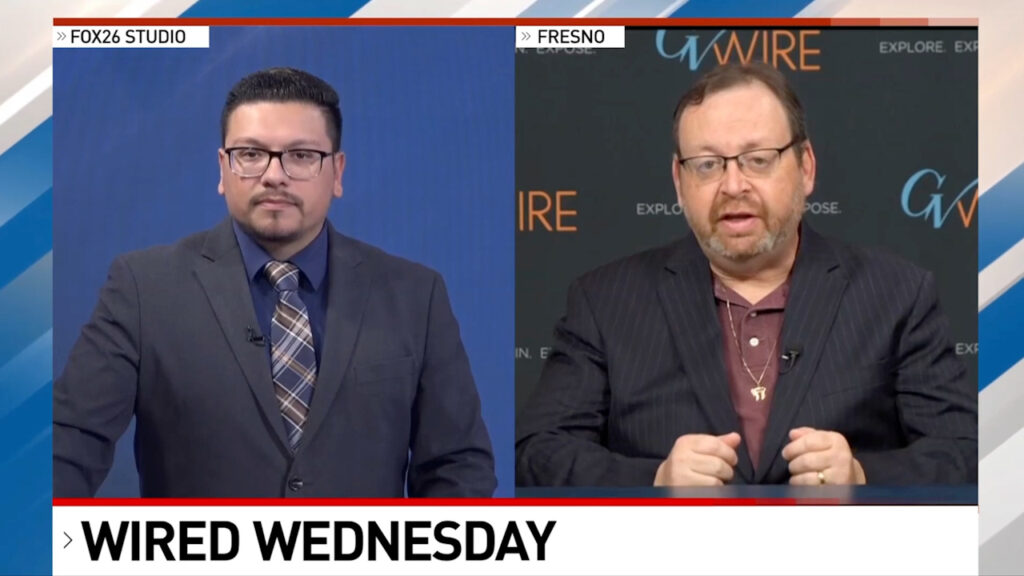
Ikeda and Brown spoke with GV Wire about their upcoming talk and the Japanese American experience. More than 120,000 Japanese Americans were removed from their homes and incarcerated in camps, including sites in Fresno at Pinedale and the Fresno Fairgrounds, known as “assembly centers.”
Ikeda said about 70% of those incarcerated were U.S. citizens, including infants.
“The conditions were very spartan,” said Brown, an award-winning author whose books include Facing the Mountain and The Boys in the Boat. “Life in the camps was extremely difficult.”
Ikeda, founder of the history project Densho, uses the term “concentration camps” not to equate the experience with that of Jews and others in Nazi Germany, but as a matter of historical accuracy.
“Historically, these camps have existed around the world not because of what people did, but because of who they were,” Ikeda said. “What happened in the United States fits that definition of a concentration camp.”
After Pearl Harbor
After the attack on Pearl Harbor on Dec. 7, 1941, Brown said the country experienced an understandable emotional reaction.
“Part of what happened is that it became a kind of hysteria, where people lost their ability to distinguish between an American of Japanese descent and someone living in Japan,” Brown said. “People become blinded by their prejudices and preconceptions, and that is what happened here.”
In the Central Valley, particularly within agricultural communities, some white neighbors helped care for Japanese Americans’ land while they were interned.
“In some cases, people did step forward and do what I think we would all consider the right thing. There were many other people who did not. In fact, some took advantage of the situation, buying up or simply appropriating properties that had been abandoned,” Brown said.
During the lecture, Ikeda will share the story of Gordon Hirabayashi, who challenged the internment order all the way to the U.S. Supreme Court. He lost.
Brown also highlighted a central irony: Japanese Americans fought for the United States during World War II, including the 442nd Regimental Combat Team, which served in Europe.
“They acquitted themselves extremely well,” Brown said. “Yet they were fighting for the United States government while many — if not all — had relatives incarcerated in camps back home.”
A Presidential Apology
The camps began closing in 1945, but it took more than 40 years for the federal government to issue a formal apology.
“There was a stigma that Japanese Americans had done something wrong, that they were guilty of some crime, and that lingered long after the war,” Ikeda said.
In the decades that followed, community members sought answers and accountability.
“It was racism, fear, and a failure of political leadership that led to Japanese Americans being placed in these camps,” Ikeda said. “For many in the community, uncovering the truth was an agonizing process.”
President Ronald Reagan apologized in 1988.
“We often say in the Japanese American community, ‘never again is now,’” Ikeda said.
About Town Hall
San Joaquin Valley Town Hall is a nonprofit organization that aims to bring thought-provoking speakers to the Central Valley.
The all-volunteer board of directors has hosted hundreds of speakers, from scientists to cultural icons, since 1937.
GV Wire is a media sponsor of Town Hall.