

|
Getting your Trinity Audio player ready...
|
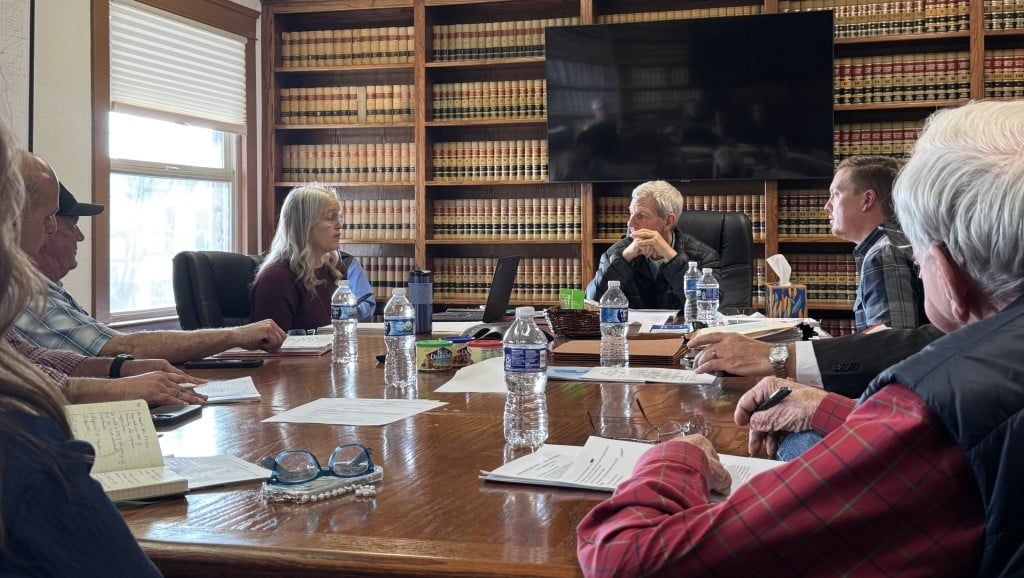
The Southwest Kings Groundwater Sustainability Agency held its first meeting in six months and covered a lot of ground — including setting a policy to fine landowners $1,000 a day for not registering their wells and vowing to sue a neighboring GSA.

By Monserrat Solis
SJV Water
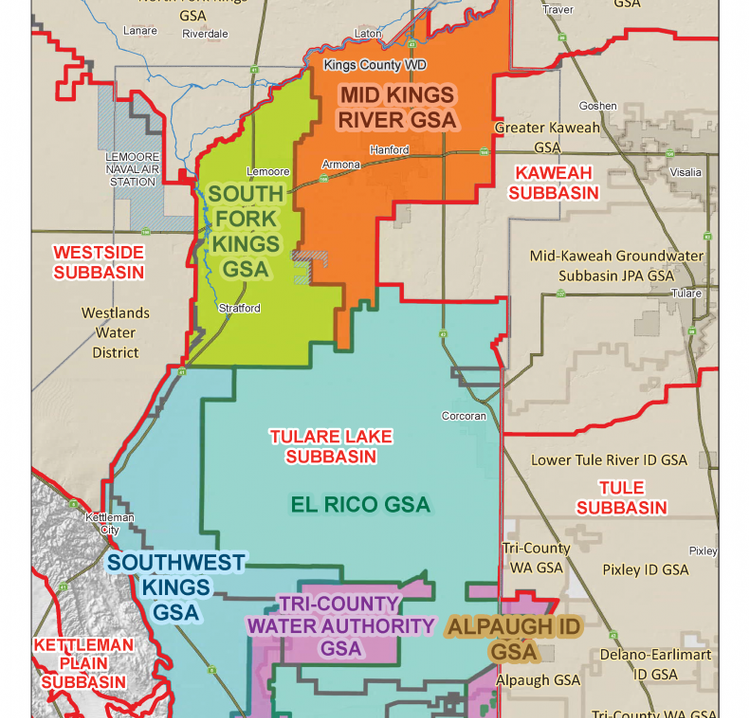
It also changed the location of its meetings from 944 Whitley Ave. in Corcoran to 19813 Madison Ave. in Stratford, a facility owned by Sandridge Partners, which is controlled by Southwest’s chair John Vidovich. Neither location is within the Southwest GSA, which runs along the southwestern edge of the Tulare Lake subbasin.
Southwest’s next meeting will be at 9 a.m. Friday, Feb. 6, in Stratford.

The well registration deadline is also set for Feb. 6, with a 20-day grace period before the penalty kicks in, according to the policy approved at the GSA’s Jan. 30 meeting.
Related Story: Newsom Signs Bill to Beam More Sunlight on Groundwater Boards
How to Register Wells
Vidovich also said at the Jan. 30 meeting that wells would be shut off if landowners don’t register and begin reporting extractions to the GSA. He declined to have the GSA send notices to owners of the estimated 20 wells within the agency’s boundaries.
“They all know and we need to get them registered,” he said. “We have to register these wells and the cooperation of registering them is that the landlords have to cooperate.”
Sandridge is a majority landowner in Southwest GSA, which currently has three board members and two vacant seats. Besides Vidovich, directors include Jim Wilson and Craig Andrew, both of whom work or partner with Sandridge.
Southwest has not established an online registration platform and is, instead, asking landowners to call its office at (559) 762-7192 or email info.swkgsa@gmail.com. Or contact its newly appointed general counsel’s office Whitney, Thompson and Jeffcoach Law Firm at (559) 753-2550 or info@wtjlaw.com.
Over the Line
Vidovich also said landowners with wells that are within 1,000 feet of Southwest’s boundaries would be required to register those wells with the GSA and report their pumping or face a $1,000-per-day fine as well.
He noted that wells just over the borderline between Southwest and other GSAs, such as South Fork Kings GSA, have an impact on Southwest’s groundwater.
“If you’re not cooperating and you’re right at our edge, that’s sensitive information,” he said, adding that such a requirement is “reasonable.”
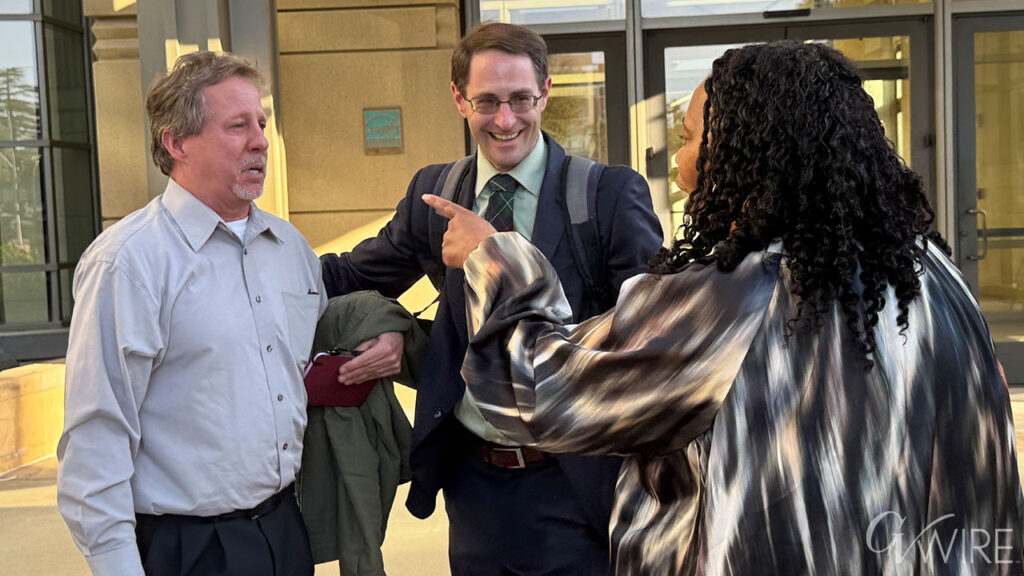
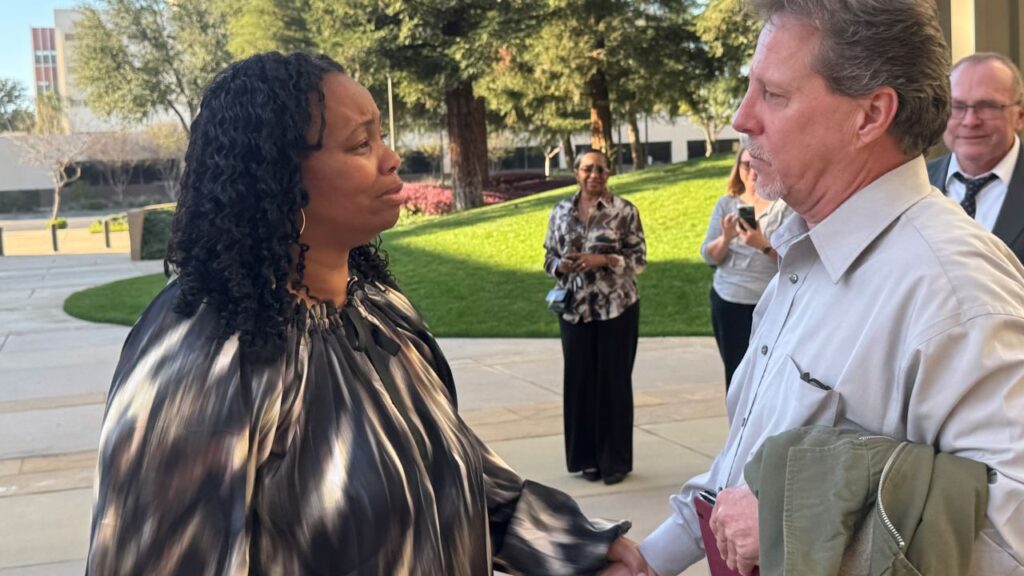
No, it’s not reasonable, retorted Ceil Howe Jr., a South Fork GSA board member who attended Southwest’s Jan. 30 meeting.
“It’s none of your damn business. It’s just not in your GSA,” Howe Jr., said.
Engineering consultant Amer Hussain said neighboring GSAs have already enacted well registration policies and it may be easier for Southwest to ask for that data from them instead of having farmers register wells a second time.
Howe Jr. agreed that perhaps South Fork GSA Manager Johnny Gailey could provide that information, if the GSA agrees.
Related Story: New Friant Water Authority Chief: ‘I Promise I Will Not Let You ...
Sinking Feeling
Vidovich also took exception to South Fork GSA’s pumping allocations, saying they would cause too much subsidence, land sinking, in the area.
South Fork GSA set its “safe yield” pumping allocation at .86 acre foot per acre of land. Safe yield is the amount the GSA believes can be pumped without causing negative effects such as subsidence.
South Fork also set “transitional pumping” amounts above the safe yield that will decrease to zero by 2040, when the Sustainable Groundwater Management Act (SGMA) mandates over pumped aquifers be brought into balance.
Those transitional amounts in the South Fork GSA are different for different aquifer zones depending on how the amounts affect subsidence in each zone. The shallowest zone, to 100 feet, was given a transitional pumping allocation of 3 acre feet per acre of land.
Transitional allocations for the middle and deep zones are lower. They start at 1.8 acre feet per acre of land in the mid-level zone and 1.14 acre feet per acre in the deepest zone, then drop from there.
Vidovich Raises Comparisons to Boswell’s Groundwater Pumping
Vidovich felt those amounts were too generous.
He likened South Fork’s allocations to what he views as excessive pumping allocations in the El Rico GSA, which is controlled by the Boswell Farming Co. El Rico’s allocation is set at 2 acre feet per acre through 2029 and decreases .50 acre feet every five years.
“I understand you’re trying to be like Boswell,” Vidovich said of South Fork GSA. “So, if you’re like Boswell, everything is sinking.”
He referred to El Rico’s groundwater plan, which would allow up to six feet of subsidence under Corcoran, which has already sunk up to 11.5 feet in some areas due to excessive groundwater pumping.
Under the South Fork policy, transitional pumping amounts could be further limited if the land sinks to 50% of the total allowable subsidence for the area.
It has already sunk to 40% of allowable amounts, South Fork’s Manager Gailey told Vidovich during the Jan. 30 meeting.
“Well, I think it’s going to happen and then it’s too late,” Vidovich said. “So that’s one of the reasons we’re going to hire counsel to go after South Fork because we need to make sure that it’s stopped before it happens.”
“I think you’re jumping the gun,” Gailey said of Vidovich’s threat to sue.
Vidovich has also threatened to sue South Fork over its policy to only allow groundwater to be moved within one mile of South Fork’s borders.
Dry Wells
The Southwest Kings GSA also approved a program to help owners repair wells damaged by excessive pumping, though board members said there are no wells in its boundaries that meet the program’s requirements.
“In our data review, we don’t show any (wells) being impacted, but on the off chance, we want to have a policy that basically sets the criteria for the people who are eligible for this program,” Hussain said.
Southwest will fund the program as needed.
Related Story: California Cities Pay a Lot for Water, but Some Ag Districts Get It Free
About the Reporter
Monserrat Solis covers Kings County water issues for SJV Water through the California Local News Fellowship Initiative.
About SJV Water
SJV Water is an independent, nonprofit news site covering water in the San Joaquin Valley, www.sjvwater.org. Email us at sjvwater@sjvwater.org