
|
Getting your Trinity Audio player ready...
|
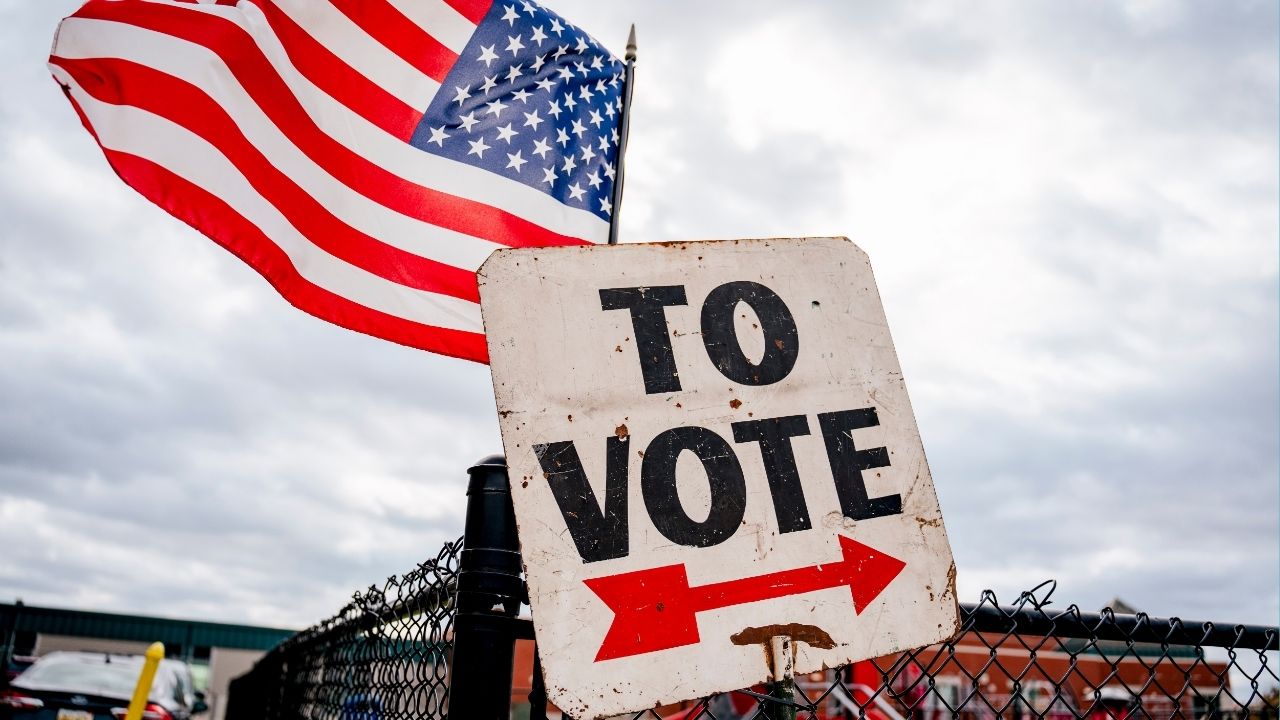
WASHINGTON — President Donald Trump doubled down on his extraordinary call for the Republican Party to “nationalize” voting in the United States, even as the White House tried to walk it back and members of his own party criticized the idea.
Trump said Tuesday that he believed the federal government should “get involved” in elections that are riddled with “corruption,” reiterating his position that the federal government should usurp state laws by exerting control over local elections.
If states “can’t count the votes legally and honestly, then somebody else should take over,” he said in the Oval Office, accusing several Democratic-run cities of corruption. “Look at some of the places — that horrible corruption on elections — and the federal government should not allow that,” he added. “The federal government should get involved.”

White House Tried to Walk it Back
Trump’s remarks came hours after the White House tried to walk back his comments from a day earlier that his party should nationalize elections. And they were the latest iteration of his unsubstantiated claims that U.S. elections are rigged, as Republicans face potentially big losses this fall.
During a podcast interview with Dan Bongino, his former deputy FBI director, on Monday, Trump called for Republican officials to “take over” voting procedures in 15 states, though he did not name them. “The Republicans should say, ‘We want to take over,’” he said. “We should take over the voting, the voting in at least many — 15 places. The Republicans ought to nationalize the voting.”
Trump’s statement amounted to a remarkable escalation of the president’s attempt to exert power over the outcome of future elections. Under the Constitution, American elections are governed primarily by state law, leading to a decentralized process in which voting is administered by county and municipal officials in thousands of precincts across the country.
But Karoline Leavitt, the White House press secretary, said Tuesday that Trump had actually been referring to legislation that would require people to prove that they are U.S. citizens when they register to vote.
“What the president was referring to is the SAVE Act, which is a huge, common-sense piece of legislation that Republicans have supported, that President Trump is committed to signing into law during his term,” Leavitt said.
“I don’t think any rational person who is being honest with themselves would disagree with the idea of requiring citizens of this country to present an ID before casting a ballot in a federal election, or, frankly, in any election, and that’s something the president wants to see happen.”
The SAVE Act
But Trump never referenced the SAVE Act during the podcast or in his appearance in the Oval Office on Tuesday. And in any case, the SAVE Act does not federalize elections.
Leavitt said that “the president believes in the United States Constitution,” but that he also believed there had been “a lot of fraud and irregularities that have taken place in American elections.”
Leavitt did not identify the 15 states Trump was referring to on the podcast. She cited only California and New York — two Democratic-led states the president often targets — as examples of places where noncitizens are allowed to vote in their elections, creating a situation she said was “ripe with fraud.”
Not long after Leavitt made her statement, Trump again spoke about federal control over elections.
“I want to see elections be honest, and if a state can’t run an election, I think the people behind me should do something about it,” Trump said in the Oval Office, where Republican lawmakers from both chambers of Congress joined him at the signing of legislation to end the partial government shutdown.
Trump’s comments and an intensifying Republican push in Congress to tighten voting laws — along with an FBI move last week to seize ballots and other voting records from the 2020 election from an election center in Fulton County, Georgia — suggests a broader drive by the president and his allies to sow distrust of American elections before midterm balloting in November.
Trump himself has repeatedly forecast in recent months that Republicans would lose midterms, after the party was rattled by losing several local races last November, and a Democrat won a special election in Texas last week in a district that Trump had won by double digits.
Noncitizen Votes Are Rare
Voting by noncitizens happens rarely, and it is already illegal in federal elections. But Trump and many of his allies repeatedly and baselessly insisted during the 2024 election that noncitizens were flooding to the polls — a campaign of misinformation that has ramped up in recent weeks as the election nears.
The Justice Department, which has been newly politicized under Trump, is demanding that numerous states, including Minnesota, turn over their full voter rolls as the Trump administration tries to build a national voter file.
So far, members of Congress have rebuffed Trump’s calls to nationalize elections.
“I’m not in favor of federalizing elections,” Sen. John Thune of South Dakota, the majority leader, told reporters on Tuesday. He said he did support stronger voter ID laws and requiring proof of citizenship at polling places, but when it comes to states having the power to run elections, that was “a constitutional issue.”
The SAVE Act would require states to obtain proof of citizenship, such as a passport or a birth certificate, in person from those seeking to register to vote. It would penalize election officials for failing to seek such proof, and it would require states to proactively remove noncitizens from their voter rolls.
The House passed the bill last year, but it stalled in the Senate, where it would need the backing of at least seven Democrats to reach the 60-vote threshold to proceed to a vote.
Conservative Republicans have made a renewed push in the past few weeks to pressure the Senate to take up the bill, with far-right influencers taking to social media to criticize GOP senators for not doing enough to enact the bill.
—
This article originally appeared in The New York Times.
By Erica L. Green, Michael Gold and Robert Jimison/Nick Hagen
c. 2026 The New York Times Company