
|
Getting your Trinity Audio player ready...
|
Iran is demanding that talks with the U.S. this week be held in Oman not Turkey, and that the scope be narrowed to two-way negotiations on nuclear issues only, a regional source said on Tuesday, casting doubt on whether the meeting will go ahead as planned.
Iran’s effort to change the venue and agenda for the talks, currently scheduled for Friday in Istanbul, came amid heightened tensions as the U.S. builds up forces in the Middle East.
Regional players have pushed for resolution of a standoff that has led to mutual threats of air strikes and stirred fears of escalation into a wider war.

The U.S. military on Tuesday shot down an Iranian drone that “aggressively” approached the Abraham Lincoln aircraft carrier in the Arabian Sea, the U.S. military said, in an incident first reported by Reuters.
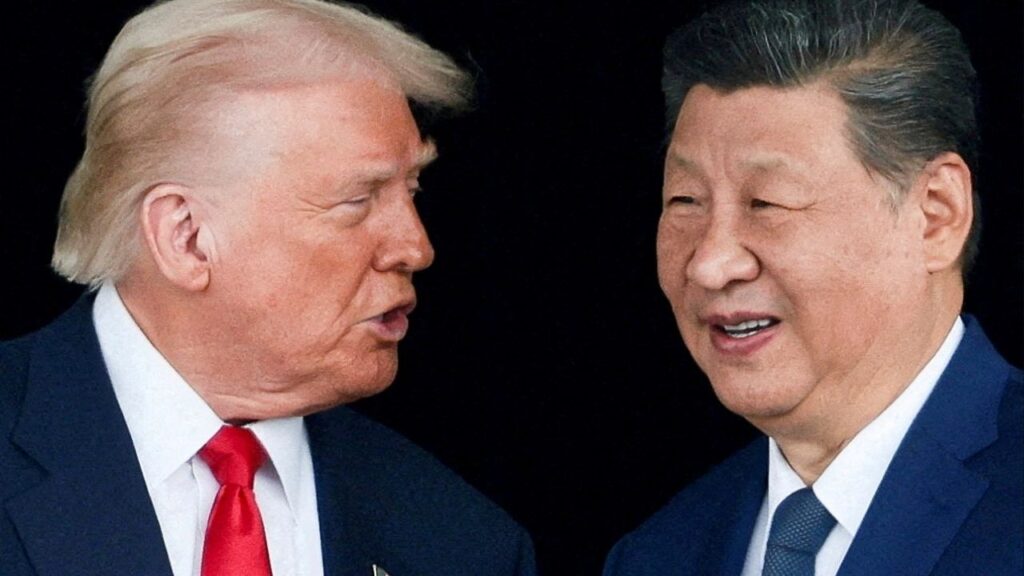
U.S. President Donald Trump said that with big U.S. warships heading to Iran, “bad things” would probably happen if a deal could not be reached.
“They want to change the format, they want to change the scope,” said the regional diplomat with knowledge of Iran’s demands.
“They only want to discuss the nuclear file with the Americans while the U.S. wants to include other topics such as the (ballistic) missiles and the activities of Iran’s proxies in the region.”
White House press secretary Karoline Leavitt told Fox News on Tuesday that talks with Iran were still scheduled to take place later this week.
A source familiar with the situation said on Tuesday that Trump’s son-in-law Jared Kushner was due to take part in the talks, along with U.S. Special Envoy Steve Witkoff and Iranian Foreign Minister Abbas Araqchi.
Ministers from several other countries in the region had also been expected to attend.
An Iranian diplomatic source said earlier that Tehran’s view of the talks is neither optimistic nor pessimistic, adding that the Islamic Republic’s defensive capabilities are non-negotiable and that it is ready for any scenario.
“It remains to be seen whether the United States also intends to conduct serious, results-oriented negotiations or not,” the source said.
US Buildup Follows Street Protests in Iran
The U.S. naval buildup near Iran follows a violent crackdown against anti-government demonstrations last month.
Trump, who stopped short of carrying out threats to intervene, has since demanded nuclear concessions from Iran and sent a flotilla to its coast. He said last week Iran was “seriously talking”, while Tehran’s top security official Ali Larijani said arrangements for negotiations were under way.
The priority of the diplomatic effort is to avoid conflict and de-escalate tension, a second regional official told Reuters earlier.
Regional powers including Pakistan, Saudi Arabia, Qatar, Egypt, Oman, and the United Arab Emirates were also invited, he said. But given Iran’s latest demands, it was unclear whether their participation would go ahead.
Iran’s leadership is increasingly worried a U.S. strike could break its grip on power by driving an already enraged public back onto the streets, according to six current and former Iranian officials.
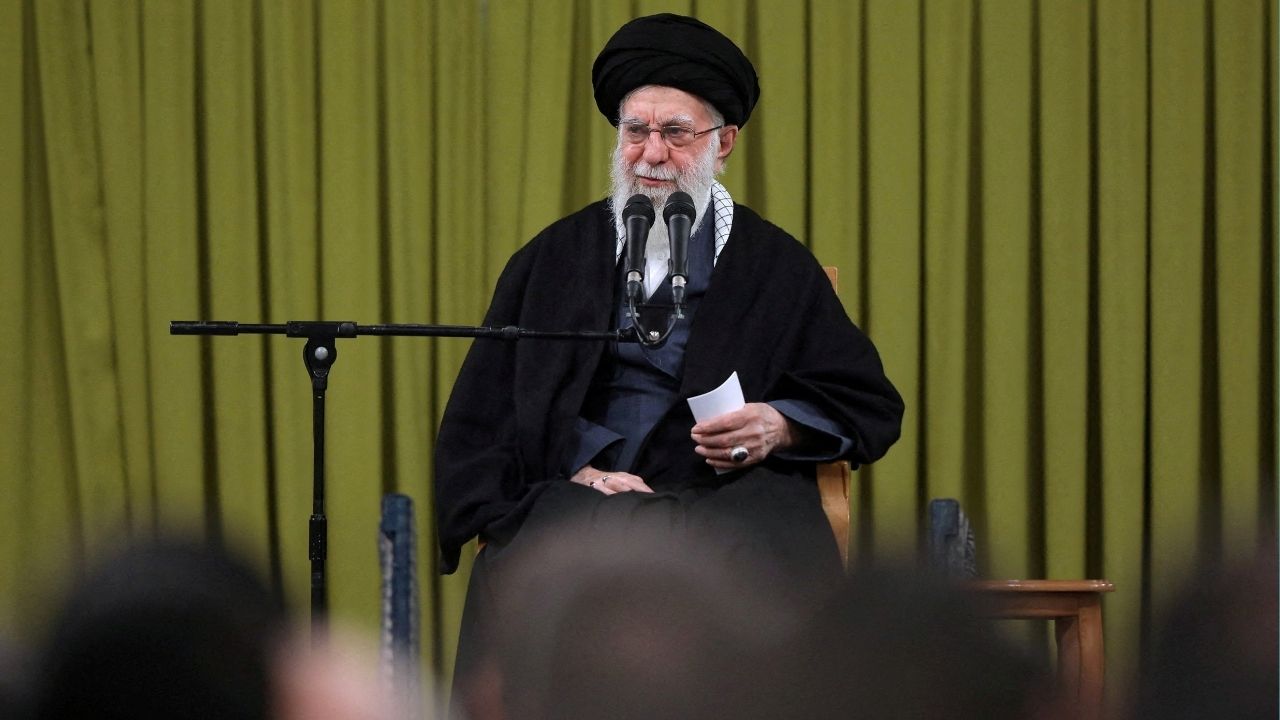
Officials told Supreme Leader Ayatollah Ali Khamenei that public anger over last month’s crackdown – the bloodiest since the 1979 Islamic Revolution – has reached a point where fear is no longer a deterrent, four current officials briefed on the discussions said.
With tensions running high, an Iranian Shahed-139 drone flying toward the Abraham Lincoln aircraft carrier “with unclear intent” was shot down by an F-35 U.S. fighter jet, the U.S. military said. The Lincoln carrier strike group is the most visible part of a U.S. military buildup in the Middle East.
Iran’s U.N. mission declined to comment.
The U.S. Central Command said in another incident on Tuesday, this one in the Strait of Hormuz, Iran’s Islamic Revolutionary Guard Corps forces harassed a U.S.-flagged, U.S.-crewed merchant vessel.
“Two IRGC boats and an Iranian Mohajer drone approached M/V Stena Imperative at high speeds and threatened to board and seize the tanker,” said Navy Captain Tim Hawkins, a spokesperson for the Central Command.
Earlier the United Arab Emirates, a highly influential Gulf Arab oil producer and close U.S. ally, said the region cannot afford another conflict.
“I think that the region has gone through various calamitous confrontations,” the UAE president’s adviser Anwar Gargash told a panel at the World Governments Summit in Dubai.
“I don’t think we need another one, but I would like to see direct Iranian-American negotiations leading to understandings so that we don’t have these issues every other day.”
Iran should rebuild its relationship with Washington to reach a wider geo-strategic deal which could help Tehran repair its economy ravaged by U.S. sanctions, Gargash said.
Gulf Arab states are worried that Iran will carry out its threat to target U.S. bases on their territory should Trump attack the Islamic Republic again.
In June, the United States struck Iranian nuclear targets, joining in at the close of a 12-day Israeli bombing campaign. Since then, Tehran has said its uranium enrichment work – which it says is for peaceful, not military purposes – has stopped.
Iranian sources told Reuters last week that Trump had demanded three conditions for resumption of talks: Zero enrichment of uranium in Iran, limits on Tehran’s ballistic missile program and ending its support for regional proxies.
Iran has long said all three demands are unacceptable infringements of its sovereignty, but two Iranian officials told Reuters its clerical rulers saw the ballistic missile program, rather than uranium enrichment, as the bigger obstacle.
One Iranian official said: “Diplomacy is ongoing. For talks to resume, Iran says there should not be preconditions and that it is ready to show flexibility on uranium enrichment, including handing over 400 kg of highly enriched uranium (HEU), accepting zero enrichment under a consortium arrangement as a solution.”
Tehran’s regional sway has been weakened by Israel’s attacks on its proxies – from Hamas in Gaza to Hezbollah in Lebanon, the Houthis in Yemen and militias in Iraq – as well as by the ousting of Iran’s close ally, former Syrian President Bashar al-Assad.
—
(Additional reporting by Nayera Abdallah, Maha El Dahan, Jana Choukeir, Federico Maccioni and Parisa Hafezi; Writing by Michael Georgy and Matt Spetalnick, Editing by Philippa Fletcher, Aidan Lewis and Deepa Babington)