

|
Getting your Trinity Audio player ready...
|
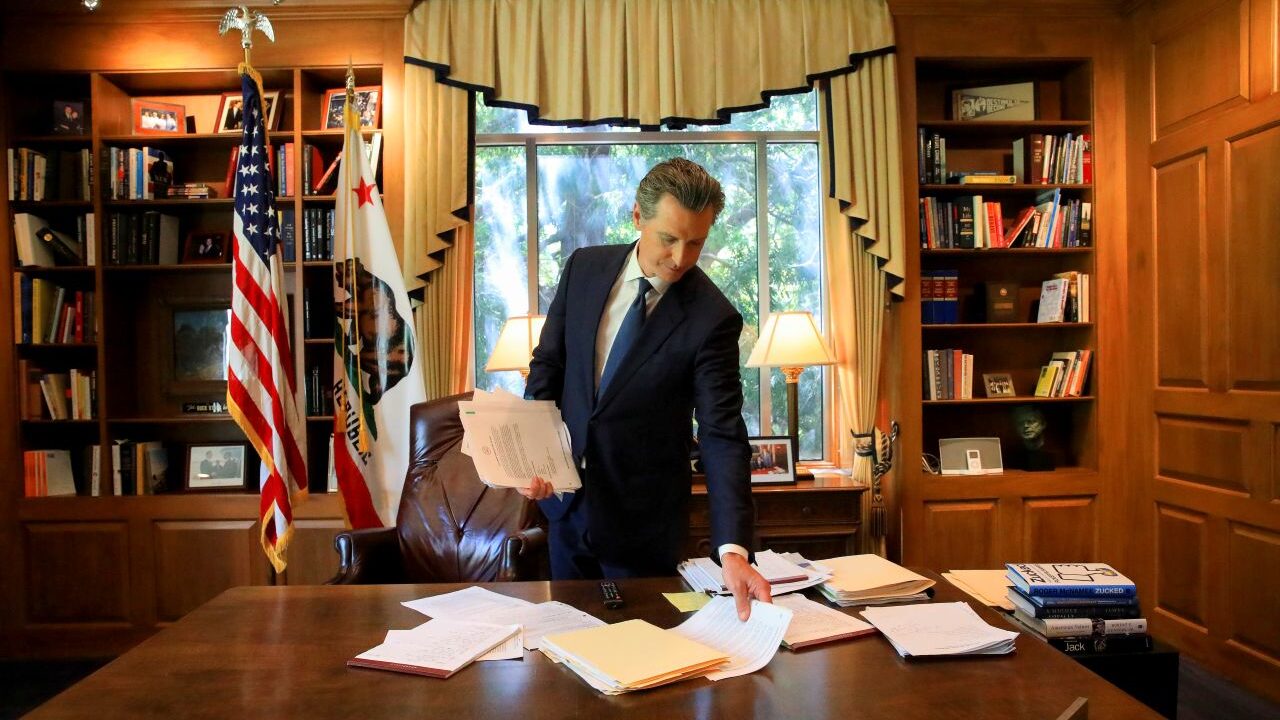
This is not the book that Gavin Newsom says he set out to write. In fact, it’s not even the book he initially wrote.
That book had been more about his governorship, California and his state’s relationship to the country. It would have fit neatly in the well-worn genre of tomes by politicians with presidential ambitions. But his editor had another idea after he shared an early draft.
“We just shedded all of that,” Newsom, 58, said in an interview. The book “became a memoir.”

The result, “Young Man in a Hurry: A Memoir of Discovery,” includes little on current events or politics. It lands somewhere between a personal investigation, a meditation and a relitigation of his own past. “My own insecurities, my own anxieties, my own flaws, my own mistakes, my own lessons, my journey,” is how he summed it up.
(Newsom’s ghost writer for the memoir is best-selling author and former Los Angeles Times investigative reporter Mark Arax of Fresno.)
The New York Times was provided an early copy of the book, which describes the rise of one of the Democratic Party’s most prominent foils to President Donald Trump. Here are five takeaways:
His Approach to Trump Changed
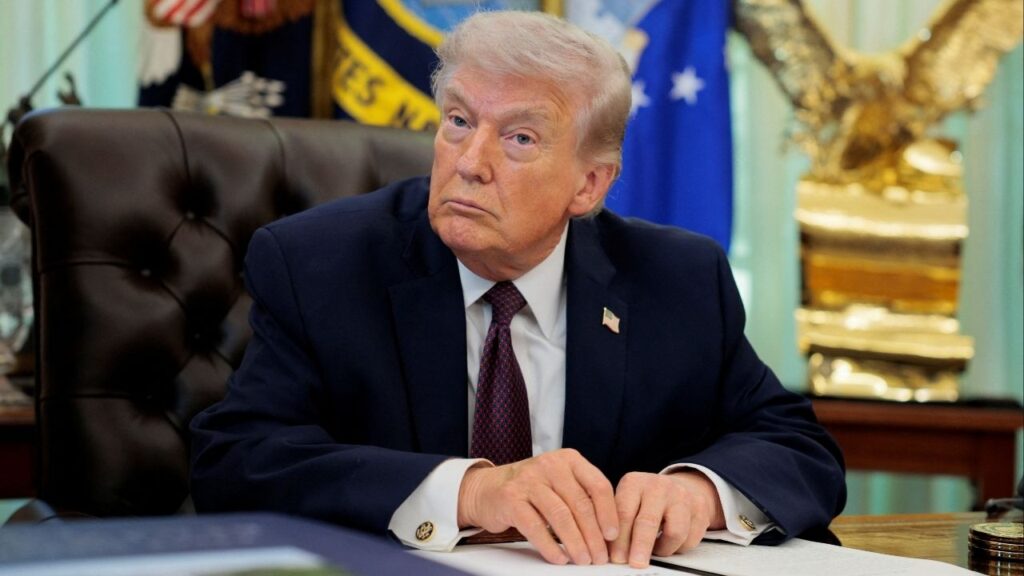
The book ends just as Newsom wins the governorship in 2018, and it includes a long scene touring fire-torn communities when he was governor-elect with Trump. Newsom describes Trump giving him a private tour of Air Force One, including his presidential bedroom and its two beds. “Melania wanted one bed,” he recalled Trump saying, adding that the president, “seemed to be winking.”
Newsom’s all-caps, all-attacks posture toward Trump these days is well documented. But Newsom writes that when Trump was first elected in 2016, he believed that “attacking Trump the personality, while it might do wonders for the gut, was a losing game.” It would be better, he wrote, to “focus on the issues.”
When Newsom recorded those words recently for his audiobook, the governor said in an interview, he had to stop and laugh: “Boy, was I wrong about that!”
“I still may be right, but it’s not certainly what I’m practicing right now, is it?” Newsom said, hinting that another reinvention may be in the offing. “That original instinct around Trump — that is definitely the page everyone will have to turn after the midterms,” he predicted.
He Reflects on his Marriage to Kimberly Guilfoyle
There is much public fascination about Newsom’s marriage to Kimberly Guilfoyle. The couple married in 2001 when he was a San Francisco supervisor and divorced during his first term as the city’s mayor. She later went on to date Donald Trump Jr., and became engaged to him before they separated. She is now the ambassador to Greece.
In his book, Newsom portrays it as a marriage of two ambitious climbers, less intimate than convenient. “I had become quite skilled at repressing my feelings,” he wrote, “and Kimberly allowed me this emotional distance.”
Describing their courtship, he writes: “I would go through all the motions until the motions led me right up to the altar.”
He describes an infamous photo shoot of the couple lying on Ann Getty’s Oriental rug as a “gag shot” gone bad. (He writes that at his 2018 meeting with Trump, the president grinned at Newsom aboard Marine One. “Kimberly,” he said without explanation. “Kimberly.”) The split, he writes, was “amicable.”
The governor describes, understatedly, not handling his single years as mayor “with discernment.” While he does not document all his romantic trysts, he writes that an affair he had with his deputy chief of staff’s wife, who was also his aide, was “the worst betrayal of my life.”
He sought counseling and explored his childhood struggles and the origins of his “self-sabotage.”
“I thought of myself as a single guy who happened to be mayor,” Newsom wrote. “Had my head been on straight, I would have seen it was the other way around.”
He Grew Up With the Gettys, but Writes of his Mother’s Challenges
To the extent that Newsom’s upbringing is known, nationally or in California, it is that he benefited early and often from political connections. His father, William Newsom, was not only a judge with deep political connections but one of the closest friends and advisers to Gordon Getty, who was ranked as America’s richest man in 1983.
But Newsom’s father moved out when he and his sister were still quite young, and Newsom uses his memoir to highlight the challenges his mother faced raising them on her own even as they were often drawn into the rarefied orbit of their father’s wealthy friends.
The Getty family brought young Gavin along on family trips that were anything but ordinary: photographing polar bears in Canada by helicopter; a hot-air balloon over the Serengeti; a week in Europe socializing with the king of Spain. Newsom was so close to the family that he was mistaken as one of the “Getty boys” — by actor Jack Nicholson.
In the book, Newsom tries to bring to light another, more hardscrabble side of his early life. His mother raised him while working multiple jobs.
When the Gettys would send opulent Christmas gifts, he writes, Newsom and his sister would feign that they did not like them. That way his mother could return them and use the credit to buy them presents herself. “They were gifts,” he wrote, “from her to us.”
But Newsom’s privileges shine through: High-powered politicos attended his high school sports games; the Gettys were investors and business partners in his wine company; he won an appointment to the San Francisco Board of Supervisors on the recommendation of one of his father’s friends; his wedding reception was at the Getty mansion.
Still, he writes, “The press’s one-dimensional portrait of me pissed me off because I knew the way I grew up.”
His Father Rarely Expressed his Love, at Least Not Directly
Newsom’s strained relationship with his parents — and theirs with each other — is one of the central themes of the book.
They separated when he was little and his father was mostly absent, leaving behind two small children. “The whole thing was insane,” one of Newsom’s aunts tells him.
He describes his mother as removed, and recounts struggles with his own undiagnosed dyslexia. “It’s OK to be average, Gavin,” his mother told him.
He says his father rarely expressed his love — at least directly to Newsom. In one searing scene, Newsom writes that on the night he was elected governor, one of his father’s caregivers had urged him to, saying, “Come on, Newsom, say you love your son.”
But his father wouldn’t say it.
He Includes a Searingly Personal Epilogue
Perhaps the most personal moment comes abruptly in the epilogue, when he described his wife, Jennifer Siebel Newsom, whom he married in 2008, becoming unexpectedly pregnant in 2020 at age 46.
“Abortion isn’t an option for me,” she told him.
But the heartbeat was gone at nine weeks. The medicine to remove the fetus had rare side effects and she was rushed to the hospital for surgery. “Would I lose my wife?” he thought, according to the book. “Would my children lose their mother?”
In the interview, Newsom said that his wife had told the children that she was pregnant before she told him. “It’s interesting, as little ones do, they were giving me hints that I didn’t pay any attention to,” he said.
Newsom said he included the story because his wife wanted him to.
“It was important to Jen because it was about family, which is what this book is about,” he said in the interview. “And it was about loss, which is a big part of what this book is about.”
Newsom said that there was “literally another book” left on the cutting room floor.
So will he publish it, perhaps in time for a 2028 run?
“We’ll see,” he said, “if I sell more than 5,000 copies of this.”
This article originally appeared in The New York Times.
By Shane Goldmacher/Jim Wilson
c.2026 The New York Times Company