
|
Getting your Trinity Audio player ready...
|
WASHINGTON — Senate Democrats grasped for a deal with President Donald Trump on Thursday that could avert a shutdown and lead to new restrictions on his immigration crackdown, after blocking a spending package needed to keep the government open past a Friday midnight deadline.
With time running out and no agreement yet nailed down, Democrats followed through on their pledge to oppose the six-bill spending package, which includes $64.4 billion for the Department of Homeland Security as well as an array of government agencies, including the Pentagon and health programs.
After Alex Pretti over the weekend became the second American citizen to be fatally shot by a federal agent in Minneapolis, Democrats have demanded that the homeland security measure be separated from the package and held up while they attempt to strike a deal with Trump and Republicans to rein in immigration officers.

Senators in both parties said a breakthrough was possible that could lead to action as early as Thursday night to salvage most of the spending package and avoid a lapse in funding.
But the legislation remained stalled for much of the day after it failed, on a vote of 45-55, to draw the 60 votes needed to open debate. Every Democrat opposed moving forward, as did a handful of Republicans, citing various spending objections. Absent a compromise, government funding is slated to lapse starting Saturday morning.
“This is a moment of truth,” Sen. Chuck Schumer, D-N.Y., the minority leader, said Thursday, moments before the vote. “Congress must act to rein in ICE and end the violence.”
Potential Bipartisan Deal Hopes
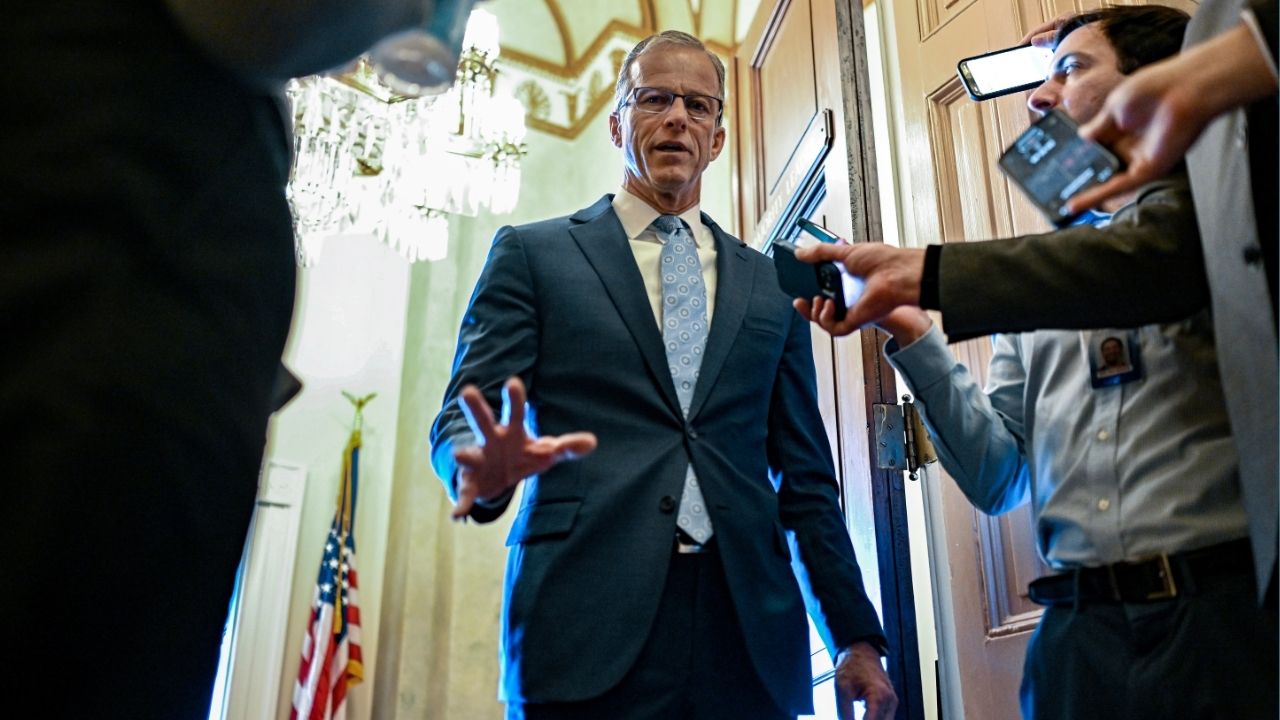
In a hopeful sign for a potential bipartisan deal, Sen. John Thune of South Dakota, the majority leader, was among the Republicans who voted against moving forward with the legislation, a procedural move that would allow him to quickly bring the legislation back for quick reconsideration if an agreement were to be struck. He said that if a compromise could be reached, he anticipated a “good, strong vote on both sides.”
Schumer and the president began negotiations late Wednesday to resolve the dispute and head off a government shutdown, according to two officials familiar with the talks who described them on the condition of anonymity.
Under the tentative framework they discussed, the measure funding the security agency would be broken off for more negotiations while the other five bills would be approved, funding the bulk of the federal government for the remainder of the fiscal year.
The Department of Homeland Security would then be funded under a separate short-term bill. One sticking point appears to be the length of time for that stopgap bill, which would keep the department funded at current levels. Democrats have pushed for a maximum of two weeks; Republicans apparently want more and Democrats do not want to prolong the negotiations.
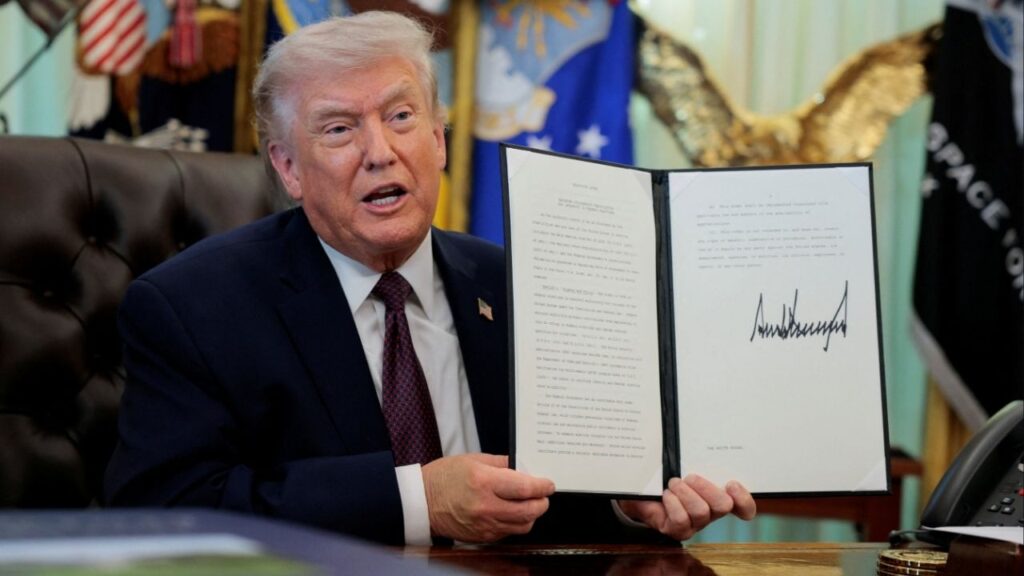
“Hopefully we won’t have a shutdown,” Trump said at a Cabinet meeting at the White House. “We’re working on that right now. I think we’re getting close. The Democrats, I don’t believe want to see it either. So we’ll work in a very bipartisan way, I believe, not to have a shutdown.”
Republican lawmakers also said they were hopeful about avoiding a prolonged shutdown — which would be the second in just a few months — and criticized Democrats’ opposition to the funding package.
“This nation deserves safety and security,” said Sen. John Barrasso of Wyoming, the No. 2 Senate Republican. “Not another government shutdown.”
Lawmaker’s Demands
The administration’s talks with Democrats began after the lawmakers unveiled a set of demands they would insist on in exchange for voting for homeland security funding. They included banning immigration officers from wearing masks and requiring them to wear body cameras and visible identification, an end to random immigration sweeps, requirements for judicial warrants for stop and searches and requirements for immigration officers to follow the same use-of-force standards as community law enforcement.
They also want an independent investigation of the two fatal shootings in Minneapolis.
“No more secret police,” Schumer said. “The Republican majority must step up to the plate. Republicans in Congress cannot allow this violent status quo to continue. They must work with Democrats on legislation — real legislation.”
If Congress can reach an agreement on handling the spending bills, it would clear the way for what promises to be a hard-fought negotiation over what restrictions could be imposed on immigration operations.
Some Republicans were already raising objections to the Democratic demands, including the ban on masks, a sticking point for Sen. Thom Tillis, R-N.C.
“I’m worried about these guys who are being put into a dangerous situation in crowds, where you know damn well some of the people there are just there to play gotcha,” Tillis said. “I just think that is a police safety issue, and I’m black-and-white on police safety issues.”
Sen. Lindsey Graham, R-S.C., said he supported some of the Democratic proposals, but he also wanted any compromise to force states and municipalities to scrap their policies against cooperating with federal immigration authorities.
“I think the best legislative solution for our country would be to adopt some of these reforms to ICE and Border Patrol, but to also end forever the sanctuary city policies being pushed by 12 states,” Graham wrote on the social site X.
Sen. Tim Kaine, D-Va., said he believed the restrictions being pursued by his party would be seen by the public as “reasonable, popular and necessary to reform these gross abuses.”
“I think people see that it is like, ‘Yeah, why wouldn’t we do that?’” Kaine said.
—
This article originally appeared in The New York Times.
By Carl Hulse and Catie Edmondson/Kenny Holston
c. 2026 The New York Times Company