

By this time next year, federal work requirements for Medi-Cal eligibility will be in place.
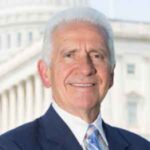
“Unless we address the safety net issues in one fashion or another it will be reduction in health care availability, longer emergency room wait times, reduction of services, and higher premiums for everyone.” — Rep. Jim Costa, D-Fresno
The California Hospital Association estimates 2 million Californians will lose health care over the next decade because of those requirements, doubling the number of uninsured in the state, said David Simon, spokesman for the association.
Those individuals who don’t meet the 80-hour-a-month work requirement will lose out on health care access, and for hospitals, that will mean picking up the tab for people whose health needs don’t go away simply because they don’t have insurance, Simon said.
“Hospitals must care for all individuals, regardless of their ability to pay,” Simon said. “What happens when people are not covered by health insurance is that hospitals are the ones who essentially have to absorb the costs of paying for those services.”

It’s not just the increase of uninsured that could push hospitals to the brink. By 2030, hospitals have to meet seismic standards that could cost hospitals more than $100 billion. Spending caps from the State Office of Health Care Affordability approved in 2025 will limit how much care hospitals can provide, Simon said.
As many as 10% of California hospitals are currently at threat of short-term closure, he said.
“Independently, any one of these things might be survivable or absorbable, but when you have this sort of perfect storm of events and external forces acting on hospitals … all of those taken together, that’s why we’re worried,” Simon said.
Fresno County Has Third Highest Medi-Cal Utilization in State: Costa
Reducing insurance coverage puts more financial burden on hospitals when they have to absorb medical costs for people needing care, Simon said, especially for regions predominantly reliant on federal health care coverage.
Rep. Jim Costa, D-Fresno, met with California hospitals and clinics in August 2025 about the impact of cuts. He will meet with them again in February, he told GV Wire.
Hearing from hospitals, he said he was very “concerned” about the future.
Fresno County has the third highest Medi-Cal enrollment numbers in the state, Costa said. New federal restrictions on eligibility and tax credits threaten health care for 65,000 families in his district, he said.
He said Medi-Cal instability affects all populations.
“Unless we address the safety net issues in one fashion or another it will be reduction in health care availability, longer emergency room wait times, reduction of services, and higher premiums for everyone,” Costa said.
11 San Joaquin Valley Hospitals Report Net Losses in Most Recent Financial Data
Community Regional Medical Centers has the highest utilization rate of any hospital in California, Costa said.
In the four quarters before July 1, 2025 — most recent financial data from California Health Care Access and Information — GV Wire research shows Medi-Cal payments made up roughly 40% and 16% of income for the downtown and Clovis campuses, respectively.
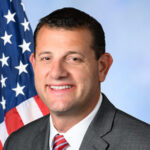
“By encouraging individuals to either work, volunteer, attend school, or participate in job training for just 20 hours per week, we’re strengthening the (Medicaid) program for the long-term.” — Rep. David Valadao, R-Hanford
Kern County hospitals have even higher Medi-Cal dependence rates. Good Samaritan Hospital, Kern Medical Center, Kern Valley Hospital, and Adventist Health Delano all have rates exceeding 50%, with Good Samaritan at 72% Medi-Cal income.
That means reimbursement rates of 80 cents on the dollar, Simon said.
Even without medical coverage, patients still use hospitals for medical emergencies.
Unpaid medical care at both Clovis Community and Community Regional exceeded 200% of the hospital’s net income. The $53 million in unpaid care at Clovis Community meant a loss at that hospital to the tune of $24.8 million, according to HCAI data.
Of the medical centers in the eight San Joaquin Valley counties, 11 reported losses for the year ending July 1, 2025, GV Wire research shows. Further Medi-Cal eligibility requirements could impact those bottom lines, said Simon.
“When you ask them to absorb millions and tens of millions and hundreds of millions more to deliver services, those are not sustainable numbers,” Simon said.
Work Requirements Will Stabilize Medi-Cal: Valadao
President Donald Trump’s administration put several provisions and allowances into the work requirements. School, job training, and volunteering all qualify as “work” under H.R. 1’s rules, and those with dependents don’t have to meet any work requirements.
Rep. David Valadao, R-Hanford, said work requirements strengthen Medi-Cal.
“The community engagement requirements enacted by H.R. 1 apply only to the Medicaid expansion population — able-bodied adults without dependents — and represent less than half of all Medi-Cal recipients in the Central Valley,” Valadao said in a statement to GV Wire. “By encouraging individuals to either work, volunteer, attend school, or participate in job training for just 20 hours per week, we’re strengthening the program for the long-term.”
The Trump administration earlier this month also directed $233 million to the state for its Rural Health Transformation Program, which Simon said is “real money and that will be helpful.”
The money, not yet doled out by HCAI, will help, Simon said.
“It is less than the projected cuts for rural hospitals that will materialize, but of course, any support is welcome,” Simon said.