|
Getting your Trinity Audio player ready...
|
President Donald Trump said on Tuesday the value of the dollar was “great”, when asked whether he thought it had declined too much, adding to pressure on the greenback which hit a four-year low.
The dollar’s recent weakness stems from multiple factors: expectations of continued Federal Reserve rate cuts, tariff uncertainty, policy volatility including threats to Fed independence and rising fiscal deficits, all of which have eroded investor confidence in U.S. economic stability.
A lower dollar can also benefit U.S. exporters, though Trump said he was not seeking for its value to decline further.

“I would want it to… just seek its own level,” he said.
Trump made the comments to reporters in Iowa ahead of a speech expected to center on the economy as he seeks to rally his stalwart rural supporters in a state that hosts key congressional races in November.
“No, I think it’s great, the value of the dollar … dollar’s doing great,” Trump said when asked by a reporter if he thought the value of the dollar had declined too much.
Losses in the dollar index, which measures its strength against a basket of six major currencies, accelerated after Trump’s comments, hitting a session low of 95.566 and the lowest since February 2022.
“If you look at China and Japan, I used to fight like hell with them, because they always wanted to devalue,” Trump said.
His comments came after an extended period of weakness in the greenback.
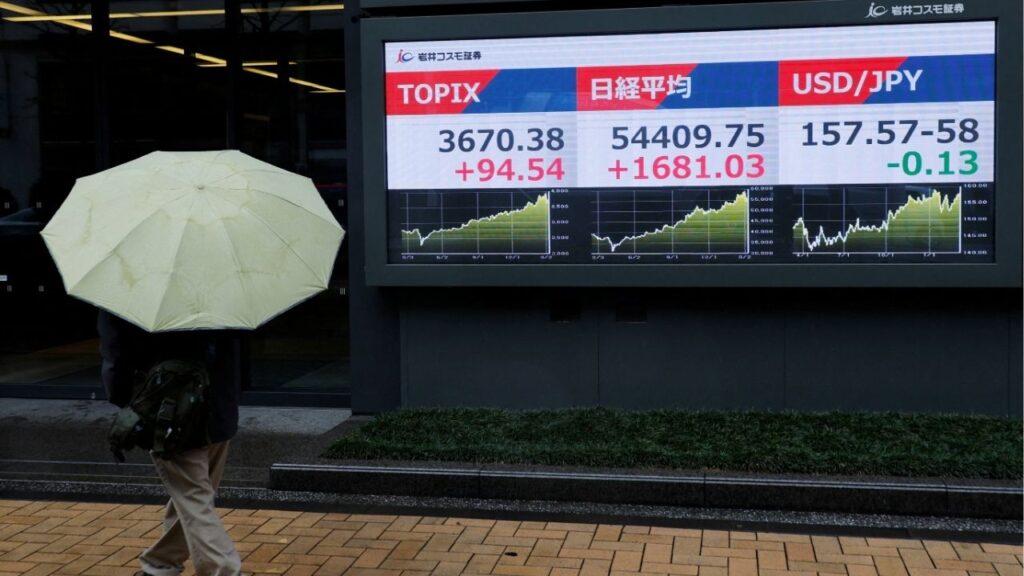
The dollar has come under pressure in recent sessions as traders braced for a possible coordinated currency intervention by U.S. and Japanese authorities to prop up the weak yen.
The yen rallied by as much as 4% over the past two sessions on talk of the U.S. and Japan conducting rate checks – often seen as a precursor to official intervention.
“FX market participants are always looking for a trend to jump on,” said Steven Englander, head of global G10 FX research and North America macro strategy at Standard Chartered in New York. “Often officials push back against abrupt currency moves but when the President expresses indifference or even endorses the move it emboldens USD sellers to keep pushing.”
Dollar Weakness Has Some Benefits
While the dollar’s fall reflects investor worries about the U.S. economy’s strength and could lead to inflationary pressures due to the rising cost of imports, it can help some businesses. A weaker greenback makes it cheaper for multinational companies to convert foreign profits into dollars, while also boosting the competitiveness of U.S. exporters’ products.
A weaker U.S. dollar also eases the burden for foreign countries and corporations with debt denominated in dollars, as they need less of their local currency to repay it.
“The administration wants a weaker dollar,” said Eugene Epstein, head of trading and structured products at Moneycorp in New Jersey, adding that it also helped improve the trade deficit.
“The point is, he’s basically making clear that he’s a president that cares about the trade deficit,” said Epstein.
Steve Sosnick, market strategist at Interactive Brokers, Greenwich, Connecticut, said that a weaker dollar “was a two-sided coin”.
“On the one hand, it’s good for multinationals… If you have operations around the world and foreign currency revenue that will have a conversion advantage when you turn it into U.S. dollars, that will be good. On the other, it makes imported goods more expensive and there might be some inflationary impact from that.”
—
(Reporting by Ismail Shakil, Costas Pitas, Chuck Mikolajczak, Bhargav Acharya, Saqib Iqbal Ahmed, Chibuike Oguh, Laura Matthews and Suzanne McGee; Editing by Megan Davies, Deepa Babington and Jamie Freed)