
|
Getting your Trinity Audio player ready...
|
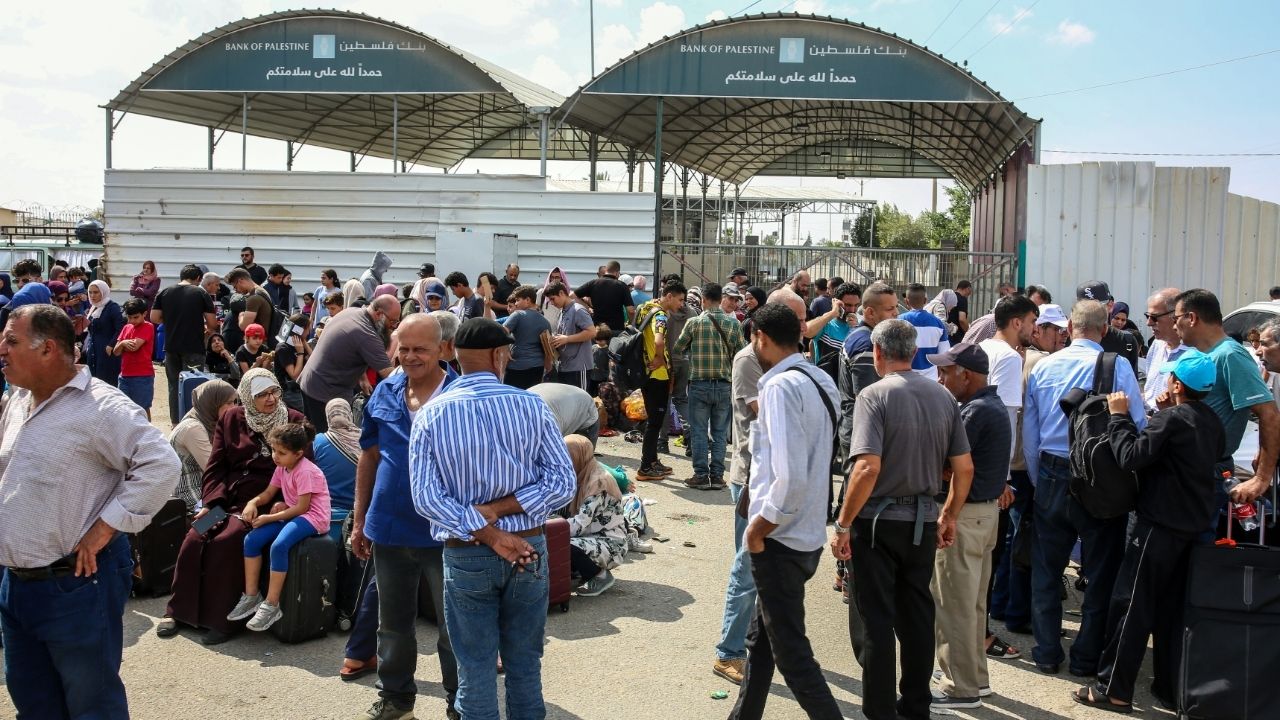
JERUSALEM — Israel has said that it will reopen the border between the Gaza Strip and Egypt within days for travelers on foot, a move that would allow Palestinians who fled the enclave during the two-year war to return home for the first time.
Aid officials said they hoped that the reopening of the border crossing would also allow them to evacuate those in Gaza who need medical care abroad — thought to number more than 18,000 people, according to the World Health Organization.
In a social media post early Monday, Israeli Prime Minister Benjamin Netanyahu’s office said that the border crossing, near the city of Rafah, would reopen after the completion of a search in Gaza for the remains of the last captive yet to be returned to Israel.

Later on Monday, the Israeli military announced that it had at last found the remains of the captive — Master Sgt. Ran Gvili, a police officer shot during the Hamas-led attack on Oct. 7, 2023 — after months of searches in Gaza.
Israel Agrees to Open Rafah Crossing
Israel agreed to allow the Rafah crossing to reopen as part of the ceasefire deal struck in October. But Israeli leaders demanded that Hamas first returned the remains of all deceased Israelis and foreign nationals in Gaza.
Now, with Gvili’s body back in Israel, that mission was complete.
Israel’s decision to reopen the border — where both Israel and Egypt are expected to impose tight scrutiny over who crosses — advances the fragile ceasefire with Hamas. Yet the next steps for implementing President Donald Trump’s plan for Gaza, which include disarming Hamas and deploying an international force there, are mired in uncertainty.
At least 100,000 Palestinians have left Gaza since the beginning of the war, according to Palestinian officials. Now, many of them must decide whether to return to the enclave, most of which lies in ruins after two years of Israeli bombardment.
The Israeli government is still refusing to let foreign journalists into Gaza. It argued in a Supreme Court hearing Monday morning that to do so would put Israeli soldiers at risk even though the ceasefire is more than 3 months old and Israel has allowed international aid workers to enter the territory.
Gaza Off-Limits to Foreign Journalists
For foreign journalists, Gaza has been off-limits since the start of the war in 2023, except for a small number of reporters invited on carefully controlled, abbreviated visits escorted by Israeli soldiers. A long-standing petition by foreign journalists seeking to report from inside the territory was considered by the Israeli Supreme Court on Monday after numerous delays.
In oral arguments, Justice Ruth Ronnen suggested that the Rafah crossing’s reopening could allow foreign journalists to enter Gaza through Egypt. But a lawyer for the Foreign Press Association, Gilead Sher, argued that the group’s 400 members, who include employees of The New York Times, should be able to enter from Israel, where they are based.
“We see international aid entering daily to the Strip, we see international aid workers and U.N. workers, and Israelis entering,” along with officials of the World Bank, Sher said, according to a pool report. “But foreign journalists are prohibited.”
A government lawyer, Yonatan Nadav, said that letting journalists into Gaza posed risks to Israeli soldiers, but he agreed to describe those risks only in a closed court session.
A lawyer for the Union of Journalists in Israel, Amir Basha, also spoke in favor of letting foreign journalists into Gaza, arguing that they represented a vital and missing source of independent information, alongside the Israeli military and Palestinian reporters in Gaza.
“No one is arguing with the aid workers’ value,” he said. “But journalists should not be last, they should be first among equals. Because of the information that journalists offer to the public, it cannot be that the Israeli public’s right to know is last in line.”
The Supreme Court did not say when it would issue a ruling.
Rafah Razed by Israeli Forces
The Rafah crossing lies near what was once the southern city of Rafah, which was largely razed by Israeli forces.
For the first nine months of the war, tens of thousands of Palestinians were able to flee to Egypt through the crossing. Some were sponsored by international aid groups who coordinated their exit with Israel and Egypt. Many others paid exorbitant bribes to intermediaries connected with the Egyptian government to secure exit papers.
In May 2024, that tenuous escape was cut off as Israeli forces swept along the Gaza side of the border and seized the crossing. Israel and Egypt could not agree on conditions for reopening the border, which has mostly been closed ever since.
The closure cut off a key route for severely ill and wounded Palestinians seeking medical treatment outside the enclave’s battered health system. Some Palestinians, such as cancer patients needing chemotherapy, died without access to proper treatment.
The potential for renewed conflict in Gaza is still very much present. Hamas has entrenched its control over half of the enclave, the Israeli military controls the other half, and most people are still huddled in crowded tent camps or in the rubble of half-destroyed homes.
Kamel Ayyad, 53, fled for Egypt in November 2023 with his wife and three daughters. While he said that he hoped to return to Gaza, he noted that most of his friends and acquaintances say that going back now is too risky.
“Gaza’s still experiencing a cold war, or an unofficial war — it’s not stable,” said Ayyad, an official with St. Porphyrius, a Greek Orthodox church in Gaza. “No one wants to gamble with the lives of their family.”
But it is far from clear how long Palestinians will be able to stay in Egypt, which has made clear that their presence ought to be temporary. “We’re between a rock and a hard place,” Ayyad said.
—
This article originally appeared in The New York Times.
By David M. Halbfinger and Aaron Boxerman/Samar Abu Elouf
c. 2026 The New York Times Company