

|
Getting your Trinity Audio player ready...
|
QAMISHLI, Syria, Jan 24 – A four-day ceasefire between the Syrian government and Kurdish forces expired on Saturday night, with the truce’s fate uncertain and both sides exchanging accusations of violations.
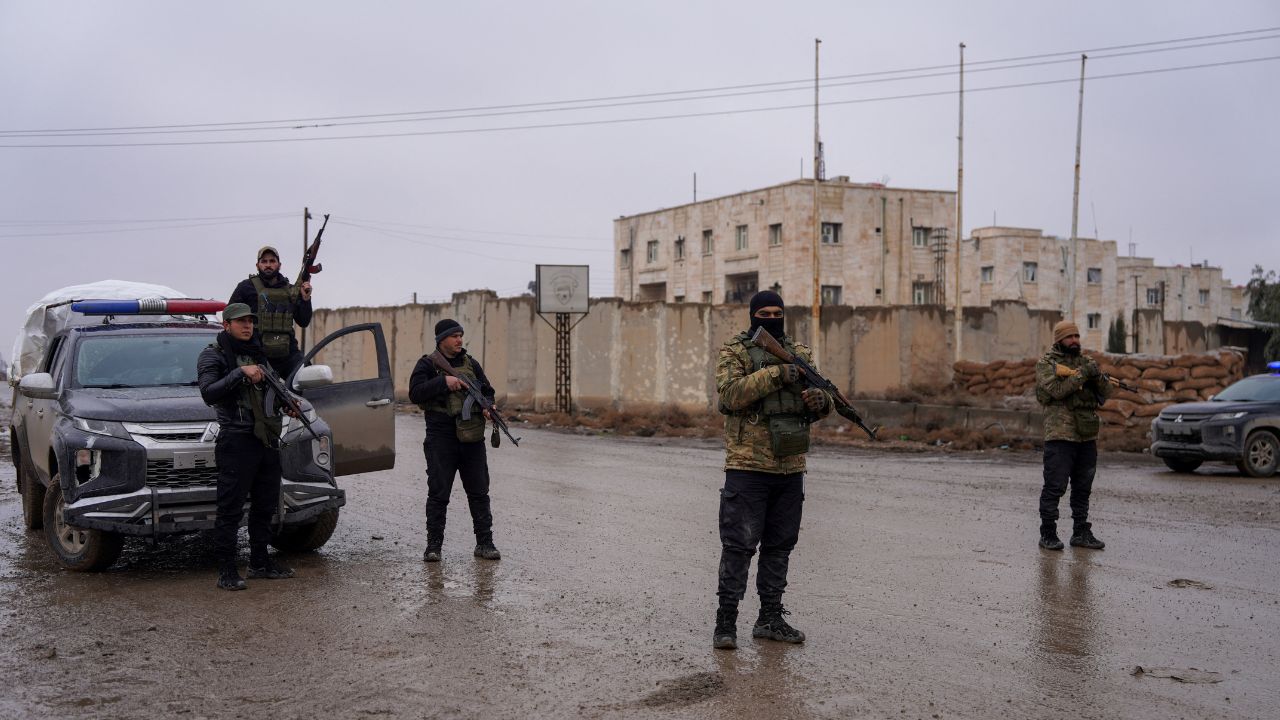
The ceasefire ended at 8 p.m. (1700 GMT), with Syrian troops and Kurdish forces massed on opposing sides of front lines around the last cluster of Kurdish-held cities.
The deadline given to the Kurdish-led Syrian Democratic Forces has expired, Syrian Information Minister Hamza al-Mustafa said. “The Syrian government affirms that it is now considering its next options,” he added on X.

There was no immediate comment from the SDF on the ceasefire’s fate.
Government troops have seized swathes of northern and eastern territory in the last two weeks from the SDF in a rapid turn of events that has consolidated President Ahmed al-Sharaa’s rule.
Sharaa’s forces were closing in on the last SDF strongholds earlier this week when he abruptly announced a ceasefire, giving them until Saturday night to lay down arms and come up with a plan to integrate with Syria’s army – or to resume fighting.
Syria’s Foreign Ministry denied on Saturday reports that an agreement to extend the ceasefire had been reached, describing them as baseless, according to the state news agency.
The ministry also said there had been no “positive response” to the government’s proposal, accusing the SDF of repeated violations of the truce.
The SDF said the government was moving towards escalation in a “systematic manner”.
“Military build-ups and logistical movements have been observed, clearly indicating an intent to escalate and push the region toward a new confrontation,” the SDF said in a statement.
US, France Caution Sharaa on Kurds, Sources Say
The U.S. has been engaging in shuttle diplomacy to establish a lasting ceasefire and facilitate the integration of the SDF – which for years was Washington’s main partner in Syria – into the state led by its new favoured ally, Sharaa.
Senior U.S. and French officials have urged Sharaa not to send his troops into remaining Kurdish-held areas, fearing renewed fighting could lead to mass abuses against Kurdish civilians, diplomatic sources told Reuters.
Government-affiliated forces killed nearly 1,500 people from the Alawite minority and hundreds of Druze people in sectarian violence last year, including in execution-style killings.
Amid the instability in the northeast, the U.S. military has been transferring hundreds of detained fighters from the Islamic State group from Syrian prisons formerly run by the SDF across the border into Iraq.
Culmination of a Year of Rising Tensions
As the Saturday deadline approached, SDF forces also reinforced their defensive positions in the cities of Qamishli, Hasakeh and Kobane for a possible fight, Kurdish security sources told Reuters.
The possible showdown is the culmination of rising tensions over the last year.
Sharaa, whose forces toppled longtime ruler Bashar al-Assad in late 2024, has vowed to bring all of Syria under state control – including SDF-held areas in the northeast.
But Kurdish authorities who have run autonomous civilian and military institutions there for the last decade have resisted joining up with Sharaa’s Islamist-led government.
After a year-end deadline for the merger passed with little progress, Syrian troops launched the offensive this month.
They swiftly captured two key Arab-majority provinces from the SDF, bringing key oil fields, hydroelectric dams and some facilities holding Islamic State fighters and affiliated civilians under government control.
—
(Reporting by Orhan Qereman in Qamishli, Khalil Ashawi and Mahmoud Hasano in Deir al-Zor; Additional reporting by Laila Bassam in Beirut, Ece Toksabay in Ankara and Menna Alaa El-Din in Cairo; Writing by Maya Gebeily, Jonathan Spicer and Hatem Maher; Editing by William Mallard, Sharon Singleton, Daren Butler)