
|
Getting your Trinity Audio player ready...
|
BEIRUT — After U.S. forces seized Venezuelan leader Nicolás Maduro, Secretary of State Marco Rubio cast the Latin American country as a regional platform for Iranian influence, and accused the government of hosting Hezbollah, the Iran-backed Lebanese militant group.
Rubio told CBS that among the reasons for capturing Maduro on Jan. 2, the U.S. wanted to ensure that Venezuelan leaders “no longer cozy up to Hezbollah and Iran in our own hemisphere.” He pressed Venezuela’s new leader, Delcy Rodríguez, to sever ties with both Iran and its proxy, Hezbollah.
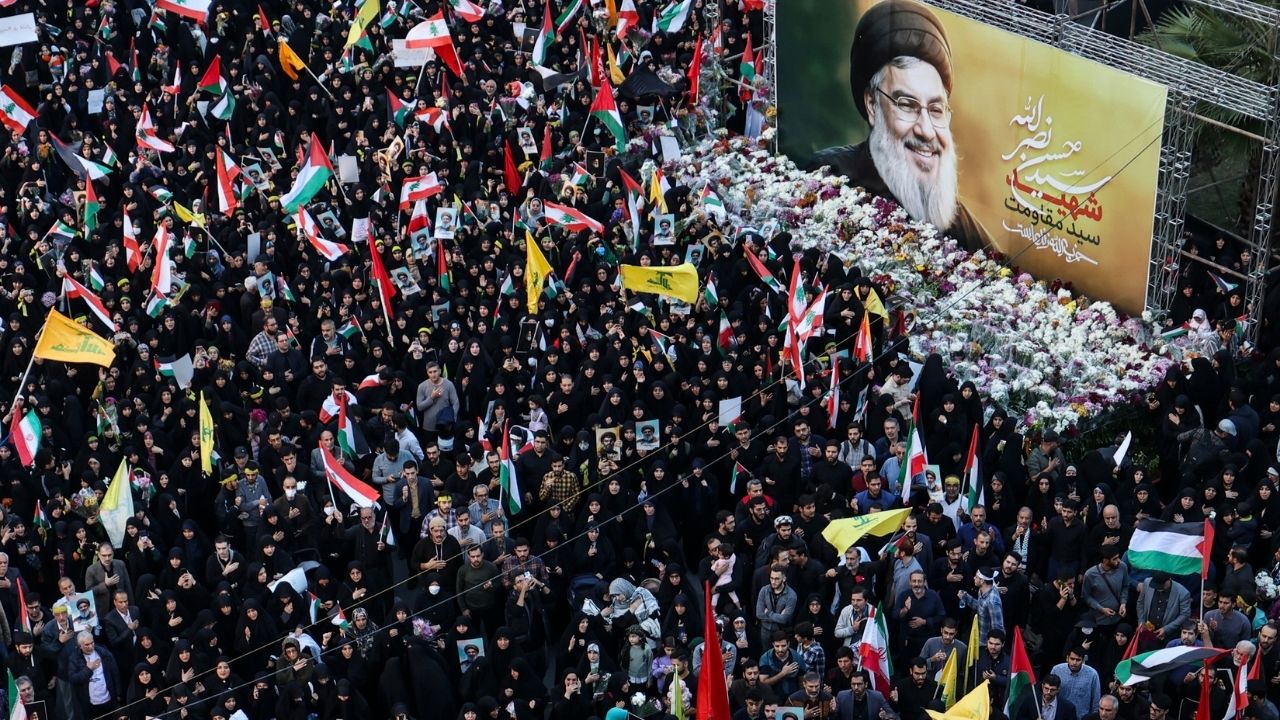
Even if she does, it may not have great impact on an already weakened Hezbollah. The group, which had been the dominant political and militant power in Lebanon for decades, was battered by a war with Israel and faces mounting pressure from the U.S., Israeli and Lebanese governments to give up its weapons.

U.S. authorities have long accused Hezbollah of complicity in drug trafficking and money laundering schemes in Venezuela.
How Did Hezbollah Get Involved in Venezuela?
Hezbollah’s connection stemmed from the relationship between Venezuela and Iran. Two oil-rich countries under U.S. sanctions, they were bound by anti-American ideology and helped each other evade U.S. sanctions.
Iran and Venezuela have maintained economic and political ties since before Iran’s 1979 revolution, which brought an authoritarian clerical regime to power. Both were founding members of OPEC.
After the revolution, Venezuela was one of the first to recognize Iran’s new regime. The relationship deepened after Maduro’s predecessor, Hugo Chávez, became president in 1999.
In the following decades, Iran invested billions in Venezuela’s oil and energy sector, along with other housing and industrial projects that often had little to no financial return, but gave Iran a foothold in the United States’ backyard.
That opened the door for Hezbollah to make inroads in Venezuela.
How Deep Are Hezbollah’s Ties in the Country?
U.S. authorities have long accused Hezbollah of using Venezuela as a base for drug trafficking and money laundering in collusion with Venezuelan officials. But experts say those illicit schemes do not seem critical to Hezbollah’s operations.
Most evidence of the illicit revenue streams stems from a U.S. Drug Enforcement Administration initiative launched in 2008 to disrupt Hezbollah’s financing networks. That investigation found that Hezbollah was involved in trafficking cocaine from Colombia through Venezuela and colluding with Venezuelan officials to move cash, contraband and Hezbollah personnel.
One of the investigation’s most prominent resulting criminal indictments involved Ayman Saied Joumaa, who holds dual Lebanese and Colombian citizenship. A federal grand jury indicted him for running one of the region’s most sophisticated international drug smuggling and money laundering networks. Joumaa, who was never arrested, has not publicly commented on the charges.
Hezbollah made millions through Joumaa’s network, according to U.S. authorities. The network paid Hezbollah operatives to help move its narcotics and illicit funds through Beirut’s international airport, among other routes, they said.
U.S. authorities accused Venezuelan officials of facilitating Hezbollah operations in the country. They accused the Venezuelan state airline of operating flights between Caracas, Venezuela; Damascus, Syria; and Tehran, Iran, that carried Hezbollah members and weapons.
The DEA also said it found evidence of Venezuelan politicians issuing passports to Hezbollah fighters and coordinating cocaine and weapons trafficking between Maduro’s government and Hezbollah.
Hezbollah and Venezuelan officials have denied these allegations.
“As for us in Hezbollah, we have no organizational, financial, security, military, or any other kind of presence in Venezuela,” Hassan Fadlallah, a Hezbollah member of the Lebanese parliament, said this month.
How Important Is Venezuela for Hezbollah Finances?
Hezbollah experts remain skeptical that Maduro’s capture will greatly affect Hezbollah’s operations. Analysts say the relationship between Hezbollah and Maduro’s government, though rooted in shared anti-American sentiments, had little practical value for Hezbollah.
“The relationship between Venezuela and Hezbollah is primarily a symbolic one,” said Kassem Kassir, a Lebanese political analyst and expert on Hezbollah who is close to the group. “Practically, nothing has changed with Hezbollah after the fall of Maduro.”
Many also question how important the illicit revenue streams outlined by U.S. authorities actually are for the militant group’s operations in Lebanon today.
“If you look at the different pieces of these links, you see very thin evidence of Hezbollah’s having widespread involvement” in illicit schemes in Venezuela, said Mohanad Hage Ali, a senior fellow at the Carnegie Middle East Center in Beirut. “We haven’t seen enough evidence that the organization is relying heavily on drug trafficking, like the Taliban did in Afghanistan, in funding its operations,” he added.
Hezbollah’s External Security Organization, an arm of the group focusing on operations outside Lebanon, appeared the most heavily involved in Venezuela, Hage said. But that wing is much smaller and less active than it was at its peak in the early 2000s — lessening the blow from the upheaval in Venezuela today.
The vast majority of Hezbollah’s financing comes from Iran, experts say.
So for Hezbollah, the much more immediate concern is the effect that the weakening of the Iranian state, and the current unrest in Iran, will have on its ability to fund its Lebanese proxy.
—
This article originally appeared in The New York Times.
By Christina Goldbaum/Arash Khamooshi
c. 2026 The New York Times Company