
|
Getting your Trinity Audio player ready...
|
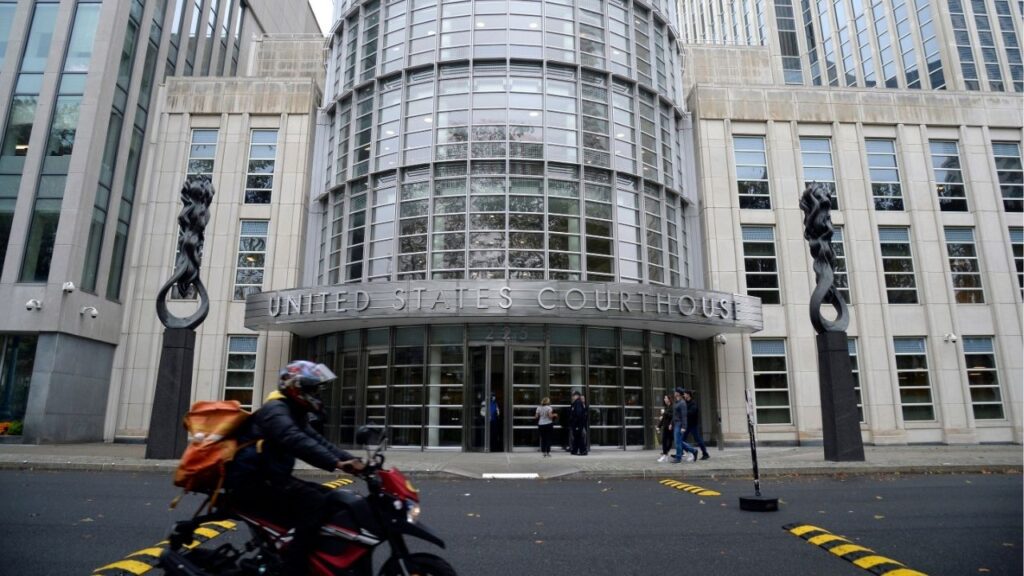
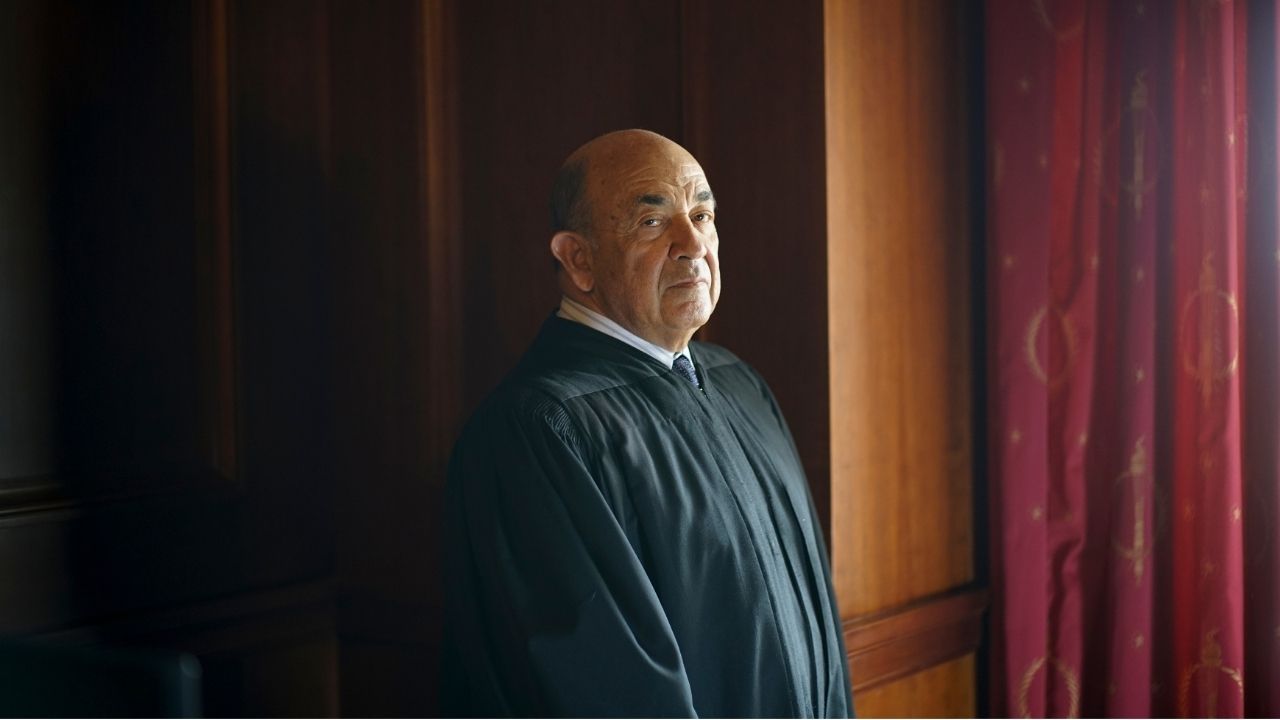
NEW YORK — At 92, Judge Alvin K. Hellerstein works out twice a week and attends classical music concerts, maintaining a level of physical fitness and an active social life admired by the lawyers who appear before him in U.S. District Court in Manhattan, where he has presided for 27 years.
But in court, Hellerstein has also fallen asleep in the midst of a trial where the defendants faced decades in prison.
As a former managing director of JPMorgan Chase stood trial for fraud last year, Hellerstein at times appeared to drift in and out of slumber, according to two people who observed the case and saw the judge every day. Hellerstein’s courtroom deputy and clerks roused him by writing him a note or refilling his mug of water.

His intermittent dozing occurred amid a shortened daily trial schedule. The day’s proceedings would often begin at 10:30 in the morning and end around 4 in the afternoon, with a lunch break that could last two hours.
Hellerstein’s Alertness in Focus
Now, Hellerstein’s alertness will be in full view as he presides over the case of Nicolás Maduro, the Venezuelan leader who was captured in one of the most audacious displays of American power in recent decades and stands accused of leading a narco-state.
The case presents a high-profile capstone to a long and illustrious career, but it will also test his endurance, temperament and legal acumen. It is bound to feature an array of thorny, novel legal issues, with rulings almost guaranteed to be reviewed by higher courts, and it could be more than a year before Maduro goes on trial, if at all. Should Hellerstein no longer be able to oversee the case, it would be transferred to a different judge in Manhattan, a process that could create further delays.
Since Maduro’s capture, a number of articles, including in The New York Times’ opinion pages, have raised questions about his fitness. Hellerstein declined to comment for this article.
There is no age limit for federal judges, who are appointed to lifetime tenures. The average age of sitting federal judges was 68 in 2024. Out of more than 1,100 U.S. District Court judges across the country, 37, or roughly 3%, are in their 90s, while around 13% are in their 80s, according to data from the Federal Judicial Center, an agency that conducts research and provides education for the federal courts.
Hellerstein isn’t the oldest federal judge in New York; that would be Judge I. Leo Glasser, 101, in Brooklyn.
According to a 2024 book by political science researchers, as judges age, they take longer to write their opinions, rely more on their clerks to draft them and use less sophisticated language in their written work.
“They’re moving slower,” said Ryan C. Black, a professor of political science at Michigan State University and a co-author of the book. “Judges are not magically inoculated from the effects of aging.”
Appointed by Clinton in 1998
Hellerstein, who was appointed by President Bill Clinton in 1998, is known as a personable jurist who draws on his lived experience. He is an observant Orthodox Jew from the Bronx who has said he schedules sentencings on Fridays so that he can reflect on his decisions over the Sabbath.
Perhaps the best-known case he oversaw was the sprawling civil litigation arising from the 9/11 attacks. For Hellerstein, the case was deeply personal: As a lawyer in private practice, he represented the firm Cantor Fitzgerald, which lost 658 of its employees on 9/11, and often worked with its executives.
Defense lawyers and former prosecutors describe him as engaged, empathetic and pragmatic, with a tendency to issue rulings that are imbued with a common-sense understanding of the law. He often questions witnesses himself in an effort to move the proceedings along quickly, and asks jurors whether they are confused by the evidence being introduced.
Lawrence S. Lustberg, a criminal defense and civil rights lawyer who has appeared before Hellerstein many times, said oral arguments with the judge were more conversational than “by the book.”
At times, his informality has gotten him in trouble. An appeals court chided Hellerstein after he called a prosecutor, off the record, about a case involving a wealthy real estate developer who had pleaded guilty.
‘Independent-Minded Jurist’
Shira A. Scheindlin, a retired federal judge and former colleague of Hellerstein in federal court in Manhattan, described him as an independent-minded jurist with a deep respect for the law, who was not afraid of being overruled by a higher court.
But Scheindlin, who stepped down in 2016 at the age of 69, said the question of a judge’s age is “a fair issue for people to be concerned about.”
“Any person who’s 94 is probably not as strong and swift as they were when they were 74, or 54,” Scheindlin said, referring to Hellerstein’s age two years from now.
So far, there is no indication that Hellerstein is not able to handle Maduro’s case. He calmly oversaw the first and only hearing to date, on Jan. 5. He has already ruled on a dispute surrounding Maduro’s defense counsel, removing from the case a lawyer whom Maduro did not hire.
But there is a long road ahead. The district judge in any case, especially a case of the magnitude of Maduro’s, is responsible for considering any and all legal issues that arise, building a foundation that higher courts, including the Supreme Court, would have to consider when those issues reach them.
Lustberg represented the American Civil Liberties Union in the 2000s and 2010s in a lawsuit concerning the CIA’s destruction of videotapes that depicted torture. In that case, Hellerstein ordered the government to release photos that showed the abuse of prisoners in American custody in Iraq.
“I think there’s a tremendous benefit to experience,” Lustberg said. “There’s very little that’s going to happen before Hellerstein that he hasn’t seen before.”
—
This article originally appeared in The New York Times.
By Santul Nerkar/Todd Heisler
c. 2026 The New York Times Company