

|
Getting your Trinity Audio player ready...
|
Maryland. Chicago. Phoenix. Los Angeles. Minneapolis.
And now Portland, Oregon.
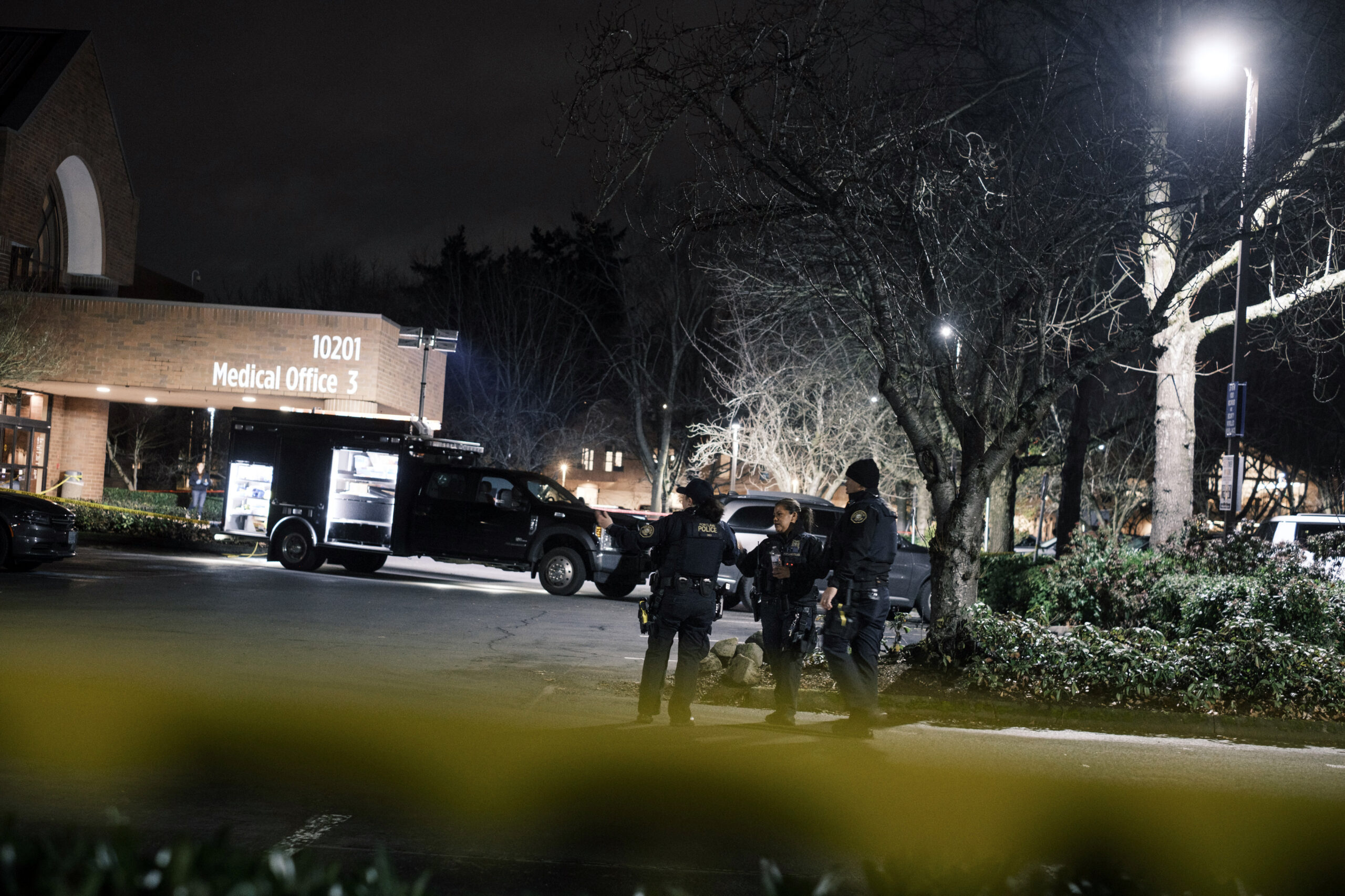
A day after a federal immigration agent shot and killed a woman in her vehicle in Minneapolis, federal agents in Portland on Thursday afternoon shot a man and a woman in their car during a “vehicle stop.” The Department of Homeland Security said in a statement that the driver had tried to run the agents over.

The shooting in Portland was at least the 10th since September by federal agents who are part of the Trump administration’s immigration crackdown — and all 10 involved people who were in their vehicles.
At least two people, including the woman in Minneapolis, have died in these shootings.
Federal officials have said that the shootings were justified because the vehicles had been “weaponized” and that officers’ lives were in jeopardy. According to the Justice Department, agents can fire at a car only under two circumstances: if the person in the car is threatening the officer or others with “deadly force by means other than the vehicle,” or the driver is operating the vehicle in a way that threatens serious injury or death.
At the heart of the debates in many cases over the use of force by officers is whether a driver’s actions have posed a grave threat.
In the case of the Minneapolis shooting, a New York Times analysis of video of the incident, from multiple angles, raised questions about the official assertion that the driver presented a deadly threat. Instead, the woman appeared to be turning the car away from the officers.
“Look at the wheels on the car. They are turning to the right, and all he has to do is step out of the way,” Geoffrey Alpert, an expert on police use of force at the University of South Carolina, said this week after reviewing the Minneapolis video at the request of the Times. “She’s jacking the wheels all the way to the right.”
Many of the country’s largest cities, including New York and Los Angeles, have banned police officers from shooting at moving vehicles except in rare circumstances, such as a driver shooting at police, or a terrorist driving into a crowd. Police cadets often aren’t trained in shooting at moving vehicles, and officials have long warned that the practice risks hitting innocent bystanders.
The Police Executive Research Forum, a nonprofit that studies law enforcement policy, put it this way in a paper published in 2023: “Shooting at a moving vehicle is not an effective way to get it to stop. There is the challenge of hitting a moving target, and the risk of an errant bullet hitting an unintended target, such as a bystander. There is also a risk that if the driver is struck, they will lose control of the vehicle.”
Law enforcement officers have been killed by drivers using their vehicles as weapons. Five officers died in this manner through the first seven months of 2024, according to the most recent data from the FBI.
This week, in the aftermath of the Minnesota shooting, Xochitl Hinojosa, a former spokesperson for the Department of Justice during the Biden administration, wrote on the social platform X that in 2022, the department updated its use-of-force policy for the first time in 20 years. She wrote that the new policy “included a duty to render medical aid and specifics on how firearms may not be discharged at a moving vehicle in most circumstances.”
This article originally appeared in The New York Times.
—
By Tim Arango/ Jordan Gale
c.2026 The New York Times Company