|
Getting your Trinity Audio player ready...
|
A vote last month by the Westlands Water District board to sign off on the environmental impact report for a massive solar project on Fresno County’s westside marked a major milestone in the development of the Valley Clean Infrastructure Plan.
The environmental report is subject to a 30-day challenge period that ends Jan. 17, Jose Gutierrez, Westlands assistant general manager, told GV Wire on Monday.
If it continues to move forward on schedule, Gutierrez said, VCIP solar farms are expected to generate 20 to 21 gigawatts of electricity by 2040. If it’s fully developed, up to 136,000 acres of fallowed land could be converted to solar projects.

In addition to generating much-needed electricity, VCIP could boost Fresno County’s property tax revenues as well as groundwater supplies, Gutierrez said.
The VCIP project proposes converting vast swaths of fallowed farmland into solar farms and will include the development of transmission lines and substations to move the collected solar energy into the state’s transmission grid.
At today’s rates of usage, 21 gigawatts would be enough to power 9 million homes. But it will represent a shrinking percentage of the state’s energy needs in years to come as California shifts to all-electric power for homes, vehicles, and businesses to meet its goal of zero carbon emissions.
Related Story: Inside Look at Fresno County Westside Solar Plan to Power 9 Million Homes
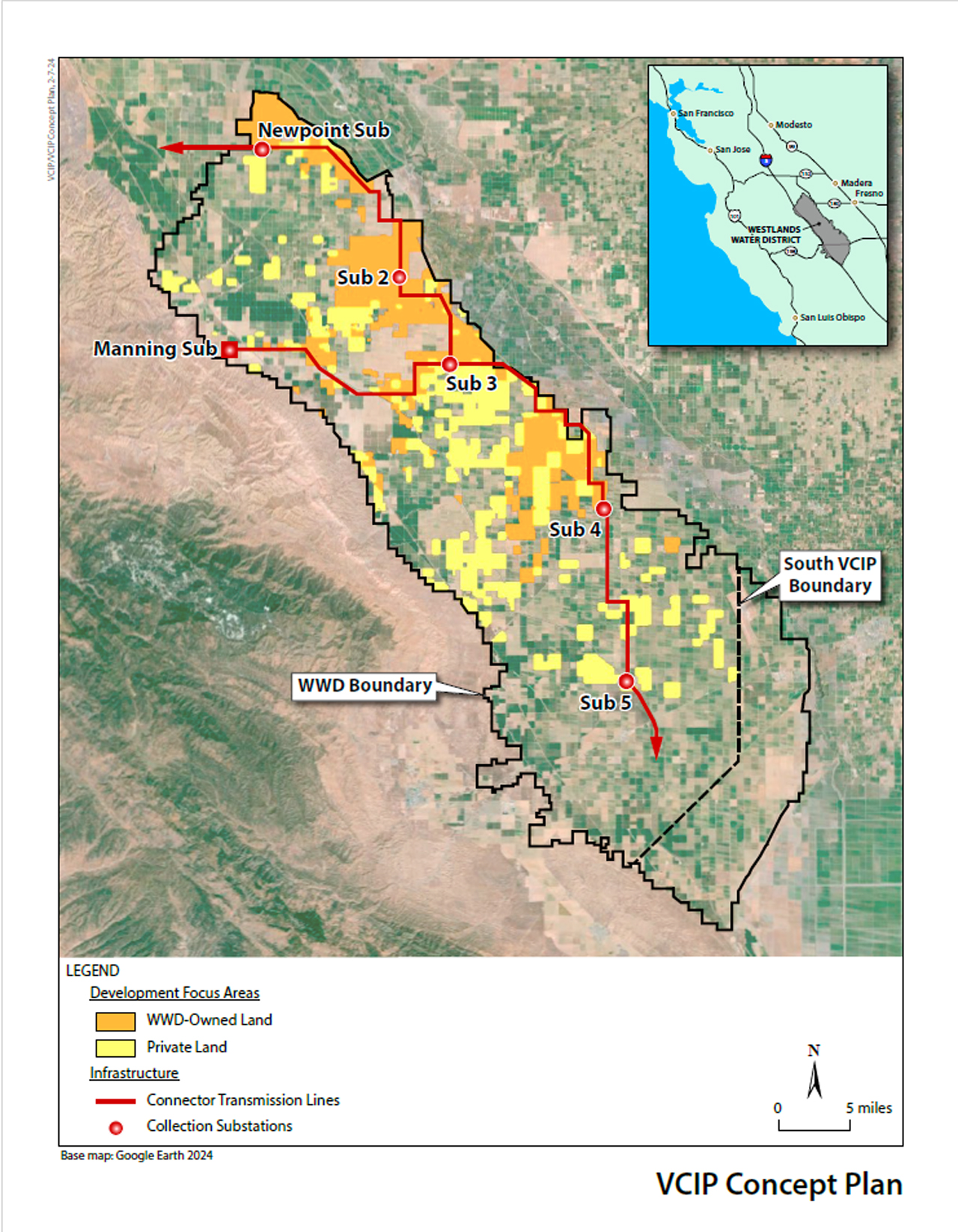
The VCIP project would develop from north to south, in part to take advantage of existing transmission and substation facilities.
VCIP’s planners are working with the California Independent System Operator, which oversees the state’s energy grid and planning for future needs.
Solar Farms Could Include Groundwater Recharge
VCIP will give Westlands and private farm owners the opportunity to sell or lease land for solar companies to develop. If Westlands sells land, it will move onto property tax rolls and boost tax revenues for Fresno County, Gutierrez said.
But Westlands plans to retain small pockets within sold parcels for drill sites to pump water into the ground instead of pumping it out, he said.
With a scarcity of surface water that comes from the Delta or Sierra snowpack, farmers on the westside have pumped so much water out of the underground aquifer that the land has dropped, damaging infrastructure like roads and electric poles. Once the land subsides, it shrinks the space available to store water underground for future use.
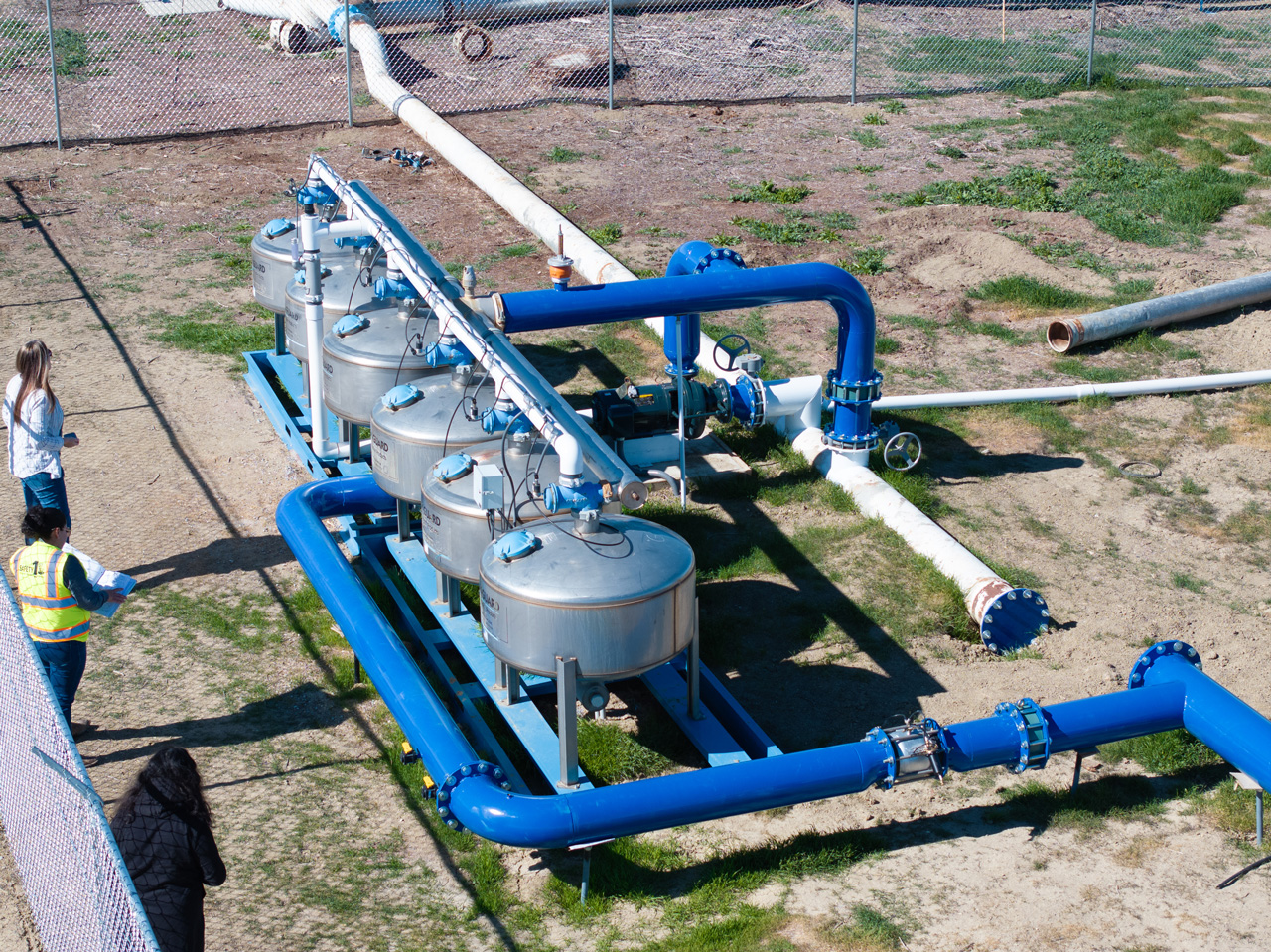
The drill sites would pump water from the Coalinga canal or California aqueduct into the ground, Gutierrez said.
Westlands already has seven recharge wells in operation, he said.
But wouldn’t this shortchange the water available to farmers by pumping surface water underground?
“The way we manage water, it is possible that if we inject the surface water today, that we can trade that groundwater credit for surface water in the future. So instead of pumping that groundwater out, maybe we do a swap with surface water that’s stored in some reservoir in California,” Gutierrez said. “As water managers, being able to inject the water and store it underground creates possibilities for exchanging that water in the future, either by directly pumping it out or exchanging it for surface water with another agency or someone within Westlands.”
Westlands Lacks Secure Water Supply
Westland critics are questioning whether the agency should continue to receive the same share of Central Valley Project water rights if less land is under cultivation with the development of VCIP and if Westlands sells off portions of the district.
“Even with the repurposing of this land, we’re still going to have land sitting idle because of lack of a secure water supply,” Gutierrez said. “So even with this repurposing, the lands that remain in agriculture still will not have enough water when you consider the SGMA (Sustainable Groundwater Management Act) implementation. And the sustainable yield for groundwater and the long-term averages of surface water allocation are still not enough to meet our ag demand. That’s why we continue to buy supplemental water on the open market at prices that are three or four times more expensive than our Central Valley Project allocated water.”
Still under development is the community benefits agreement plan required by Assembly Bill 2661, which allows Westlands to develop solar power in addition to its operations as a water district.
The goal is to provide a boost to westside communities that have been job-dependent on the agriculture industry and the plan could include solar industry job training opportunities as well as development of community improvement projects such as parks and recreation, roads, and expanding Fresno County fire service, which would increase the number of first responders on the westside, he said.
The community benefits plan will need the approval of the Westlands board, Gutierrez said.