
|
Getting your Trinity Audio player ready...
|
As Fresno and the Central Valley continue to wrestle with challenges ranging from housing and health care to education, food insecurity, and environmental change, a group of local leaders is quietly shaping a different future.
GV Wire’s 2025 Difference Makers spotlight individuals and organizations whose work is redefining what service, leadership, and impact look like in the region — from nonprofit executives and educators to advocates, artists, entrepreneurs, first responders, and young people finding their voice.
Together, their stories reflect a Valley driven not just by need, but by innovation, compassion, and a deep commitment to community.

MATTHEW DILDINE: FRESNO MISSION
If Nashville is known for music and Silicon Valley for startups, Matthew Dildine says he wants Fresno to be known for giving. And given the history of the Fresno Mission and its partner organizations, Dildine, the nonprofit’s CEO, says they are well on the way.
“Nashville does music, Silicon Valley does tech startups, Hollywood does movies,” Dildine said. “I would love if people looked at Fresno and said ‘that is that place that has all these different facilities and systems that provide the best possible care when someone’s experiencing crisis.’ ”
Ever since the Mission’s City Center opened in 2024, its draw has reached both near and far, Dildine said. Hungry people, unhoused people, NS needy people come to the 9-acre campus at Dakota and Blackstone avenues for groceries, access to a multitude of services, or simply a place to sit and get coffee. They cut the ribbon on their housing facility earlier this year with rooms suitable for an entire family.
It’s not just people with needs that come to the center, however. Bankers and professionals come to the facility for a cup of coffee or to host meetings, Dildine said. The facility hosts conferences and business lunches.
That draw has since extended to the entire continent, he said, with organizations wanting to see how a homeless service center can upend the stigma around them — elevating the neighborhood around it and restoring dignity to the people visiting.
“We really endeavored to build not just the nicest place for a homeless mother to go, we wanted to build the nicest place for any mother to go,” Dildine said. “For that reason, one of the great things about it is it’s been able to get so much attention from all over the country. We’ve literally had people from all over North America come visit.”
City Center Officially the ‘Coolest Place in the Country’
Last week, Dildine was coordinating a return visit from a Houston organization wanting to see how to build one in their area. Another group from Los Angeles is hoping to build a City Center-like building in Southern California.
When word came out that the Hilton family wanted to build a homeless service campus in Las Vegas, President Donald Trump’s homeless czar, Robert Marbut Jr., reportedly told them they need to go to Fresno, Dildine said.
This comes after President Joe Biden’s homeless czar, Jeff Olivet, visited City Center.
When Marbut visited earlier this year, Dildine saw how impressed the official was. He asked him if he thought it was the “coolest” place in the country.
Marbut agreed, but asked Dildine why the question.
“I was like, ‘Biden’s guy said it was the coolest place in the country, now you said it’s the coolest place in the country, I’m going to go tell my donors that the Trump administration and the Biden administration finally agree on the same thing, which is that City Center is officially the coolest place in the country,'” Dildine said.
Fresno Mission Has a Long Tradition of Innovation
The Fresno Mission exporting service models didn’t start with City Center, Dildine said. When the Mission — then the Rescue Mission — began in 1949 part of the operations included training other organizations.
In addition to providing services locally, the founders traveled up and down the West planting other ministries, Dildine said. A quick calculation estimated $500 million in revenue from some of the largest homeless service providers in the Bay Area, San Jose, Santa Rosa, and Bakersfield — all that found their origins in the Fresno Mission.
Some of those groups include Redwood Gospel Mission, the Mission at Kern County, another called CityTeam in the Bay Area.
“In fact, I was talking to one nonprofit up in Santa Rosa — and I never knew this — but he told me in their bylaws, it says that if they were ever financially to go under, all of their resources go the Fresno Rescue Mission,” Dildine said.
The most recent undertaking for the Mission brought on a partnership with Valley Children’s Hospital to create a coordinated system of services for children and teens in crisis.
Combining the resources of CASA, Breaking the Chains, City Without Orphans, Central California Food Bank, the Justice Coalition, Martin Park, and the Troy Center means building wraparound services for youth in need.
Knowing There’s Always One More Mouth to Feed Is Stressful: Dildine
Dildine came to the Mission by way of a decade in the legal field, he said. While successful at his firm, he watched the impact his wife made with the Central California Food Bank. Kym Dildine is now co-CEO of the food bank.
He considered the abundance of food in the region and yet so many still went hungry, he said.
“The fact that we had the most food, yet the most hungry people, most neighborhoods to reflect a creation that God didn’t intend, and yet most people sitting in church pews, really started to bother me,” Dildine said. “And so all the time that I was investing in my legal career, I started investing that into these issues of poverty.”
In 2018, the opportunity arose to become the Mission’s CEO and he took it.
Many think about the stress of the legal field, but he said it doesn’t compare to the stress of ensuring people are fed, clothed, and housed.
At the Mission, they tabulate daily how many receive a meal or a coat or find shelter. While reaching as many people as possible is important, creating a lasting impact is how Dildine says he calculates success. The outreach provided at the Mission helps create those intangible foundations to help people on their way to stability.
But knowing that still more need food and shelter is one of the highest stressors, Dildine said.
“Knowing that there is a person who really needs that resource just beyond your limit I think is one of the hardest things,” Dildine said. “To know that people are struggling with life threatening situations, to know that kids are suffering through things that will permanently impact them for the rest of their lives and getting to a point where you’re always trying to help that next person, that to me is a very stressful, hard experience.”
— Edward Smith
DR. SONY SIDHU: MADERA COMMUNITY HOSPITAL
In 2023, despite efforts to keep it open, the Madera Community Hospital board faced the difficult decision of closing the only full-service medical center between Fresno and Merced.
The closure meant the population of Madera — a majority of whom rely on Medi-Cal — had to travel to Fresno or Merced for medical emergencies or to get services that couldn’t be provided by Camarena Health or other health clinics.
After two years, American Advanced Management, an agency familiar with reopening a distressed hospital, took over operations. And now, the hospital has slowly reopened, adding services in a controlled manner over the past six months to keep it from suffering the same fate as the previous Madera hospital.
At the helm is Dr. Sony Sidhu, the hospital’s CEO who says she’s made a point of being front-facing with the community. She said the first few patients to the emergency room had tears in their eyes, telling Sidhu they were relieved that trips for their children required only a short drive.
“That’s huge. We had older populations that had been dealing with chronic conditions — simple diabetes and high blood pressure,” Sidhu said. “When there’s a crisis with that, you don’t want them to be traveling, right? Let’s say a community member has a diabetic episode… they want to get treatment right away. We were able to serve some of those people and after that, we actually got calls from the community members (saying) ‘we’re so thankful that the services are there.’ ”
A Phased Approach Will Prevent Repeat of Hospital Failures: Sidhu
The loss of Madera’s emergency room caused the most panic. For strokes, heart attacks, or diabetic shock, every second matters, Sidhu said. Every moment not treated means potential loss of muscle or of brain function.
For desperate situations, having to drive the 25 minutes to the nearest hospital means a much higher likelihood of losing that life, Sidhu said.
Reopening a fully functioning hospital, however, is a major undertaking. Operations and work flows have to be built from scratch, equipment not used for two years has to be reviewed over and over again.
After opening the emergency room, the hospital began adding inpatient services. Next came intensive care, surgical and surgical telemetry services, Sidhu said. Recently, they added MRI and CT scans, something the hospital didn’t have before.
Overextending services can put a hospital back into a situation similar to what originally closed Madera Community. By taking a slow, phased approach and understanding the Madera population, the hospital can sustain itself.
At previous hospitals, Sidhu had been tasked with opening new operations, but Madera had to be built from the ground up.
“I was able to create a whole model at one of the facilities that I worked, able to create new service lines,” Sidhu said. “This one was a complete project. You have to create a service line for every single department you can imagine. I think that was my biggest thing, and I’m going to get to see the return immediately with the community.”
Hospital Leadership Needs to Be Accessible: Sidhu
Sidhu has been in medical care for 25 years, quickly jumping into management after about five years. She went from quality compliance to administration, becoming chief nursing officer, and then CEO.
Before coming to Madera, she lead the Central Valley Specialty Hospital in Modesto where she familiarized herself with underserved communities.
With inadequate medical coverage, many patients in those communities will wait until a situation becomes a true emergency before getting treatment.
The hospital in November had a ribbon cutting ceremony for their clinic. With their clinics, she hopes to better provide preventive care and medical education.
Healthy eating, men’s and women’s health, children’s, and teenage health needs to be stressed for people.
Sidhu wants to be a familiar face to the community. She said it should be expected of hospital leadership to be accessible to the people of Madera.
A board member recently told her that he’s already heard from more than a dozen people out in the community who’ve met with Sidhu, and she takes pride in that.
“The amount of patients that have come and talked to (me), that’s what I want to take home,” Sidhu said. “At the end of the day that what my goal is. Was I able to give back?”
— Edward Smith
ALCIDIA FREITAS GOMES: AG ONE FOUNDATION
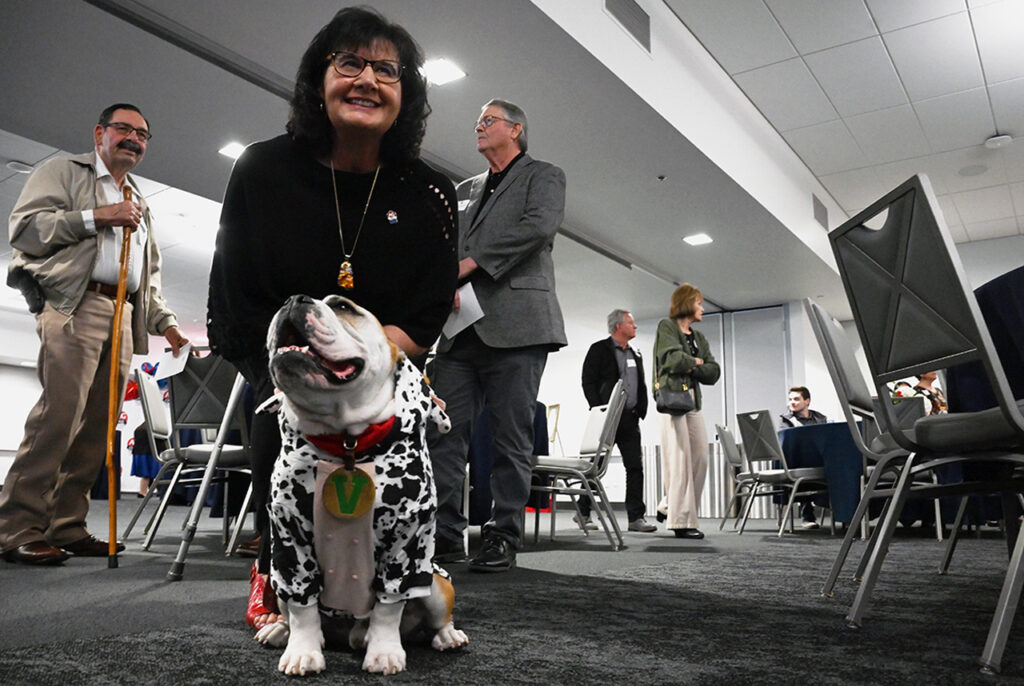
Earlier this year, Fresno State Ag One Foundation’s long time executive director, Alcidia Freitas Gomes, retired from the position, ending a 30-year career with the nonprofit.
In her time, the organization providing scholarships to first generation students grew from donating $50,000 a year to $1 million a year, helping 5,500 students.
“Over time, agriculture continues to grow and thrive,” Gomes told GV Wire. “People want to show their gratitude and give back to their alma mater because they, in their own rights, have become successful in what they’re doing. And then companies, because they want to hire the best and brightest, invest in programs that they have great confidence in.”
Gomes grew up in the dairy industry, coming to Fresno after immigrating with her parents from the Azores. After graduating from Fresno State, she got a job at the California Holstein Foundation where she put her marketing background to use and got her first taste in fundraising.
It wasn’t long after that the opportunity to join the Ag One Foundation presented itself.
“It was really satisfying to be back at my alma mater,” Gomes said. “A little daunting in the beginning because now I’m on the same side of the desk as my professors.”
Fresno State Education Life Changing for Students, Families: Gomes
Companies wanting to hire the best students, and invest in education do so through Ag One, Gomes said. National and international foundations seeking to invest in a region find an outlet in the foundation, she said.
Other gifts come from alumni.
“There’s just countless stories of graduates talking about faculty that they just had great regard for who took them under their wing and had it not been for them, they might not have graduated,” Gomes said.
One couple, Gary and Marlene Peacock, wanting to honor Marlene’s father, designated $7 million to go to scholarships for first-generation students majoring in either plant science or animal science.
“That’s life changing for many, many students,” Gomes said.
The Jordan College of Agriculture got its name from Bud and Dee Jordan. They donated to the university following a pitch from Fresno State faculty member Bob Glim and his wife Dorothy.
With a box of raisins, Gomes said, Glim fundraised for the ag school.
Despite never visiting the campus — until Dee did after Bud’s death — the couple believed in the mission and made an annual donation of $25,000 a year. That gift eventually turned into a $29.5 million donation, earning them the college’s namesake.
“For students that are interested in pursuing careers in agriculture, in technology, in science, Fresno State can’t be beat,” Gomes said. “Coupling that with the fact that so many of the students are first generation. President Saúl Jiménez-Sandoval will often say that Fresno State changes lives. I truly believe that it changes lives.”
— Edward Smith
TAYLOR LONG: PINC
For more than 15 years, Philanthropy Inspired by the Needs of Our Community has quietly become one of Fresno County’s most consistent forces for good, channeling the collective energy of women determined to give back.
Taylor Long
Founded in 2008, the nonprofit was created to support women and children through both fundraising and hands-on service, pairing financial impact with thousands of volunteer hours across the Central Valley.
“I think that’s another thing that blows people’s mind, is every single woman that is a part of this powerhouse organization, we’re all just volunteers,” Taylor Long said.
Each year, PINC members commit to serving wherever the need is greatest — from shelters and food programs to coat drives, after-school support, and emergency assistance — reinforcing the idea that time and presence can be just as powerful as money.
Long’s journey with PINC began in 2019, when she witnessed the organization’s work firsthand at a nonprofit check presentation.
Drawn to the group’s mission and its diverse membership, she joined and steadily took on leadership roles, eventually serving as president.
“It’s definitely an organization that I joined because I saw these women making a difference,” she said.
Under her leadership, PINC continued its tradition of selecting a single beneficiary each year, ensuring focused, meaningful impact.
Most recently, the organization raised $90,000 for the Poverello House’s Family Hope Shelter, a donor-funded program serving families facing housing insecurity. Since its founding, PINC has contributed nearly $1.5 million to local nonprofits.
View this post on Instagram
Now an honorary lifetime member, Long remains deeply connected to PINC’s future.
While balancing a demanding career as public information officer for the Fresno County District Attorney’s Office, she continues to advocate for volunteerism as an accessible way for people to engage with their community.
“We all have the same set of hours every single day, and it’s just a matter of what your priorities are,” Long said.
To her, PINC’s strength lies not just in its financial contributions, but in the relationships formed, the shared sense of responsibility, and the belief that collective action — driven by compassion — can create lasting change.
— Anthony W. Haddad
JONNY FELD: FIELD VAN
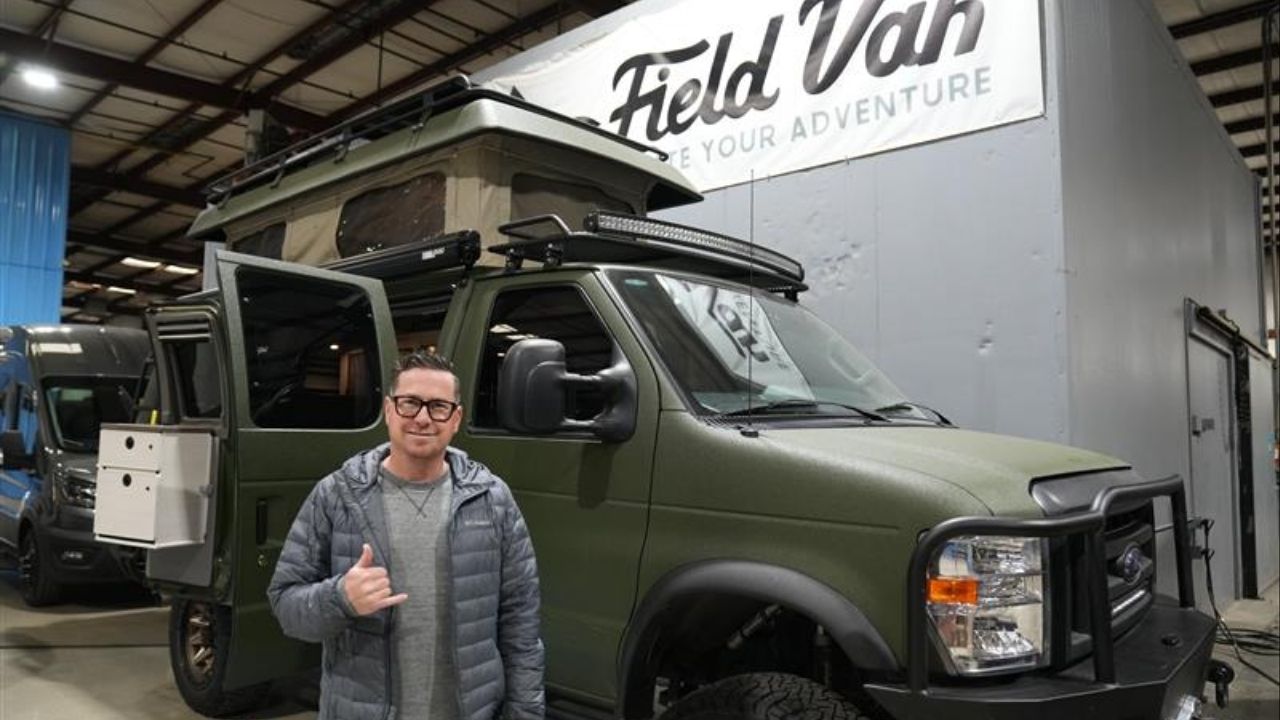
The Fresno company that began by customizing Volkswagen buses for road trippers, then moved on to outfitting vans for off-road use has found a new customer base — local governments using the adaptability of the Field Van to reach rural citizens.
Field Van recently partnered with Fresno County Superintendent of Schools to build mobile therapy vans and a STEM van for students, said Brian Furrow, sales manager for the company.
Other governments have found use of the vans that can be customized with all sorts of features. The Madera County Sheriff’s Office had theirs turned into a mobile probation van that serves as both a drug testing lab and a miniature courtroom for virtual hearings.
The Grover Beach Police Department made theirs into a search-and-rescue vehicle, and the city of San Francisco had an on-demand computer center, shower, and clothing closet built into their van.
President Jonny Feld said after more than three decades in the business, they’ve gotten a sense of everything that can be done with a utility vans.
“Having built thousands of vans over the years here at Field Van, we have the expertise to help guide the decision-making process for each project, but at the same time, we work closely with the people who are going to be using the vans and deploying them,” Feld said. “What are your needs, what are your main goals? And then we can just work around that.”
From STEM Vehicles to Mobile Courtrooms
Not every school has access to state-of-the-art technology for students interested in science and mathematics. So, the Fresno County superintendent ordered a van to bring that technology to them.
“They’re doing laser cutting, they’re doing CNC, 3D printers,” Furrow said. “Some really cool applicable sciences.”
Sticking with the science and engineering theme, the superintendent also wanted it to be electric. Most of the off-roaders prefer gas-powered vehicles, Furrow said, but with a 200-mile range, the van can reach anywhere in the county and then simply get plugged back in for a charge.
The superintendent’s office recently announced the All 4 Youth program, a partnership between with the Fresno County Behavioral Health Department. The program uses mobile therapy vans to bring counselors and therapists to rural schools.
Field Van helped create what is essentially a mobile office, Furrow said. It comes with meeting space, couches, tables for activities, and books.
Furrow said it also provides a more discrete setting for students.
“It’s like a stigma for a kid to go to the therapist on campus, right? You go to the office, maybe you get teased. So they have these vans where it can be more subtle,” Furrow said. “They can also reach people where they don’t have therapy.”
Madera County’s van serves as a mobile command center and probation vehicle. A Starlink connection allows court proceedings to be held right in the van, and a bathroom allows drug testing to occur.
“They also set it up as multi-purpose, so if they’re not using it for probation, it’s a mobile command center, crisis management van,” Furrow said.
It’s a Pickup, a Minivan, and a Camper All in One: Feld
The company started in 1989 when Feld’s parents, Liz and Alan, began outfitting vans — especially Volkswagen buses — for off-roaders and road trippers. Once Mercedes and Ford began pumping out utility vans, Field Van saw the opportunity to turn those into 4×4 vehicles.
There at the factory on Central Avenue off Highway 99, fabricators strip the van down to its shell and turn it into an much more navigable RV, capable of driving comfortably on sand dunes or alpine heights.
They make the cabinets and do the upholstery there on site.
With pop-ups tall enough so even Shaquille O’Neal can stand comfortably, Feld has had his entire family sleep comfortably on beds built into the van.
They recently unveiled a new rail system where seats and benches can be easily added and moved. Feld figured those same car seats could be put around the campfire so he partnered with Fresno State’s mechanical engineering college to develop a cradle so those car seats could turned into rocking chairs.
They liked one of those students so much they hired him, nicknaming him “Jet” because he had originally wanted to go into aerospace. They named the gliding rocker after him, calling it the “Jet Glide.”
“It’s such a versatile van. Again, they’re not cheap these vans with all the amenities that they have,” Feld said. “But if you can sell your pickup truck, sell your minivan, sell your camper or trailer or whatever you’re using for recreation, you can get all those vehicles in one and use it as an everyday driver and park it in a normal parking spot.”
— Edward Smith
TYRONE RODERICK WILLIAMS: FRESNO HOUSING
Now in its 85th year, Fresno Housing has taken on a role unlike most other housing authorities in the country. Where most agencies limit their mission to the Section 8 vouchers that supplement the rents for low-income families, Fresno Housing goes beyond rental assistance to build and manage affordable housing for tens of thousands of families in the county.
And under CEO Tyrone Roderick Williams, Fresno Housing continues to pursue a wide variety of ventures to increase access to permanent homes for people in need, even in the face of drastic funding changes.
“Housing is rarely provided under ideal conditions. Even as federal funding levels and regulatory requirements evolve, our responsibility to the community remains constant and unchanged,” Roderick Williams told GV Wire. “Fresno Housing remains focused on keeping people housed, delivering quality developments, and serving as a responsible steward of public resources — ensuring that families, seniors, and individuals have a stable place to call home.”

Fresno Housing Opens Up Affordable Single-Family Home Options
When people think of affordable housing, most wouldn’t be wrong to think of apartment rentals. Fresno Housing this year changed that script with their Heritage Estates, unveiled in November.
The community in southwest Fresno made 33 single-family homes available to low-income families earning anywhere from 50% of the area median income to 80%.
Roderick Williams said making homeownership available creates generational wealth.
“This community represents more than new homes — it represents opportunity, stability, and hope,” Roderick Williams said. “Heritage Estates gives families who have worked hard but have been priced out of the housing market a real chance to achieve homeownership. Through layered assistance and long-term affordability protections, we’re helping build generational wealth and stronger neighborhoods.”
Grand Downtown Housing Plan Unveiled
This month, Fresno Housing revealed the first phase of its massive proposed housing project in downtown Fresno called Fulton Forum.
The city broke ground Dec. 15 on a 603-stall garage that will eventually provide parking for the Forum. The garage, located along Congo Alley near Merced Street, will serve the nearly 400-unit complex at the site of the former CVS.
The agency still needs financing for the 123-unit Forum, but Roderick Williams anticipates breaking ground on the first housing portion — called The Roos — by summer 2026.
Fresno Housing Navigating Federal Funding Cuts
In May, Roderick Williams sounded the alarm on federal funding changes that would fundamentally change the mission of Fresno Housing.
President Donald Trump earlier this year issued broad changes to how housing authorities get funded. Fresno Housing gets 70% of its funding through federal sources. Trump, however, wanted to put the money on states to deliver — something Roderick Williams warned could take years to figure out, impacting availability of housing vouchers.
Other proposals from the Trump administration limit how long a person can receive housing assistance, Roderick Williams said at the 2025 Real Estate Forecast hosted by the Fresno Economic Development Corporation.
Housing grants, the kind essential to make affordable projects pencil out financially, also experienced major cuts.
Despite this, the agency still supports the more than 11,000 Fresno County households reliant on housing choice vouchers.
— Edward Smith
PAUL LOEFFLER: HONOR FLIGHT
Paul Loeffler uses his voice to describe Fresno State sports for a living. He also uses it to advocate for veterans.
“There’s nothing in my life that’s been more fulfilling, more eye-opening, more educational, and more inspiring than the time I’ve been privileged to spend with our vets,” Loeffler said at a recent check ceremony.
Helping fundraise and presiding over ceremonies are just some of the ways Loeffler makes sure veterans get their due.
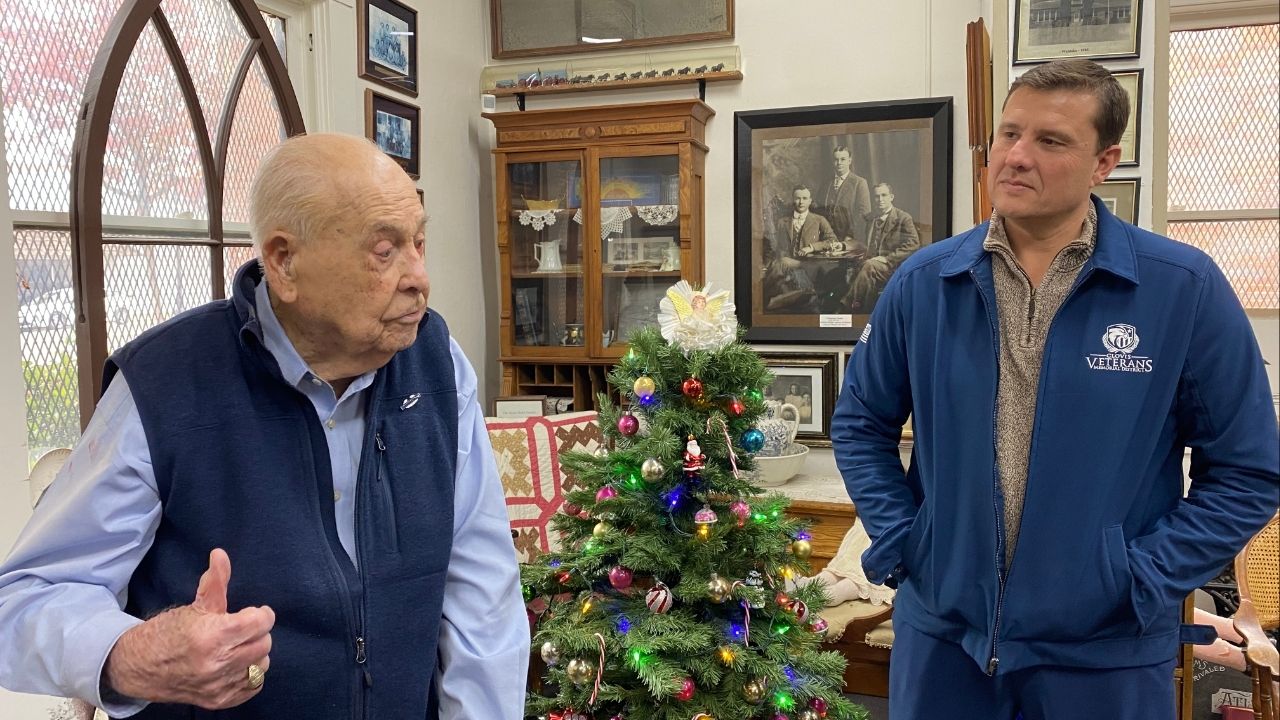
Earlier this month, Vern Schmidt, a 99-year-old World War II veteran, and the Reedley City Museum donated a $7,000 check to Central Valley Honor Flight. The proceeds came from Schmidt’s book.
Schmidt helped liberate Nazi death camps. He was one of dozens of young men who served from First Baptist Church in Dinuba. The church prayed around the clock throughout the war for the men to come home. All of them did.
Today, the church’s pulpit is featured at the museum.
Honor Flight — a tour of Washington, D.C., monuments for veterans — is another Loeffler passion.
Grandfather Inspired Advocacy
Inspired by his Silver Star–recipient grandfather, Loeffler created a radio show, “Hometown Heroes,” to tell the stories of World War II veterans. He expanded that to launch Central Valley Honor Flight, which flies those who served to Washington, D.C., to view their monuments and receive long-overdue recognition.
Paul’s grandfather, Dr. Robert Loeffler, saved 26 men from burning tanks in France during a Nazi ambush.
“I always wanted to get his story,” Paul said. “I asked, ‘What were you thinking?’ He said, ‘What was I thinking? I thought I was gonna get killed.’ And I said, ‘Well, I’m glad you didn’t.’ And he said, ‘Yeah, you wouldn’t be around.’ That’s when it really hit home. I would never have been born if my grandfather hadn’t survived.”
Those stories became a feature in 2005 when Loeffler worked as a sportscaster at CBS 47. It eventually became “Hometown Heroes.” Listeners began cold-calling Loeffler, asking if Honor Flight could come to Fresno.
Loeffler prayed on it. A year later, EECU called asking for a veterans charity it could support. At the same time, Al Perry had just retired as chief executive at the Fresno VA hospital.
With seed money and an experienced administrator, Central Valley Honor Flight was born.
Loeffler calls it “God’s perfect timing.”
“The story is not about any one of us. To me, the story is the power of our veterans to inspire and unite,” Loeffler said. “It’s the ultimate reflection of the heart of the people of the Valley.”
Next Honor Flight in April
Since 2013, 2,216 veterans have flown on Honor Flight. Each trip costs approximately $245,000 — all paid with donations. Honor Flight No. 34 takes place April 20–22, 2026. About 70 veterans, along with guardians and staff, will participate.
Honor Flight started with World War II veterans and has now expanded to Vietnam-era vets. There are 450 on the waiting list.
Perry, an Army veteran, said he was blessed when Loeffler asked him to serve.
“Paul is what I call the North Star — the guiding light of Honor Flight,” Perry said.
When the flights return to Fresno Yosemite International Airport, hundreds gather to welcome the veterans home. Loeffler said they come from all ages — literally infants to 100 — and from all tax brackets, political viewpoints, and races.
Loeffler said Honor Flight is especially impactful for Vietnam veterans, many of whom did not receive a welcome reception in the 1970s.
“Now when they come home, they’re heroes. They get the welcome home they never received before. It’s healing and powerful in so many ways,” Loeffler said.
Loeffler has become the de facto Fresno personality advocating for veterans.
“Maybe people see my face or hear my voice more, but I’m just one of hundreds. And that’s the beauty of Honor Flight — every time we do a flight, more people want to help us,” he said.
— David Taub
FRANK NEIN/LOEL WOOD: CYBERSECURITY START-UP
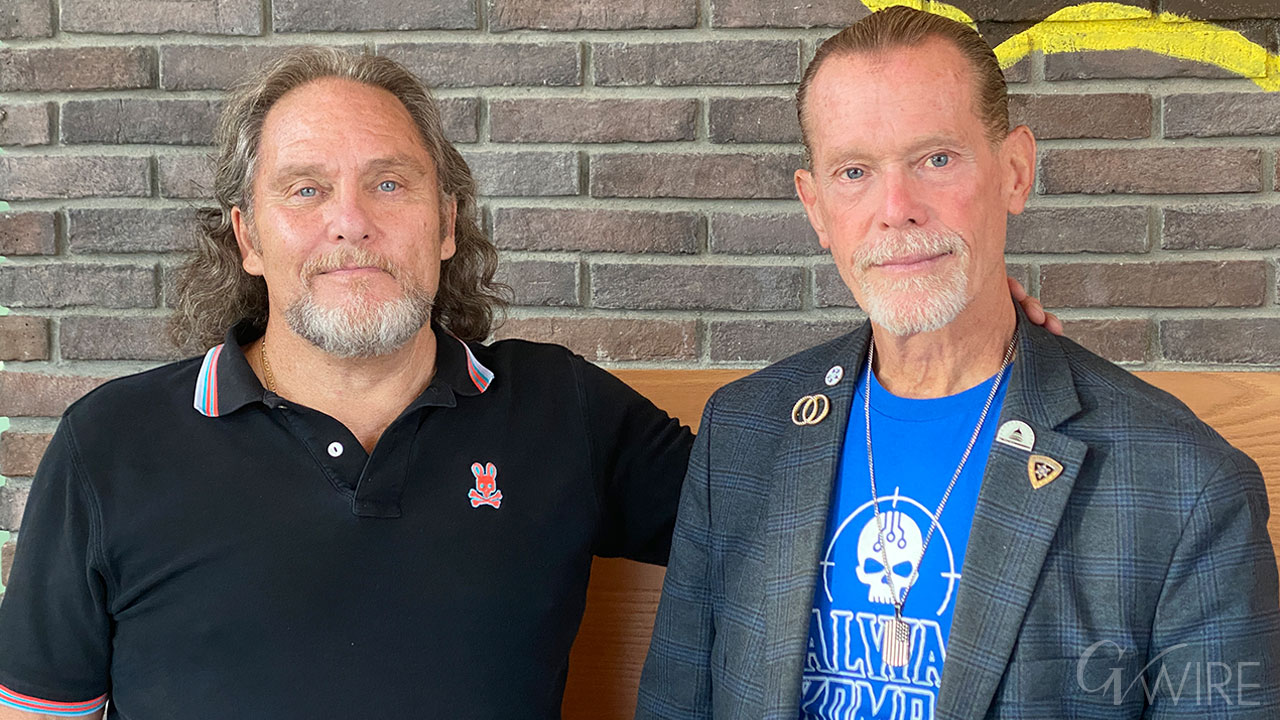
Going after cyberpunks is personal for Frank Nein. Building a business in Fresno is personal for Loel Wood.
The two Navy veterans met in the 1980s while stationed at Miramar. They went their separate ways — Nein worked in Hollywood and Washington, and Wood became an executive at Pelco. But they reunited to make Fresno a hub for cybersecurity.
They formed 9sight 2020 with the lofty goal of hiring thousands of cybersecurity experts based in Fresno.
Nein helped bring streaming to Hollywood, working with actor David Caruso and former Windows Media architect Nils Lahr to form Lexicon Digital Communications, according to a 2008 Streaming Media article.
He also helped bring Arnold Schwarzenegger’s charitable organization, Inner-City Games (now After-School All-Stars), into the digital age.
“Frank is so incredibly passionate about his purpose and about his mission on this planet. He’s completely turned his life over to this mission. And it’s phenomenal because it’s not a pretty road that he’s traveling,” said the group’s former COO, Liora Mendeloff.
Cybersecurity Motivation
Nein, a fast-talking New Jersey native, pivoted to cybersecurity in the late 2000s after learning someone was stalking his 12-year-old daughter.
“Some guy showed up at my daughter’s door and said, ‘I’m here to pick up my date for the weekend.’ She’s 12 and a half,” Nein said. “I went into a rage.”
His first instinct was violence, but people like Wood calmed him down.
“The FBI got to him before I did,” Nein said.
Since then, Nein has become a cybersecurity expert, earning several certificates.
“I’m not going to lie — it wasn’t motivation; it was revenge,” Nein said.
Nein envisions several areas of cybersecurity where 9sight 2020 can help. He told GV Wire that recent scandals involving baseball and online betting are one example.
Busting human trafficking is another focus.
“We’re like bounty hunters in the threat-hunting world across all levels — the dark web, deep net, and surface web,” Nein said.
9sight 2020 will focus on cybersecurity, cyberspace, and cyber warfare, Nein said. That means going after fraudsters, sexual exploiters, and other online criminals.
“We have our own proprietary solutions and services. We have our own technologies that we’ve engineered, designed, and developed,” Nein said.
Why Fresno?
Wood wants to get the company rolling by mid-2026.
“I’d like to have an onboard staff of 1,500 to 2,000,” Wood said.
Wood and Nein also want to focus on hiring people from Fresno. The estimated pay ranges from $85 to $120 an hour.
For Wood, operating in his Fresno hometown is important.
“Fresno is something you have to come experience and hang out in, because it’s not like L.A.,” Wood said.
Wood wants to focus on hiring military veterans and those “heavy” in data and analysis.
“We want people to think and create and be their own. They’re going to produce and contribute to the company,” Wood said.
There’s another criterion Wood wants — the “God factor.”
“If you’re going to compromise your morals because you’re in business, you’re in the wrong company,” Wood said. He added that there are ways to ask such questions without violating labor laws.
— David Taub
MICHELE ELLIS PRACY: FRESNO ART MUSEUM
Art matters to Michele Ellis Pracy, and she is making sure it matters to Fresno.
“I don’t think you can have a great city without a very active and professional cultural element,” Pracy said. “This is a huge responsibility — to make sure Fresno keeps this museum and we’re here for another 76 years.”
Art “opens our eyes to beauty,” she said.
For 10 years, Pracy has served as the executive director and chief curator at the Fresno Art Museum. She implemented six-month-long exhibits (instead of three), which helped with planning and costs.
She’s proud of the educational component, regularly hosting school field trips. It’s a chance for students to learn art appreciation and museum etiquette, she said.
“You don’t know what you’re missing until you experience it,” Pracy said.
Funding Challenges
“Funding has always been hard for this museum,” Pracy said.
Pracy operates on a $1.3 million budget, requiring about $100,000 in fundraising each month. Measure P has helped, providing up to $240,000.
“It’s really tough because the current federal administration doesn’t believe in the arts as they’ve been established for 250 years in this country. There’s a fear element that affects donations when people worry the arts are in jeopardy. So it’s difficult,” Pracy said.
Pracy said the museum’s visionary history drew her to Fresno. She had previously worked in Ojai.
“I am visionary. I am risk-taking. I appreciate what’s come before and want to continue that into the future — while also making this a place people can’t help but want to visit,” Pracy said.
Pracy and her staff curate their own exhibits. That includes bringing in pop-culture shows — like the recent history of baseball cards — as well as more traditional forms of art.
“When patrons leave here, they know what they saw and why they saw it. Whether they like it or not, it affected them somehow,” Pracy said.
Sometimes the museum rents a traveling exhibition, but that requires additional fundraising.
Pracy said the donors are here in the Central Valley, but they tend to contribute more to sports and hospitals.
If she had a blank check, Pracy would bring in Van Gogh, Andy Warhol, or Frida Kahlo.
“These are names familiar to people — artists they’d be automatically curious about and want to come see,” Pracy said.
Warhol did have an exhibit in 2022. And the museum may have the next best thing in the absence of Kahlo — Diego Rivera.
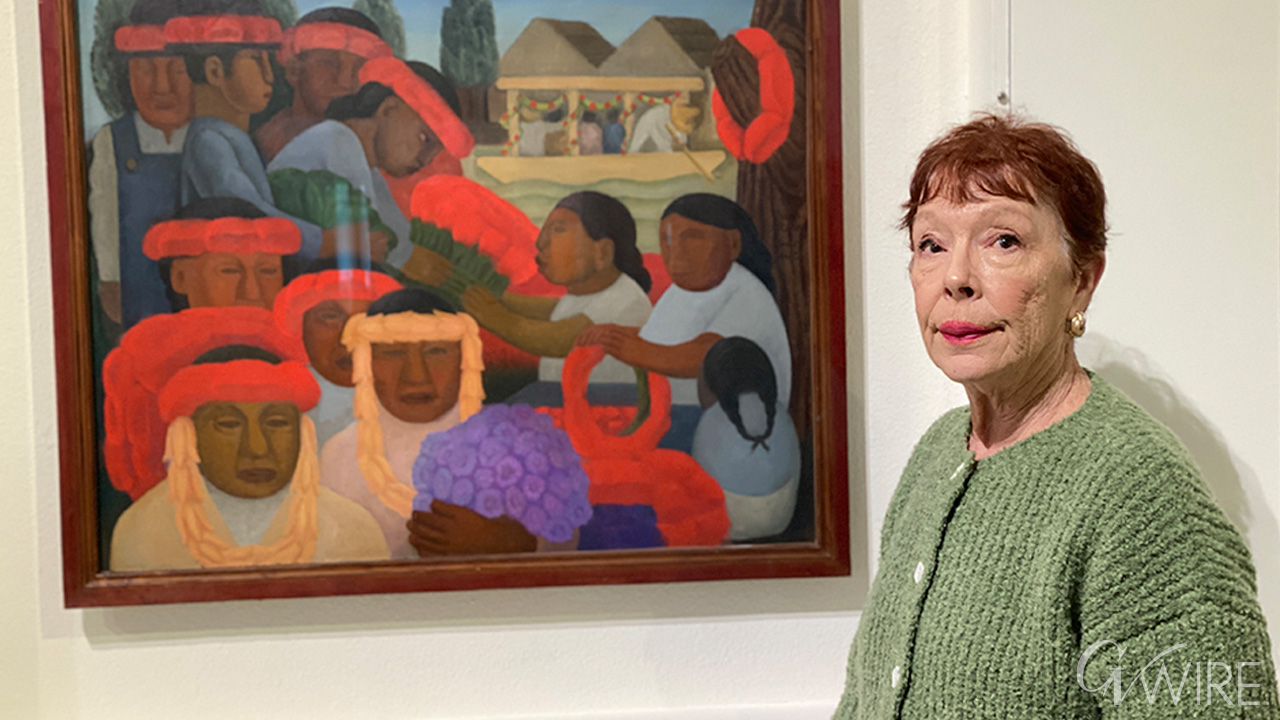
Its most prized permanent piece is “Fiesta,” a 1926 painting by Rivera. The oil-on-canvas work was commissioned by Fresno patron Marguerite Lopez for $300. The museum also features several letters between Rivera and Lopez.
— David Taub
JULIAN BANDA: FRESNO GRIZZLIES
For many aspiring professional athletes, Julian Banda is the concierge to Fresno — and one of the best at shining a light on the city.
“I let them know, ‘Hey, this is a good place to be,’ ” Banda said.
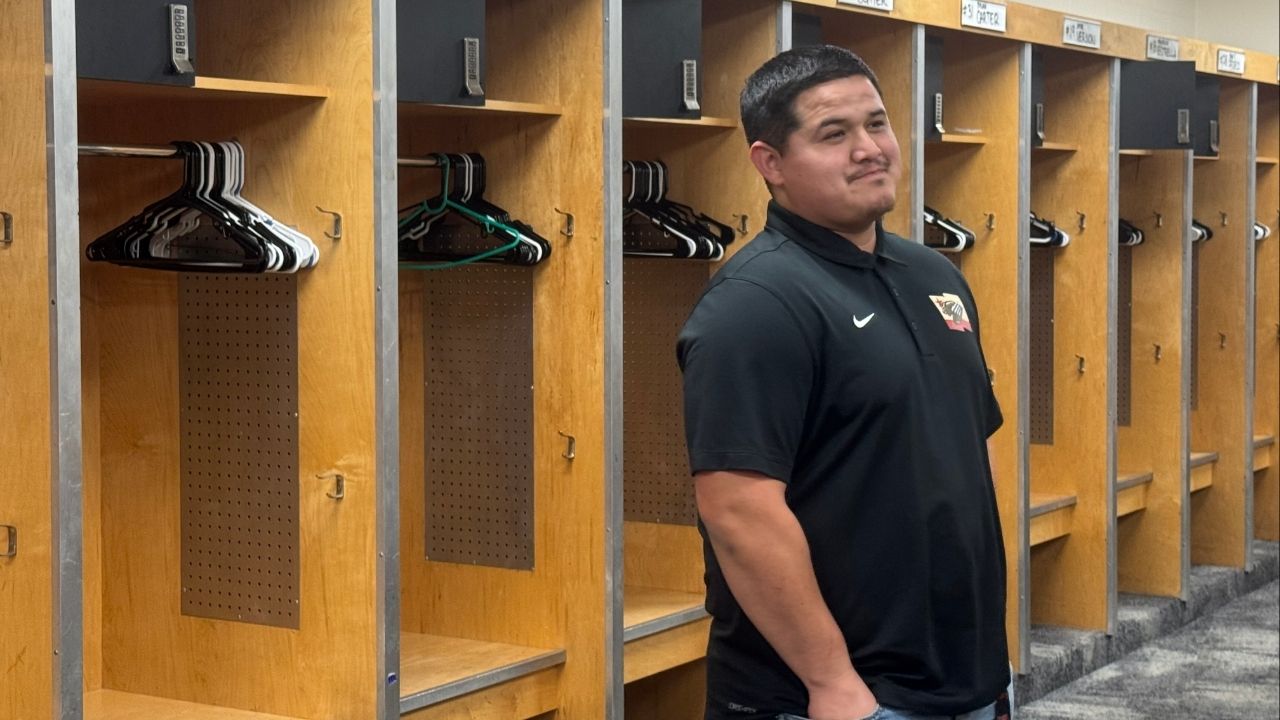
The Firebaugh native worked his way up the ranks to become the visiting clubhouse attendant for the Fresno Grizzlies, the Single-A affiliate of the Colorado Rockies.
“It’s something I fell in love with. It’s long hours, but being around professional sports is something I always imagined doing,” Banda said.
Tips are one way players show their appreciation for Banda.
“I’d rather have guys tell me, ‘Hey, I had a really good time. I think you’re one of the best clubbies I’ve ever had.’ That means more to me than a tip,” Banda said.
Another form of appreciation came from the California League. Banda won the Visiting Clubhouse Attendant of the Year award in 2025. He is a two-time recipient, having also won in 2023.
Conlin McGuire, the Grizzlies’ home clubhouse attendant, also received 2025 honors.
“Both of them take immense pride in their work, and the relationships they’ve built across baseball are a testament to their dedication. We’re thrilled to see them recognized with these well-deserved honors,” Grizzlies President Derek Franks said.
Banda said it means a lot to be recognized by players and coaches.
Working in the majors is Banda’s dream job. If not, maybe one day he can be president — of the Grizzlies.
“Sorry, Derek!” Banda said with a smile.
Josh Allen, Guidance Counselor?
Banda described Firebaugh as a small community where everyone knows each other.
“I’m very proud to be from there. I think it’s helped me become who I am today. I wasn’t given much early on — I had to earn a lot,” Banda said.
He worked in the fields picking melons but quickly realized that wasn’t the life for him.
Banda played football at Firebaugh High School. A linebacker, he received offers to play college football at smaller schools.
He chose Reedley College based on advice from a famous Firebaugh native and Reedley College alum.
“Josh Allen was in the draft process, and he came down and told me, ‘Just go to Reedley College.’ Knowing who Josh was, I thought, ‘All right — Josh told me to go to Reedley College,’” Banda said.
Working in Baseball
After transferring to Fresno City College, teammate Noe Garcia — who also worked for the Grizzlies — helped Banda start his baseball career as a bat boy in 2019.
Banda worked his way into game operations and took over the visiting clubhouse in 2022.
During home games, Banda can work 16-hour days doing laundry — folding as many as 300 towels per game — preparing food and setting up the locker room.
Banda also offers players recommendations on where to eat — his favorite downtown spots include Chicken Shack, Dab Tacos, and The Cosmopolitan.
One of the more unusual food requests Banda received involved running to a nearby store to buy three boxes of Froot Loops.
“That was his postgame meal,” Banda said.
One time, a player got stuck at a fast-food restaurant and missed his ride to the stadium — so Banda picked him up.
“That’s what I’m here for. I’m there for the guys. Whatever they need, I’m there to help,” Banda said.
There’s plenty of superstition in baseball.
“I was cleaning a coach’s shoes when he said, ‘Hey, we won last night in those shoes — don’t clean them,’” Banda said.
— David Taub
STEPHANIE TALLEZ: VICTIM RIGHTS ADVOCATE
Stephanie Tallez never expected her life to be defined by advocacy, but the loss of her son forced her into a fight she says no parent should ever have to join.
After her child was killed in a random act of violence committed by a minor on Thanksgiving in 2024, Tallez found herself confronting California’s Proposition 57, a law she believes minimizes accountability for violent crimes committed by juveniles.
What began as personal grief quickly turned into a mission to change a system she says failed her family and others like it.
Tallez argues that Proposition 57 allows minors who commit violent offenses to receive sentences that do not reflect the severity of their actions.
As she learned more about how the law is applied, her frustration deepened, fueling her resolve to push for reform or repeal.
For her, the issue is not abstract or political — it is rooted in the reality of a life lost and a family permanently changed. She now channels that pain into public action, speaking out so that her son’s death is not reduced to another statistic.
Alongside other parents who have lost children to youth violence, Tallez has found purpose and solidarity.
The group has become a source of emotional support as well as a platform for legal advocacy, connecting families through online communities and public demonstrations.
Through protests planned in Fresno and beyond, Tallez continues to share her story, not only to push for changes to Prop. 57, but to stand with parents navigating the same grief — offering comfort, understanding, and a shared determination to make sure their children are remembered.
— Anthony W. Haddad
DEPUTY SABIN HENDERSON: TULARE COUNTY SO
Deputy Sabin Henderson was not expecting recognition for the call that came in just after 1 a.m. on an August night in Pixley.
He and a partner were already responding to a burglary when dispatch redirected them to a medical emergency: a man was reported not breathing and believed to be dead.
Inside the home, family members were panicked and desperate. The man lay unresponsive on an air mattress, pulseless, and not breathing.
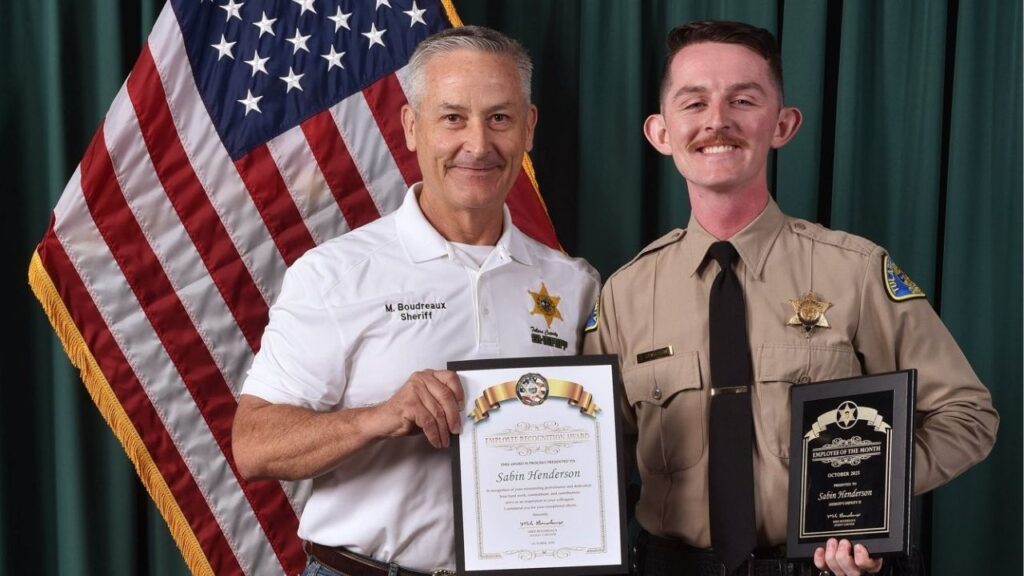
Henderson and his partner immediately moved him to the floor and began life-saving measures.
Trained as an EMT before joining the Tulare County Sheriff’s Office, Henderson relied on instinct and repetition rather than hesitation.
Chest compressions and ventilation began immediately and continued until paramedics arrived. Henderson assisted as medics applied cardiac monitoring equipment, delivered shocks, and administered medication. Minutes later, a pulse returned.
The man was transported to the hospital, where he later emerged from a coma and recovered — an outcome Henderson would not learn about until months later.
“I’ve done CPR on a lot of people. I’ve never had anyone live,” Henderson said. “It was incredible to hear he made it.”
Recognized by the department for his actions, Henderson says the moment reflects more than a single save.
It shares the quiet, often unseen work first responders perform every day — work that carries emotional weight long after a call ends.
To manage that burden, he leans on family, routine, and the discipline of stepping away from the uniform once the shift ends.
“You’ve got to take the badge off and go home,” he said. “Life is gradual. Don’t waste a second on things that don’t matter.”
His response that night is a reminder that behind the badge are people who act without hesitation, carrying the responsibility of life-and-death decisions so others can go on living.
— Anthony W. Haddad
CALIFORNIA ODYSSEY GIRLS SOCCER: NATIONAL CHAMPIONS
For nearly a decade, the girls of California Odyssey grew up together on soccer fields across the Central Valley, forming a bond that went far beyond wins and losses.
What began when many of them were just five or six years old evolved into a shared journey shaped by long drives, early mornings, heartbreaks, and relentless belief.
On July 24 in Denver, that journey reached its defining moment when the Clovis-based under-14 squad captured a U.S. Club Soccer national championship — a title earned not in a single game, but through years of persistence, trust, and sacrifice.
“They always just kept their heads down and worked. This was a win for the girls. A win for the parents. A win for the coaches. We all deserved it,” said Jessica Cuevas, wife of coach Ramon Cuevas.

The championship run was the culmination of grinding through local, state, and regional tournaments just to earn a place in the national Super Group.
A year earlier, the team had suffered a narrow 1-0 loss in the national final, a defeat that lingered and fueled their return. In Denver, the title match mirrored the team’s resilience — scoreless through regulation and two overtimes before being decided in a tense penalty shootout.
When the final kick found the net and the goalkeeper delivered clutch saves, the moment belonged not just to the players on the field, but to an entire community that had grown alongside them.
California Odyssey’s success reflects more than elite soccer ability.
Coaches emphasized character as much as competition, parents committed years of time and resources, and players learned to lead each other through adversity — including injuries that forced some into supporting roles rather than starting positions.
Families from Clovis, Fresno, Madera, Reedley, and beyond became an extended family, unified by belief in the girls and in each other.
In a region often overlooked in youth sports, the Odyssey story stands as proof that excellence can be built slowly, collectively, and with heart — and that championships are strongest when everyone earns them together.
— Anthony W. Haddad
BERNARD MENDOZA: BENSMOKIN BBQ
For Bernard Mendoza, Thanksgiving has always been one of the busiest days of the year at BenSmokin BBQ. This year, the Fresno pitmaster chose a different measure of success.
Instead of focusing on sales, Mendoza and his family decided to open their doors to the entire community, offering a free Thanksgiving meal in the Tower District — an act rooted not in marketing, but in purpose.
Mendoza’s path to barbecue was shaped by family and faith. Inspired by his father — the “Ben” behind the restaurant’s name — Mendoza turned a moment of encouragement into a calling that carried him through culinary school, small plate sales, catering during the pandemic, and eventually a brick-and-mortar restaurant run alongside his wife, Rebecca.
From the beginning of their relationship, giving back was woven into their lives, and feeding people became more than a profession. It became a responsibility.
“Ever since I met my wife… I was like, I hear these voices in my head. I think it’s God telling me that I need to feed people,” Mendoza said. “We’ve done stuff pretty much from the first time that we met, handing out groceries to people and stuff.”
When Mendoza announced the Thanksgiving meal online, the response exploded, drawing donations, volunteers, and resources from across Fresno.
What began as a simple idea quickly transformed into a full community event. Local businesses and residents contributed food, equipment, entertainment, and time, turning the restaurant into a gathering place open to anyone who wanted to share a meal.
Families, neighbors, and those facing hardship alike were welcomed without conditions. For Mendoza, the day is as much about teaching his children the value of generosity as it is about feeding hundreds of people.
With his wife and staff working side by side, the restaurant becomes exactly what it was always meant to be — a place where community comes first, and everyone has a seat at the table.
— Anthony W. Haddad
ANDY WHITE: THE GIVING TRUCK
Andy White doesn’t measure success by how many cups of coffee are poured, but by what happens after they’re handed across the counter. During Clovis’ Old Town Motorama, the pastor of The Legacy Christian Church stood beside a restored 1954 Chevy 4400, watching strangers pause, smile, and reconsider their expectations.
What they thought would be a routine purchase became a moment of connection — the foundation of White’s vision for The Giving Truck.
White created the mobile generosity project to bring faith into everyday spaces without placing religion front and center.
“We were thinking Christian people don’t enjoy being Christians in a community. How do we get the church people out of the church and into the community doing something that’s fun?” he said. “What would be awesome is if we had our own coffee truck, and we go to do just coffee in the community.”
Years earlier, he began asking how to move church members beyond the building and into the community in a way that felt natural and joyful. The answer was simple: coffee, served through a pay-it-forward model that invites people to give without obligation.
A donation during the pandemic made it possible to acquire the truck, and since then White has helped guide its slow, deliberate transformation into a fully functional mobile coffee operation.
For White, The Giving Truck is less about the vehicle and more about the conversations it sparks. He often watches as bells ring for unexpected generosity and people linger, curious about who paid for their drink or how they might repay the kindness.
Still in development, the truck reflects White’s belief that generosity doesn’t need to be loud to be powerful.
By creating space for small, sincere acts of giving, he’s built something that turns everyday encounters into reminders that community can be formed one cup — and one person — at a time.
— Anthony W. Haddad
DR. NUPUR HAJELA: HELPING UNDERSERVED COMMUNITIES
In an era of skyrocketing medical expenses and thinning resources, Dr. Nupur Hajela is stepping up to bring cutting edge care to underserved communities.
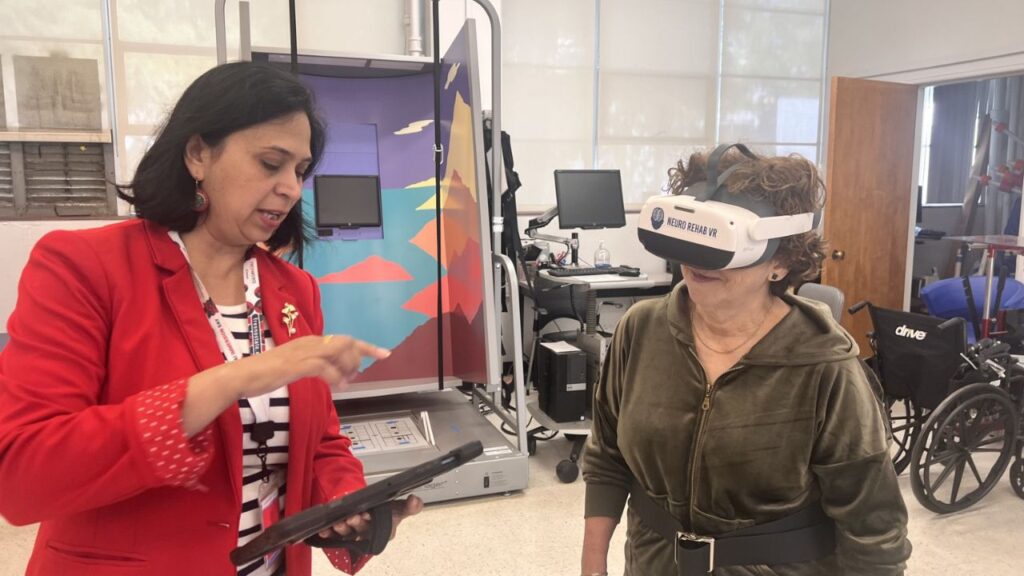
Hajela, a clinician and Fresno State professor, is integrating innovative technology into physical therapy and expanding access to healthcare.
The professor, using funds awarded via the CSU StemNET EAGER research grant, provides free research-based services to Parkinsons patients in the area — combining immersive virtual reality and mobile health unit-based outreach.
An estimated 1.1 million people are living with Parkinson in the United States, and agricultural communities, such as our beloved Central Valley, are hotspots for the disease.
“Parkinson’s disease is still widely underrecognized. As a result, many patients arrive for care only after the disease has progressed—when walking is no longer reliable, freezing episodes occur, and independence is already slipping away,” Hajela said.
The Mobile Health Team
Led by Dr. Hajela, Fresno State students delivered mobile outreach to the community, raising Parkinson’s awareness while showcasing immersive virtual reality applications to enhance walking, balance, and independence.
Fresno State’s physical therapy program uniquely blends rigorous clinical education, cutting-edge technology, and meaningful community engagement — giving students hands-on experience while making a tangible impact.
“When we are ready with technology, we can go after addressing some of the pandemic-related things and endemic-related things,” Hajela said. “I think it’s technology which can help us leverage some of our expertise.”
People in the Central Valley struggle to find health care near them. Half of residents saying their community doesn’t have enough providers, according to study by California Health Care Foundation. So, the team goes directly to those in need.
The mobile group includes students enrolled in the Doctor of Physical Therapy program and undergraduates in STEM work. Hajela mentors this next generation, preparing them to use technology while treating patients.
“Preparing students to work with emerging technologies is critical to the future of healthcare,” Hajela said. “When clinicians are comfortable using these tools during their training, they are empowered to translate innovation into real-world practice. Integrating technology into physical therapy expands what is possible—enhancing mobility, independence, and access to care—while ensuring the next generation of providers is equipped to meet the evolving needs of their communities.”
Additionally, she is the co-director of the Gait Balance and Mobility Clinic, a pro-bono facility on campus, and director of Rehab Technologies and Outcomes Research at the California Sport Science Institute.
Currently, she is spearheading a transdisciplinary initiative alongside a faculty group representing five colleges at Fresno State. The group is collaborating on initiatives using digital, AI and other technological innovations in healthcare with plans to found a new center on campus.
“What the center can do is help these underserved communities, whether it is through environmental factors related research or behavioral factors related research,” Hajela said. “Our Valley needs innovation.”
Hajela envisions a world where experts combine resources and technology-driven health care enhances outcomes.
Hajela believes that addressing the Valley’s complex health challenges requires the power of collective intelligence— bringing together diverse perspectives, expertise, and mindsets to drive innovation and provide solutions.
“People are working in silos,” Hajela said. “I think my vision for the Valley is a center for digital and technological innovation in health.”
Hajela and her team at Fresno State are organizing the Frontiers in AI and Digital Innovation in Healthcare: An Interdisciplinary Symposium, tentatively scheduled for March 10th 2026. She invites connections and collaboration and can be reached at nhajela@csufresno.edu
— Anya Ellis
JACK ROBERTS: ENVIRONMENTAL ADVOCACY/EDUCATION
One is never too young to start helping their community and improving the world. Meet Jack Roberts, a 17-year-old who is working to revitalize Fresno’s “endemic ecology” and integrate these efforts into the Fresno Unified education system.
Roberts grew up surrounded by nature and has a seemingly genetic affinity for the outdoors. A passion that has led him to advocate for change.
“My dad’s emphasized the importance of trees and the importance of helping our planet towards a brighter future. And part of a way that he saw he could do that was to bring trees and plant them,” Roberts said. “So I’ve kind of taken that from my childhood roots.”
The University High School Junior spent months preparing and presenting plans to improve the Fresno Unified school grounds — pitching multiple presentations to trustees, the site principal, and maintenance managers.
In spring, he was able to spearhead an Earth Day project at Hoover High School.
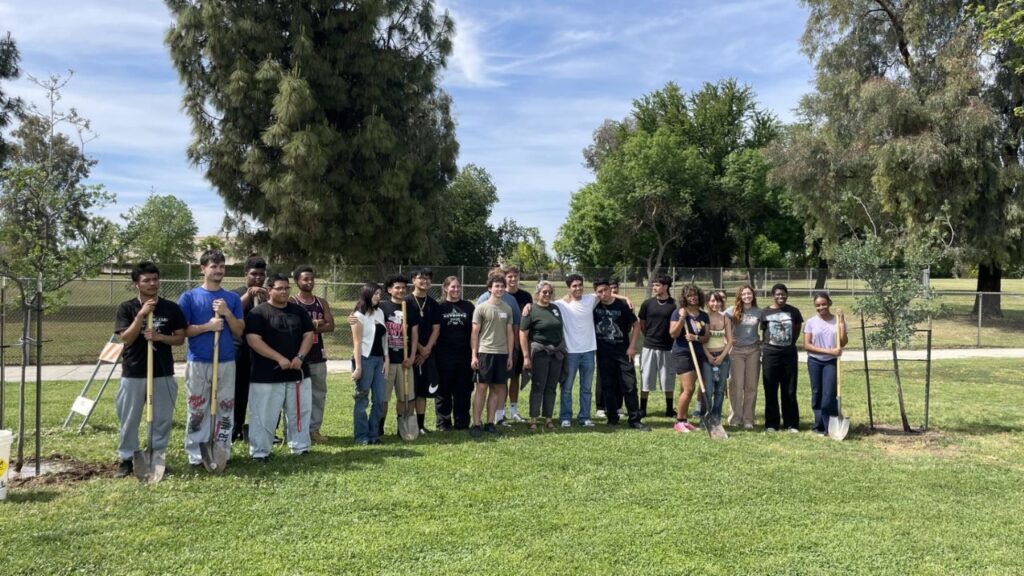
Roberts, alongside 30 student volunteers from the site’s Science Enrichment club, celebrated the holiday by planting five valley oak trees. They ended the day with muddy hands and big smiles, proud to have made the campus a greener place.
“I hope students first, more superficially, will take pride in the time that they have left on campus,” Roberts told GV Wire. “In the long term, I want them to take away the importance of trees… I think bringing trees back here, students can see the beauty of them and might even want to plant some of their own trees and might go towards a future that would be cleaner.”
Roberts is also working at starting an environmental club at University High School, inspired by Hoover High.
He also helped plant trees at Wawona Middle School, Gibson Elementary School, and Manchester Gate alongside his family. Currently, he is in talks with Fresno State about planting nine Valley Oaks next Earth Day.
Roberts is focused on revitalizing Valley Oaks, a tree endemic to the Central Valley — meaning it grows natively and exclusively here. Previously, Valley Oaks were once rampant, but as the surrounding cities grew, these trees became sparse.
The Benefits of Valley Oaks
Valley Oaks provide a multitude of benefits including shading, erosion control, wind protection, pollution reduction, and screening.
The tree’s massive size and long lifespan allow for a massive intake of carbon, efficiently converting CO2 into oxygen, while needing less water than grass. This allows them to survive prolonged seasonal droughts typical to the Valley.
Additionally, the trees house native species, so their removal caused “native ecosystems to start to vanish,” Roberts said.
Roberts hopes that bringing valley oaks back into the community will prompt more native species to return.
Soon, he will be doing research alongside Dr. Michael Kunz, a professor at Fresno Pacific University, on Valley Oak growth.
“We’ll be going out and sampling Valley Oak population densities in local places that still have these thriving Valley Oak ecosystems like the San Joaquin River, the Kings River, and analyzing the different environmental factors that can affect their growth,” Roberts said.
As a high schooler, one can feel helpless in the face of big issues like climate change. But Roberts hopes acts such as these can lead to big changes.
“I think it is part of my job here is to go out and try to help the environment,” Roberts said. “This is not just a localized problem; this is a global thing that we need to get our act together and figure out.”
— Anya Ellis