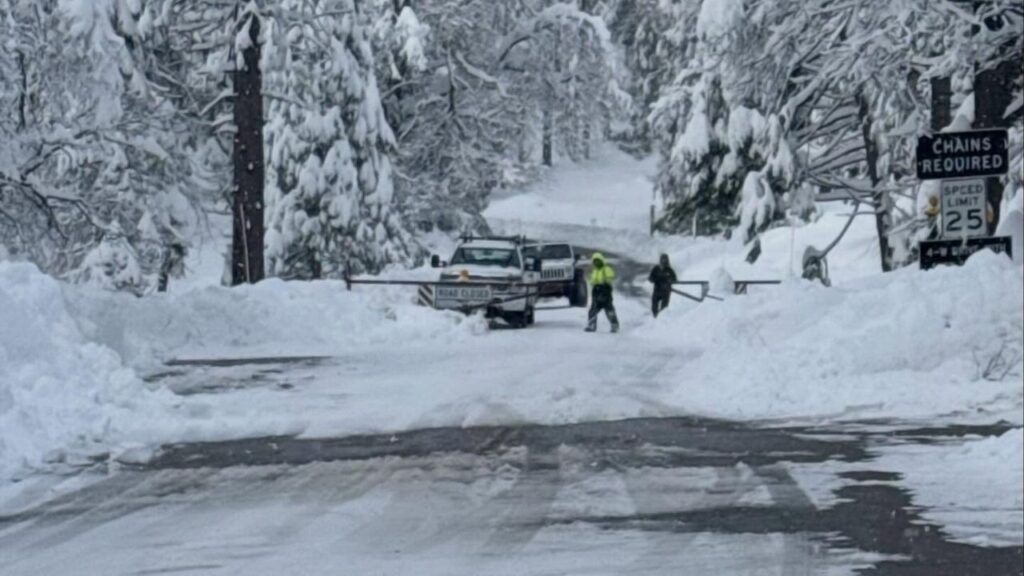
The California Highway Patrol is urging residents to prepare for wide-ranging public safety laws taking effect Thursday, Jan. 1, 2026. The laws include new burglary penalties, electric bicycle regulations, speed enforcement measures and autonomous vehicle rules. (Shutterstock)


- CHP urges Californians to learn new public safety laws taking effect Jan. 1, 2026 statewide.
- New laws target burglaries and electric bikes, adding penalties, safety equipment requirements, and training options.
- California expands speed enforcement, school zone protections, vehicle impound authority, and autonomous vehicle oversight statewide.
Share
|
Getting your Trinity Audio player ready...
|
The California Highway Patrol is urging residents to familiarize themselves with a slate of new public safety laws approved during the latest legislative session and signed by Gov. Gavin Newsom, many of which take effect Thursday, Jan. 1, 2026.
Crimes
Among the changes are new criminal penalties aimed at curbing burglaries. Assembly Bill 486 makes it a misdemeanor to possess a key programming device, key duplicating device or signal extender with the intent to commit burglary. Violations are punishable by up to six months in county jail, a fine of up to $1,000, or both.
Laws on Electric Bicycles
Several laws focus on electric bicycle and motorcycle safety. Under Assembly Bill 544, electric bicycles must display a red reflector or a solid or flashing red rear light with a built-in reflector during all hours of operation, not just at night. The bill also allows a CHP-developed online safety course to satisfy training requirements for minors cited for helmet violations.
Senate Bill 586 creates a new definition for off-highway electric motorcycles, or eMotos, and classifies them as off-highway motor vehicles. Operators must wear safety helmets, and vehicles must display identification issued by the Department of Motor Vehicles if not registered under the Vehicle Code.
Pedestrian Safety in School Zones
Pedestrian safety near schools is also addressed. Assembly Bill 382 allows local governments to lower school zone speed limits from 25 to 20 miles per hour through Jan. 1, 2031.
After that date, the reduction will automatically apply where proper signage is posted.
Speed Enforcement Laws
New speed enforcement and highway safety measures include Assembly Bill 289, which authorizes a pilot program using radar or laser systems in highway work zones to detect speeding and issue citations to registered vehicle owners.
Assembly Bill 390 expands California’s “slow down and move over” law to include highway maintenance vehicles and other stationary vehicles using hazard lights or warning devices.
Assembly Bill 1014 allows Caltrans to reduce speed limits by five miles per hour and requires warning citations during the first 30 days after a reduction.
Vehicle Impounds
Assembly Bill 875 gives peace officers new authority to remove certain electric-powered vehicles from the road, allowing impoundment for at least 48 hours under specific circumstances.
The law applies to vehicles with fewer than four wheels that do not meet the definition of an electric bicycle and are powered by an electric motor capable of propelling the vehicle at more than 20 miles per hour on a highway when the operator is not properly licensed.
It also covers class 3 electric bicycles operated by children younger than 16. In cases involving a child under 16 operating a class 3 electric bicycle, a safety course may be required as a condition for the vehicle’s release, according to the Vehicle Code.
From the 2024 Legislative Session
Public safety laws approved during the 2024 legislative session will take effect in 2026, including new requirements for electric bicycles and autonomous vehicles.
Beginning Jan. 1, 2026, Senate Bill 1271 sets new safety standards for electric bicycles, powered mobility devices and related lithium-ion batteries. The law requires those devices and their components, including batteries and charging systems, to be tested by accredited laboratories and labeled to show compliance with safety regulations.
The bill also prohibits the distribution, sale or leasing of e-bikes and related equipment that do not meet the required standards. Starting Jan. 1, 2028, the law will further prohibit renting or offering for rental an electric bicycle, powered mobility device, charging system or storage battery unless it has been tested to the specified safety standard.
Assembly Bill 1777, which takes effect following the adoption of regulations by the Department of Motor Vehicles, gives law enforcement officers new authority to issue a notice of autonomous vehicle noncompliance to manufacturers for alleged traffic violations involving their vehicles.
Beginning July 1, 2026, the law also establishes additional requirements for autonomous vehicles operating without a human driver, including how those vehicles must interact with first responders.
—
Connect with Anthony W. Haddad on social media. Got a tip? Send an email.
RELATED TOPICS:
Categories

Blackstone Avenue Shelters Crush Fresno Dreams and Businesses



Tulare County Man Gets Life for Child Molestation


CHP Warns of Hazardous Driving on Highway 168 Near Shaver Lake