

|
Getting your Trinity Audio player ready...
|
I disagree with the anti-immigrant, anti-feminist, bitterly reactionary right-wing pundit Matt Walsh about basically everything, so I was surprised to come across a post of his that precisely sums up my view of artificial intelligence.

“We’re sleepwalking into a dystopia that any rational person can see from miles away,” he wrote in November, adding, “Are we really just going to lie down and let AI take everything from us?”
AI obviously has beneficial uses, especially medical ones; it may, for example, be better than humans at identifying localized cancers from medical imagery. But the list of things it is ruining is long.
A very partial accounting might start with education, both in the classroom, where AI is increasingly used as a dubious teaching aid, and out of it, where it’s a plagiarism machine. It would include the economic sustainability and basic humanity of the arts, as demonstrated by the AI country musician who topped a Billboard chart this year. High on the list would be AI’s impact on employment, which is already bad — including for those who must navigate a demoralizing AI-clogged morass to find jobs — and likely to get worse.
Then there’s our remaining sense of collective reality, increasingly warped by slop videos. AI data centers are terrible for the environment and are driving up the cost of electricity. Chatbots appear to be inducing psychosis in some of their users and even, in extreme cases, encouraging suicide. Privacy is eroding as AI enables both state and corporate surveillance at an astonishing scale. I could go on.
AI Is More Like the Nuclear Bomb Than the Printing Press
And what do we get in return for this systematic degradation of much of the stuff that makes life worth living? Well, Sam Altman, CEO of OpenAI, has promised marvels. “The rate of new wonders being achieved will be immense,” he wrote in June. “It’s hard to even imagine today what we will have discovered by 2035; maybe we will go from solving high-energy physics one year to beginning space colonization the next year.” Yet among the most high-profile innovations that OpenAI’s ChatGPT has announced in 2025 are custom porn and an in-app shopping feature.
It is true that new technologies often inspire dread that looks silly or at least overwrought in retrospect. But in at least one important way, AI is more like the nuclear bomb than the printing press or the assembly line: Its progenitors saw its destructive potential from the start but felt desperate to beat competitors to the punch.
In “Empire of AI,” Karen Hao’s book about Altman’s company, she quotes an email he wrote to Elon Musk in 2015. “Been thinking a lot about whether it’s possible to stop humanity from developing A.I.,” wrote Altman. “I think the answer is almost definitely not.” Given that, he proposed a “Manhattan Project for A.I.,” so that the dangerous technology would belong to a nonprofit supportive of aggressive government regulation.
Tech Barons Woo Trump and Dems
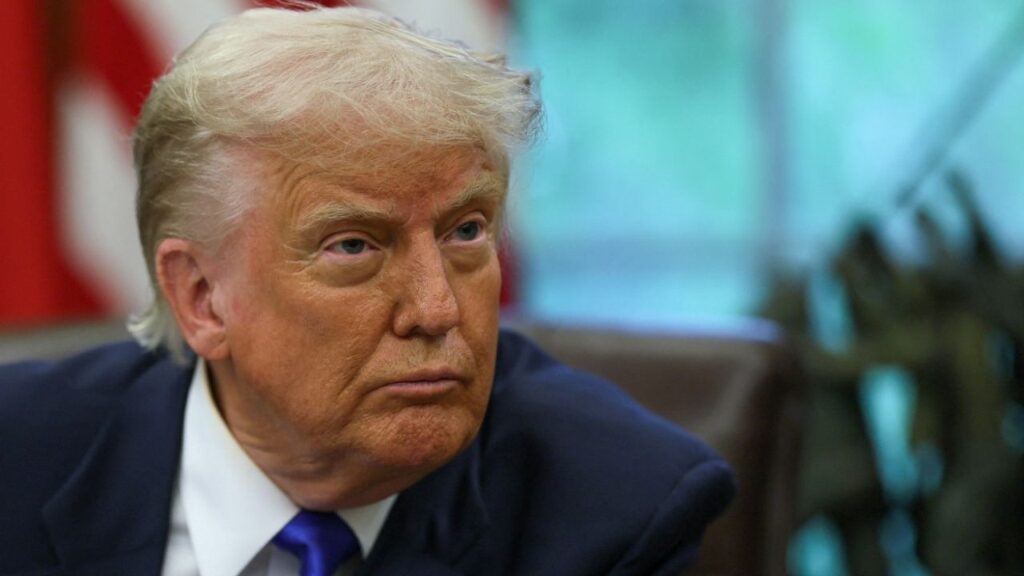
This year, Altman restructured OpenAI into a for-profit company. Like other tech barons, he has allied himself with Donald Trump, who recently signed an executive order attempting to override state AI regulations. (Full disclosure: The New York Times is suing OpenAI for allegedly using its articles without authorization to train its chatbots.)
Despite Trump’s embrace of the AI industry, attitudes toward the technology don’t break down along neat partisan lines. Rather, AI divides both parties. Florida’s governor, Ron DeSantis, is a fierce skeptic; this month he proposed an AI Bill of Rights that would, among other things, require consumers to be notified when they’re interacting with AI, provide parental controls on AI chatbots and put guardrails around the use of AI in mental health counseling. Speaking on CNN on Sunday, Sen. Bernie Sanders, I-Vt., suggested a moratorium on new data center construction. “Frankly, I think you’ve got to slow this process down,” he said.
Yet a number of leading Democrats are bullish on AI, hoping to attract technology investments to their states and, perhaps, burnish their images as optimistic and forward-looking. “This technology is going to be a game changer,” Gov. Josh Shapiro of Pennsylvania said at an AI summit in October. “We are just at the beginning of this revolution, and Pennsylvania is poised to take advantage of it.” He’s started a pilot program to get more state employees using generative AI at work, and, by streamlining permitting processes, he has made the building of AI data centers easier.
One major question, going into 2026, is which party will speak for the Americans who abhor the incursions of AI into their lives and want to see its reach restricted. Another is whether widespread public hostility to this technology even matters given all the money behind it. We’ll soon start to find out not just how much AI is going to remake our democracy, but also to what degree we still have one.
This article originally appeared in The New York Times.
By Michelle Goldberg/Kenny Holston
c.2025 The New York Times Company