
|
Getting your Trinity Audio player ready...
|
SAN FRANCISCO — The artificial intelligence boom has turned high-profile billionaires such as Jensen Huang, the CEO of chipmaker Nvidia, and Sam Altman, the CEO of ChatGPT maker OpenAI, into even richer billionaires.
It has also produced a crop of new billionaires — at least on paper — from smaller startups. These individuals may become future Silicon Valley power brokers like the wealthy executives created by past tech booms, including the late-1990s dot-com frenzy, who then invested in or helped steer later waves of technology.
The new AI billionaires include Alexandr Wang and Lucy Guo, who founded Scale AI, a data-labeling startup that received a $14.3 billion investment from Meta in June. The founders of the AI coding startup Cursor — Michael Truell, Sualeh Asif, Aman Sanger and Arvid Lunnemark — entered the billionaire ranks when their company was valued at $27 billion in a funding round last month.

The entrepreneurs behind Perplexity (an AI search engine), Mercor (an AI data startup), Figure AI (a maker of humanoid robots), Safe Superintelligence (an AI lab), Harvey (an AI legal software startup) and Thinking Machines Lab (an AI lab) are in the nine-figure club as well, according to the companies or people close to the startups, as well as data from startup tracker PitchBook and news reports. Most reached that point after the valuations of their privately held companies soared this year, turning their company stock into gold mines.
Jai Das, a partner at Sapphire Ventures, a Silicon Valley venture capital firm, likened the new billionaires to the railroad barons of the 1890s Gilded Age who leaned into that era’s technology boom. But he cautioned that their wealth could be fleeting if the startups did not live up to their promise.
“The question is which of these companies is going to survive,” Das said. “And which of these founders can actually end up really being true billionaires and not just paper billionaires.”
Here’s what to know about them.
They Became Billionaires Quickly
Elon Musk’s journey to billionaire took years. After becoming a millionaire when one of his early ventures was sold to eBay in 2002, the tech entrepreneur did not turn into a billionaire until he was leading the electric carmaker Tesla and had started the rocket company SpaceX.
In contrast, most of the new AI billionaires founded their companies less than three years ago after OpenAI released ChatGPT, and then saw investors rapidly bid up the values of their firms.
Mira Murati, 37, a former top executive at OpenAI, announced her AI startup, Thinking Machines Lab, only in February. By June, the startup had hit a $10 billion valuation without releasing a single product. (The startup, which declined to comment, has since released one.)
Ilya Sutskever, 39, another former top OpenAI executive, launched Safe Superintelligence in June 2024. The company has not unveiled a product but is valued at $32 billion after raising $2 billion this year, according to PitchBook. Safe Superintelligence declined to comment.
Brett Adcock, 39, the CEO of Figure AI, founded the company in 2022. His net worth stands at $19.5 billion, Figure AI said. Aravind Srinivas, 31, the CEO of Perplexity, also created his company in 2022; it is valued at about $20 billion, according to PitchBook.
Perplexity said Srinivas was not focused on his wealth and “prefers to live modestly,” adding that the company is searching for wisdom, which “is far more important than the search for wealth.”
(The New York Times has sued OpenAI, Microsoft and Perplexity, claiming copyright infringement of news content related to AI systems. The companies have denied the claims.)
The wealth accumulation has been especially rapid this year. Harvey, which is based in San Francisco, raised money in February, June and this month. Each time, the company’s valuation soared, reaching $8 billion from $3 billion in February. That catapulted the wealth of Harvey’s founders, Winston Weinberg and Gabe Pereyra.
Weinberg, 30, who lives with Pereyra, 34, and a third roommate, said he did not think much about riches. “Yeah, sure it’s in the billions, but it’s on paper,” he said.
The exception to the speed is Scale AI, which grew relatively quietly until Meta’s investment.
Mark Zuckerberg, Meta’s CEO, tapped Scale AI’s Wang, 28, to be his chief AI officer. Guo, 31, left the startup in 2018 and has started a venture capital firm and Passes, a platform for influencers to make money from their content.
Scale AI and Meta declined to comment, and Guo did not respond to a request for comment.
They Are Under 40 Years Old
Youth is a hallmark of tech booms. Larry Page and Sergey Brin were in their 20s when they founded Google in 1998. Zuckerberg was 19 when he founded Facebook in 2004.
The latest AI billionaires are also youthful. “Like the original Gilded Age and like the dot-com boom, this AI moment is making some very young people very, very, very rich, very quickly,” said Margaret O’Mara, a history professor at the University of Washington who focuses on the tech economy.
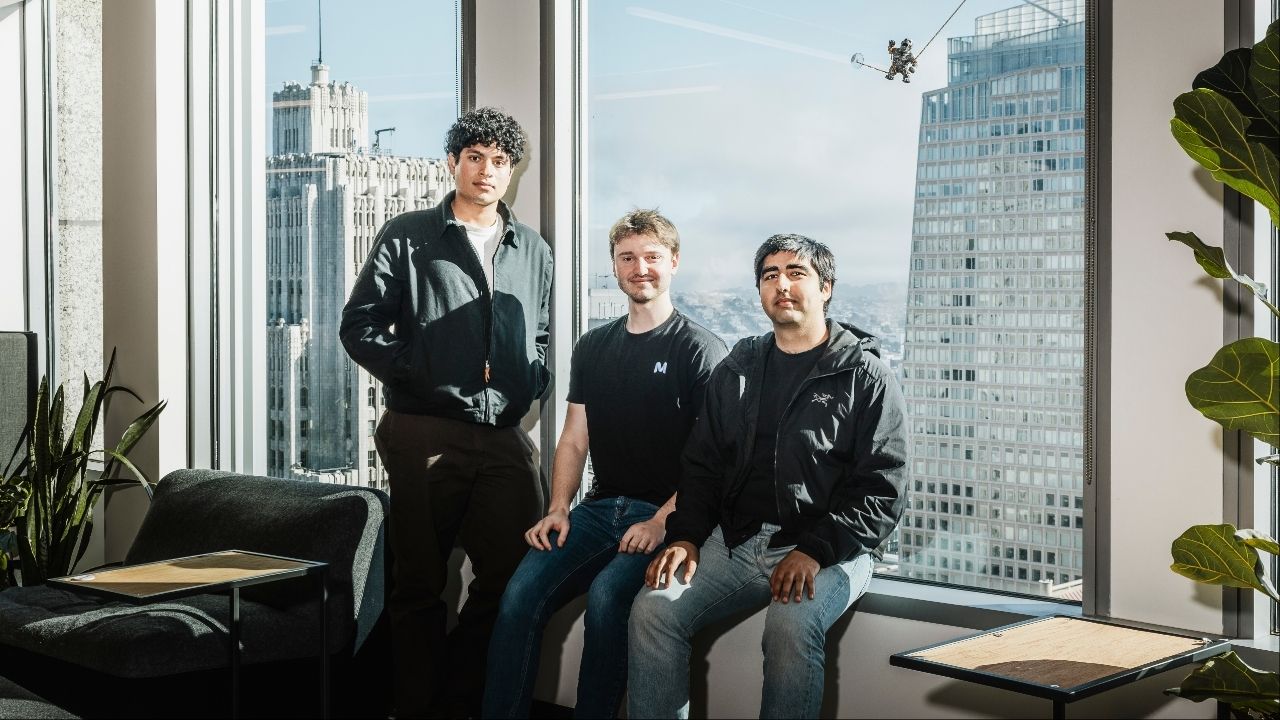
Among them are the 22-year-old founders of Mercor. Brendan Foody, the CEO, dropped out of Georgetown University in 2023 after founding the company with two high school friends, Adarsh Hiremath, the chief technology officer, and Surya Midha, the chair. Mercor, which declined to comment, was valued at $10 billion in an October funding round.
Other young billionaires include Truell, the 24-year-old CEO of Cursor, and his co-founders, Asif, Sanger and Lunnemark, who are also in their 20s. They met at the Massachusetts Institute of Technology and dropped out in 2022. A $2.3 billion funding round last month brought the valuation of their startup — also known by its parent company’s name, Anysphere — to $27 billion, according to PitchBook.
Cursor did not respond to requests for comment.
Most Are Men
The AI boom has elevated mostly male founders to billionaire status, a pattern in tech cycles. Only a few women — such as Guo and Murati — have reached that wealth level.
The AI craze has amplified the “homogeneity” of those who are part of this boom, O’Mara said.
—
This article originally appeared in The New York Times.
By Natallie Rocha/Carolyn Fong
c. 2025 The New York Times Company