

|
Getting your Trinity Audio player ready...
|
For three weeks, David Mas Masumoto, a peach farmer in California’s San Joaquin Valley, has worked under a dense fog that has blocked nearly all sunshine.
It has been good for the fruit trees, which benefit from the cool, clammy weather, Masumoto said, “but it can get depressing for humans.”
“It’s like going into a dream stage where you can’t see anything around you,” he said. “You feel like you’re in this twilight zone.”

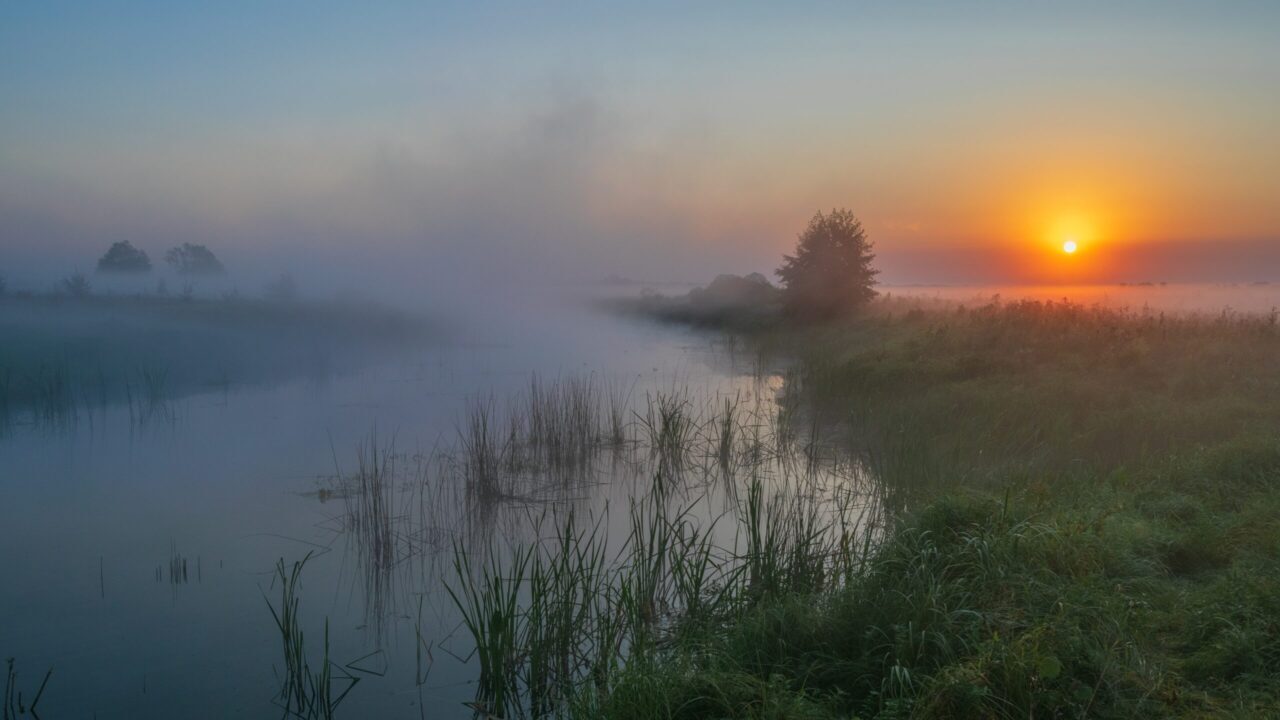
The gloom that has gripped California’s Central Valley since before Thanksgiving is known as a tule fog, named after a tall native grass that grows in the area’s freshwater marshes. Its size, location and thickness have ebbed daily, expanding and contracting in varying configurations across the 450 miles between Redding and Bakersfield, with fog banks sometimes hugging the valleys and obscuring roads.
At times, it has stretched far into wine country in the north, and to the beaches of Los Angeles in the south, making the world outside look like a gray London day and feel like the inside of a meat locker.
Finally, a Little Sunshine in the Forecast
But it is, at long last, on the way out, with a series of storms in the coming days expected to help break up the weather pattern that has allowed the fog to linger.
“Hopefully, we’ll finally get some sunshine,” said Kris Mattarochia, a meteorologist with the National Weather Service.
Masumoto, who has been farming in the valley for nearly 50 years, said he could not recall a recent year when the fog had been so relentless.
Tule fog is common in the Central Valley from November through March, often leading to five- or six-day stretches of gray. But, as the foggy days have turned into weeks, Mattarochia said, the stretch of tule fog and the weather conditions that have lingered with it have become “unusual.”
Tule fog is a regional name for what is often called radiation fog in other parts of the world. (It is unrelated to the radiation released in a nuclear explosion; the name instead refers to thermal radiation, the process that occurs when any object — whether a campfire or a human body — releases heat.)
In this case, when temperatures dip at night, the Earth’s surface radiates the heat absorbed during the day. If skies are cloudy, the heat becomes trapped, but if they are clear, it rises high into the atmosphere, allowing the ground to cool off and chill the air near the surface. This process drives condensation and creates clouds — or fog, when it occurs at ground level.
Early Rains Packed Ground With Moisture
The Central Valley received unusually high amounts of rain this fall, soaking the ground with moisture, which has helped fuel the fog. More recently, a long-lasting high pressure system off the coast of California has prevented storms, which would ordinarily move the fog along, from reaching the region. The high pressure has also acted as a lid that has trapped the fog at the ground’s surface, with the Sierra Nevada Mountains to the east and the Coastal Mountains to the west hemming in the cloudy blanket.
The maximum temperature in Fresno has not exceeded 50 degrees for more than two weeks. This might sound like warm weather for December in most parts of the country, but “that’s as cold as it gets” in Fresno, Mattarochia said.
There have been pockets of sun, though. While afternoon highs in the San Joaquin have been in the 40s for more than three weeks, nearby locations in the Sierra foothills have seen temperatures in the 60s and even the 70s.
“If you go up into the foothills of Central California, like Shaver Lake, locations like that, pretty much every day, it has been 15 to 20 degrees warmer than on the valley floor,” Mattarochia said. “It’s because they’re above the clouds, they have completely clear, blue skies that see sunshine every day.”
The fog began to lift in the Sacramento Valley at the start of this week, with a storm system brushing Northern California, though some returned Wednesday.
In coming days and into next week, more storm systems are set to sweep the state and will usher more of the fog out — and keep it away.
“We’re going to see a different pattern of storm clouds and rain and mist, and maybe at times fog, but it’s likely to be less widespread,” said Eric Kurth, a meteorologist with the weather service in Sacramento.
Less Valley Fog Since the Late 1970s
Scientists have found that the fog in the Central Valley has occurred less frequently since the late 1970s.
Dennis Baldocchi, a professor emeritus of biometeorology at the University of California, Berkeley, knows the fog well: He grew up in the Central Valley and once had a dog named Tule Fog. He co-authored a study in 2014 that found that the number of winter fog events decreased by nearly half on average over 32 winters, from 1981 to 2014.
“During my childhood in the ’60s and ’70s, we were always in fog,” Baldocchi said. “In the 2000s, my wife and I moved to the valley and she said, ‘Where is this fog?’”
Masumoto, a third-generation peach farmer who is the author of “Epitaph for a Peach,” is ready for it to lift.
“The fog is good for the life of the tree, but it’s hard for us humans,” he said. “I’m cold all the time.”
This article originally appeared in The New York Times.
By Amy Graff
c.2025 The New York Times Company