
|
Getting your Trinity Audio player ready...
|
BERLIN — President Volodymyr Zelenskyy of Ukraine expressed a tense and wary optimism Tuesday about proposed guarantees for Ukraine’s future security, so long as they were detailed and confirmed by the U.S. Congress. But what might make them acceptable to Ukraine, he suggested, would prompt Russia to reject them.
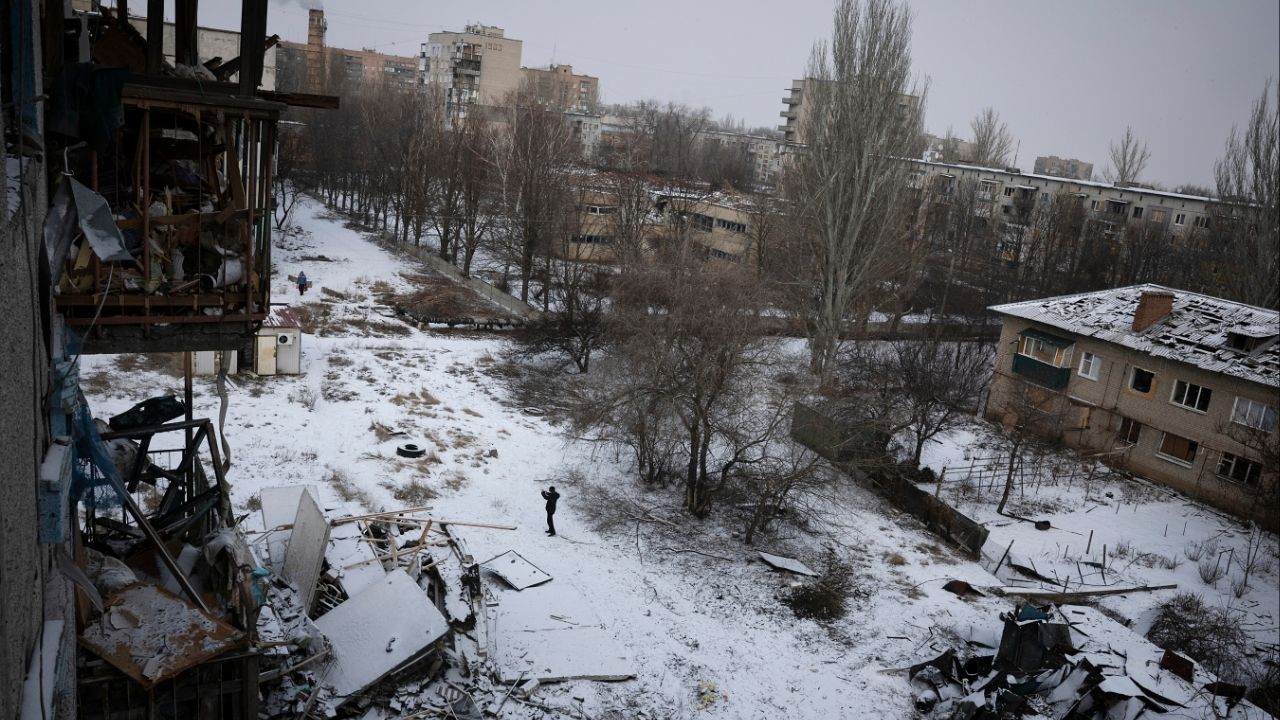
Zelenskyy spoke after two days of peace proposal talks with U.S. and European negotiators, who had emphasized progress Monday and promoted what they called a NATO-like security agreement. Zelenskyy acknowledged that the United States had gone a long way to spelling out what kind of security guarantees it might offer Ukraine in any peace deal, but he added that significant details had still to be worked out. Russia has not been involved in this round of negotiations.
“You and I are people of war, and during war we believe in facts,” Zelenskyy said in an interview over social media with Ukrainian journalists early Tuesday. Those comments came as the Ukrainian president flew from Berlin after the talks, which took place with the Trump administration representatives Steve Witkoff and Jared Kushner and with European officials.

Zelenskyy’s comments, directed to his compatriots, were more cautious than his remarks in a news conference Monday evening with Chancellor Friedrich Merz of Germany. Then, Zelenskyy — as always — made a point of thanking President Donald Trump and his envoys for trying to bring peace to Ukraine and for working to secure its future against further Russian aggression.
The Ukrainian president has said that security guarantees from Europe and the United States are a precondition for his country to make any territorial concessions, and the guarantees and territory lines have emerged as the two major sticking points in the talks.
‘Painful’ Compromise
Zelenskyy described even that sort of trade as a “painful” compromise to which he has not yet agreed. President Vladimir Putin of Russia has insisted that Ukraine give up the 14% or so of the Donbas, in eastern Ukraine, that Russia has not yet conquered, a demand that Trump officials have supported.
U.S. efforts to find some sort of solution, like turning the area into a demilitarized zone, have not convinced Zelenskyy. He argues that even if Ukrainian forces withdraw from the Donbas, Russian forces will not, and thus such an arrangement is unacceptable.
“There was enough dialogue on the territory,” Zelenskyy said at the Monday news conference in Berlin. “And it seems to me that so far we have different positions, to be honest, but I think that my colleagues have heard my personal position.”
That’s why he is insisting, with European support, on the security guarantees. But the stronger those guarantees, the more likely Russia will be to reject them as a tenet of a ceasefire deal.
And there is still a lot of work to be done on the guarantees even to satisfy Ukraine, said a senior Ukrainian official who was not authorized to speak publicly about internal discussions.
European leaders expressed some optimism after the Berlin talks that Washington was taking on board Ukrainian and European concerns.
“For the first time, I heard from the mouths of American negotiators that America would engage in security guarantees for Ukraine in such a way that the Russians would have no doubt that the American response would be military if the Russians attacked Ukraine again,” Prime Minister Donald Tusk of Poland said.
Prime Minister Ulf Kristersson of Sweden said in a statement that security guarantees had become “clearer and more credible,” which he called an important step toward sustainable peace. “But many difficult questions remain, not least about territories and whether Russia wants peace at all,” he added.
Russia Consistently Rejects Prospect of a Settlement
For example, the Europeans and Americans also agreed to establish a Europe-led and Washington-supported postwar troop presence in Ukraine to “assist in the regeneration of Ukraine’s forces, in securing Ukraine’s skies, and in supporting safer seas, including through operating inside Ukraine,” according to a joint European statement issued late Monday.
But Russia has consistently rejected the prospect of a settlement that allows the presence of any NATO member troops inside Ukraine. And not all European countries are prepared to put boots on the ground there in any circumstance.
On Tuesday, Deputy Foreign Minister Sergei A. Ryabkov of Russia said that Moscow was not willing to make territorial concessions in talks on ending the Ukraine war, the state news agency Tass said. Ryabkov was talking about the Donbas, as well as Crimea and the parts of eastern Ukraine that Moscow calls “Novorossiya,” or “New Russia,” Tass noted.
In the reported comments, Ryabkov said that foreign troops in Ukraine would be a red line for Moscow. “We are open to discussing possible solutions,” Ryabkov said. “However, under no circumstances are we prepared to support, approve, or even tolerate any NATO troop presence on Ukrainian territory.”
When asked about the potential deployment of European forces in Ukraine outside of the NATO framework, Ryabkov added, “No, no, and no again.”
Zelenskyy has his own doubts about whether the United States and Europe would really go to war against Russia if a peace deal broke down, given their refusal to fight for Ukraine after the full-scale invasion in 2022.
But he also expressed the hope that “if Putin rejects everything,” the United States would impose additional sanctions on Moscow and provide Ukraine with more weapons to continue the fight.
—
This article originally appeared in The New York Times.
By Steven Erlanger and Maria Varenikova/Tyler Hicks
c. 2025 The New York Times Company