
|
Getting your Trinity Audio player ready...
|
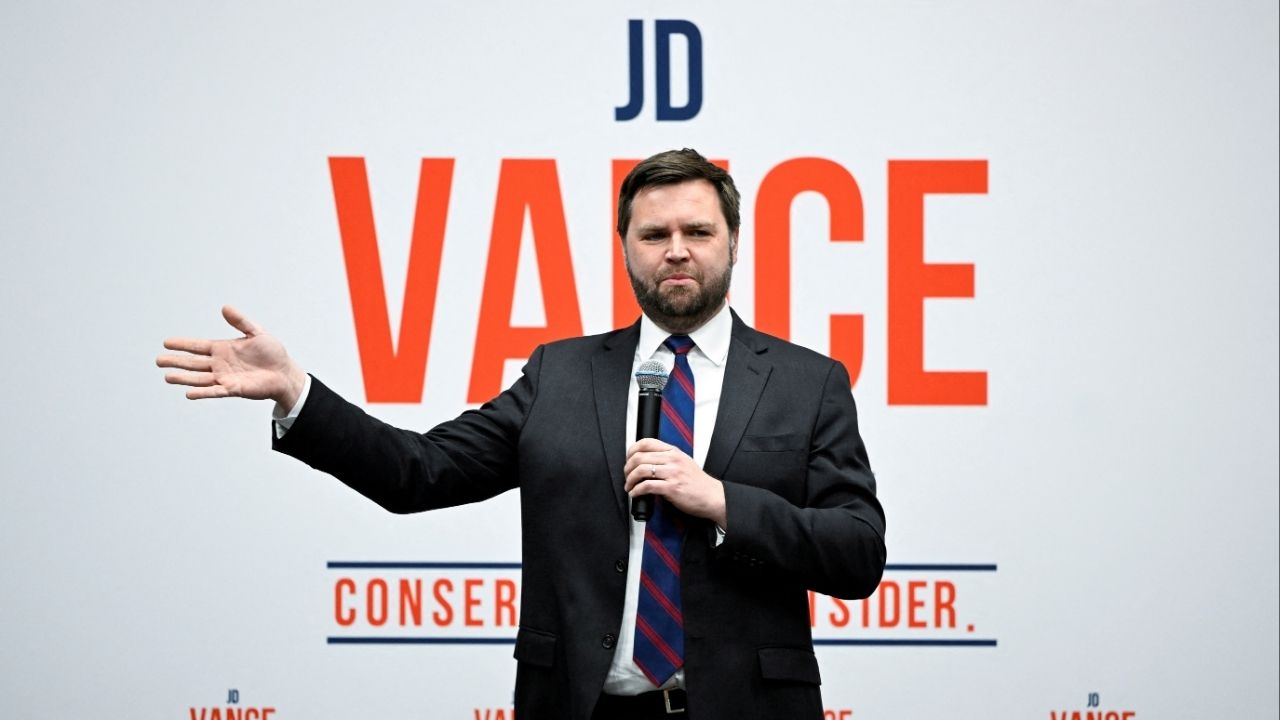
The U.S. Supreme Court was hearing arguments on Tuesday in a Republican-led challenge on free speech grounds to federal limits on spending by political parties in coordination with electoral candidates in a case involving Vice President JD Vance.
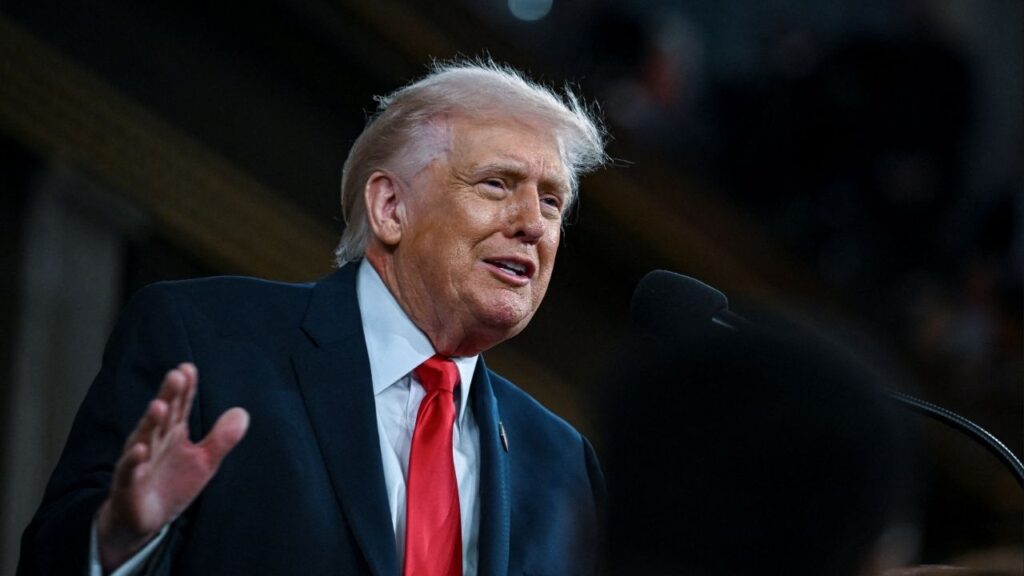
President Donald Trump’s administration has thrown its support behind the challenge, brought by plaintiffs including two Republican committees and Vance, who was running for the U.S. Senate in Ohio when the case began. The case centers on whether federal limits on coordinated campaign spending violate the U.S. Constitution’s First Amendment protection against government abridgment of freedom of speech.
The challengers have appealed a lower court’s ruling that upheld restrictions on the amount of money parties can spend on campaigns with input from candidates they support, formally known as coordinated party expenditure limits.

“The coordinated party spending limits are at war with this court’s recent First Amendment cases,” Noel Francisco, a lawyer for the Republican challengers, told the justices during the arguments.
“The theory is that they’re needed to prevent an individual donor from laundering a $44,000 donation through the party to a particular candidate in exchange for official action. But that Rube Goldberg theory fails for the same reasons this court rejected it” in a prior case decided in 2014 in which it struck down limits on the overall amount an individual could spend on federal political contributions, also on First Amendment grounds, Francisco said.
The Federal Election Campaign Act of 1971 regulates fundraising and spending in U.S. elections by limiting the amount that can be spent on a candidate, with the aim of preventing corruption.
Under that law, spending by a political party to advocate for or against a candidate that is not coordinated with a candidate’s campaign is considered an “independent expenditure” – and not subject to amount limits. Contributions that are coordinated between a party and a campaign, however, are restricted.
Because the Federal Election Commission under Trump has declined to defend the provision of federal law at issue, the court appointed lawyer Roman Martinez to do so. The justices also permitted three Democratic groups – Democratic National Committee, Democratic Senatorial Campaign Committee and Democratic Congressional Campaign Committee – to intervene to defend the lower court’s decision.
Martinez argued in court papers that without these curbs, “common sense and history show that donors will often use political parties as conduits” to evade limits on individual contributions, increasing the risk of quid pro quo corruption.
“The strategy is simple: A donor maxes out his contributions to a candidate, then routes additional money to the candidate by giving to the party, which uses that money to pay the candidate’s expenses,” he wrote.
The Mootness Argument
Martinez also argued that the case should be thrown out as moot because the Trump administration’s alignment with the legal position of the challengers means “there is no longer the actual and imminent threat of enforcement.”
Francisco argued that the case was not moot. The defenders of the law in the case would have to show “that it is impossible to grant either Vice President Vance or the committees any effective relief.”
“But there’s no evidence that the vice president has abandoned his intention to run for federal office in 2028. To the contrary, he has an active statement of candidacy, an active Senate campaign committee that’s already raised $50,000 in this year alone, and at least 15 of the last 18 vice presidents have gone on to run for the presidency,” Francisco said.
The spending limits at issue vary based on the population of the state where the candidate is running for office, lower in states with smaller populations and higher in those with larger populations. In 2024, restrictions ranged from around $123,000 to $3.7 million for Senate candidates and from around $62,000 to $123,000 for House of Representatives candidates, according to court papers.
In their 2022 lawsuit, the National Republican Senatorial Committee, National Republican Congressional Committee, Vance and Republican former congressman Steve Chabot of Ohio sought a court order blocking the Federal Election Commission from enforcing the restrictions at issue.
The Cincinnati-based U.S. 6th Circuit Court of Appeals in 2024 upheld the limits, concluding that they comported with the Constitution. The 6th Circuit said it was required to follow a 2001 Supreme Court ruling arising from Colorado that addressed the very same issue.
On appeal, the plaintiffs said that developments in campaign finance over the intervening decades, including shifts in the Supreme Court’s jurisprudence, have eroded the rationale underlying that 2001 ruling and urged the justices to consider overruling it.
The Supreme Court in several rulings since 2010 has chipped away at campaign finance laws. In a landmark decision called Citizens United v. Federal Election Commission, the court in 2010 struck down federal limits on independent expenditures as a First Amendment violation, enabling corporations and other outside groups to spend unlimited amounts of money on elections.
—
(Reporting by John Kruzel; Editing by Will Dunham)