

|
Getting your Trinity Audio player ready...
|
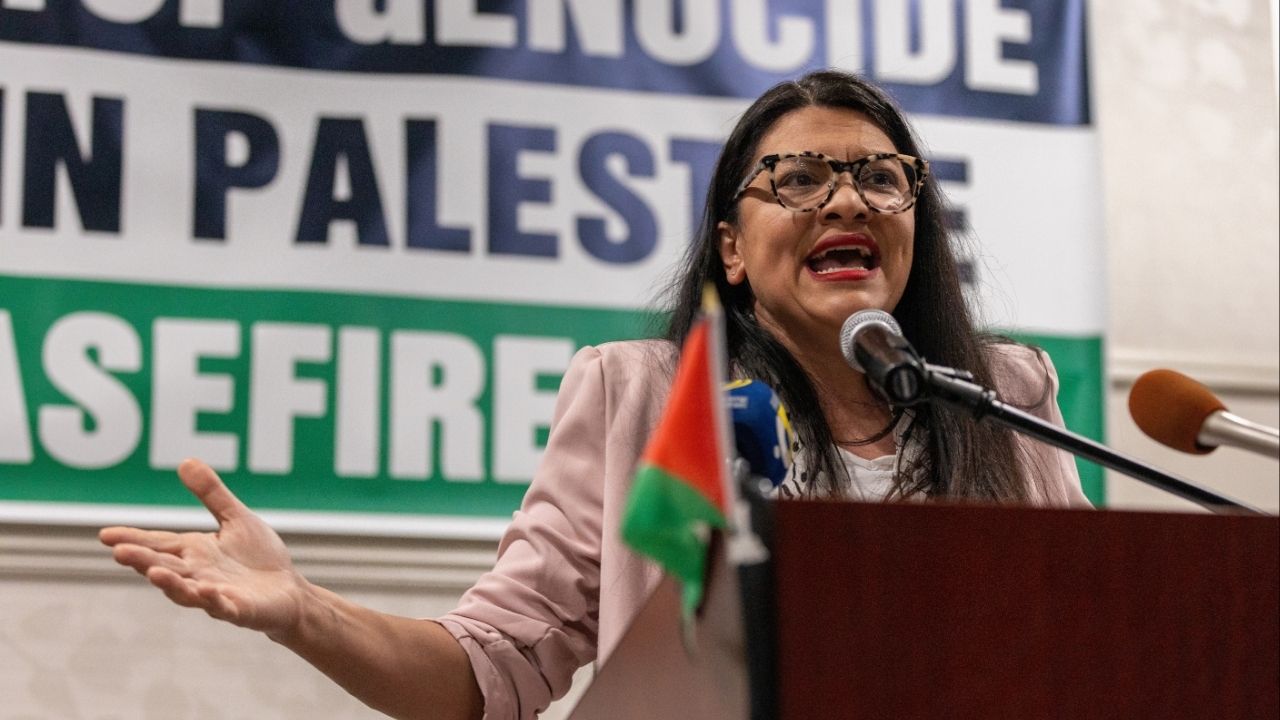
Rep. Rashida Tlaib, a Michigan Democrat, is renewing her push in Congress to formally label Israel’s actions in Gaza as genocide, introducing a resolution that calls on the United States to meet its obligations under international law and halt military support for Israel.
Tlaib introduced H.Res. 876 on Nov. 14. The measure asserts that the Israeli government has committed the crime of genocide against Palestinians in Gaza and urges the U.S. to prevent and punish genocide as required under the Genocide Convention. The resolution, submitted a day earlier and referred to the House Committee on Foreign Affairs, has 21 Democratic co-sponsors, including California Reps. Lateefah Simon and Ro Khanna.
The resolution calls for the U.S. to halt arms transfers to Israel, ensure compliance with international court orders, and support investigations into possible violations of international law.

Tlaib discussed the legislation during a Tuesday panel hosted by the Institute for Middle East Understanding’s Policy Project, alongside Rutgers University professor and human rights attorney Noura Erakat and IMEU policy director Josh Ruebner. The panel focused on evidence cited by U.N. bodies, genocide scholars, and human rights organizations that lawmakers say meets the legal definition of genocide.
Tlaib, who was censured by the House over her comments on the Israel-Hamas war, said that vote was intended to silence her. On Nov. 8, 2023, the House voted 234-188 to censure her after several Democrats joined Republicans in approving the rare punishment.
She said the U.S. has provided $21.7 billion in bombs and other aid to Israel since the conflict escalated, accusing both the Biden and Trump administrations of offering what she called a “blank check.” Tlaib argued the resolution should not be seen as radical, saying it reflects concerns raised by the United Nations, Palestinians, and the American public.
Tlaib Calls for Ending Aid, Wants Sanctions and Legal Action to Prevent Genocide
When asked what meaningful U.S. intervention to prevent genocide would look like, Tlaib outlined a series of steps.
She said the U.S. should end all weapons and equipment transfers to the Israeli military, which she described as “genocidal.”
She also called for investigations and prosecutions of individuals and U.S.-based corporations she says are complicit in genocide, compliance with orders issued by the International Court of Justice and ongoing investigations by the International Criminal Court, and the use of targeted, lawful sanctions against Israel and those facilitating genocide.
Regarding the resolution’s prospects in a House controlled by Republicans and divided on Israel-Palestine policy, Tlaib said the goal is to educate and organize Americans around H.Res. 876. She said the effort is meant to push back against colleagues and groups she described as “pro-genocide” who claim the situation in Gaza does not constitute genocide.
Asked whether the Democratic Party has a plan to address what she described as the “brutalization of populations,” citing Israel, ICE and aggression in South America, Tlaib gave a one-word response: “No.”
She added that she is seeing a shift in opinion among her colleagues, noting that lawmakers are being consistently questioned at town halls and public events on issues including SNAP, Medicaid, and what she describes as genocide in Gaza.
“They are pushing back and forcing my colleagues to deny … that a genocide is happening,” Talib said. “Having colleagues at least acknowledge that it’s a genocide leads to more support for actual legislation, and that leads to ending the funding for it.”
To watch the recorded webinar, visit the IMEU Policy Project website.