

|
Getting your Trinity Audio player ready...
|
This commentary was originally published by CalMatters. Sign up for their newsletters.
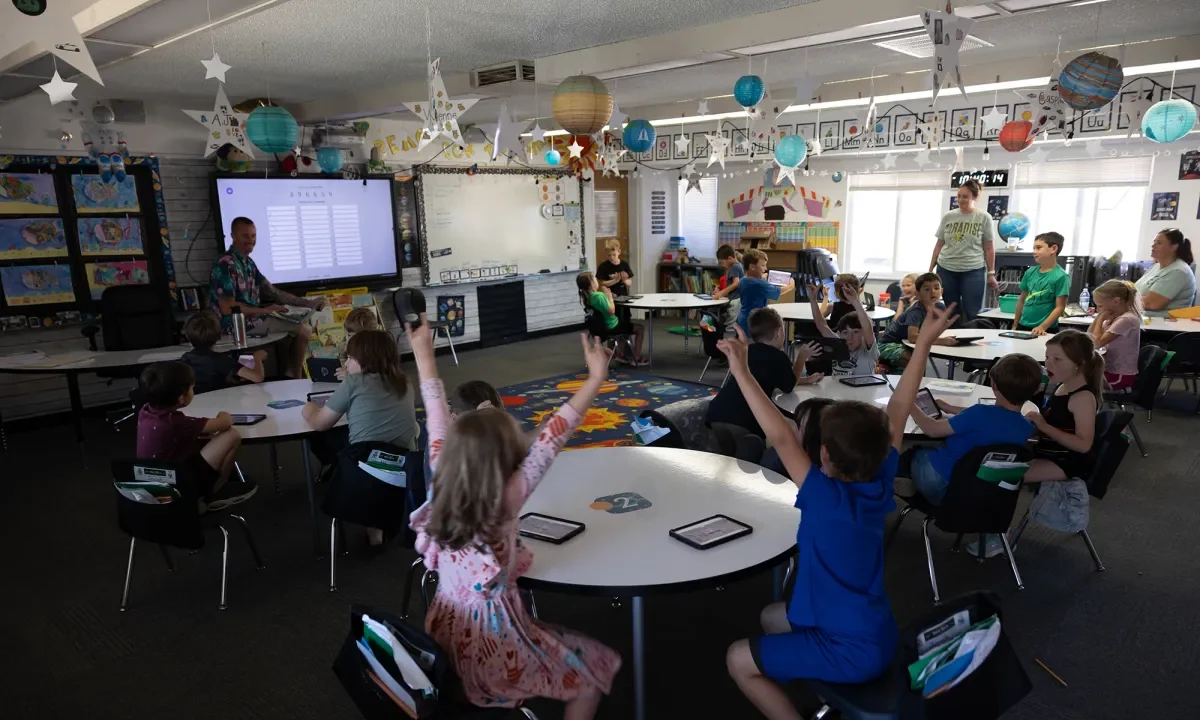
California’s public school system, which purports to educate nearly 6 million students ranging from 4-year-olds in transitional kindergarten to near-adults preparing to graduate from high school, is in a world of hurt.
Its students perform poorly in national tests of academic achievement, some local school districts flirt with insolvency as unions press for raises to offset spikes in living costs, politicians wrangle over money while issuing a steady stream of mandates and demands and — on top of everything — nobody knows who is accountable for outcomes.

The lack of accountability stems from the construction — in layer after layer — of overlapping bits of authority that undermine cohesive governance.
Too Many Cooks in the Kitchen
The governor, the state school board he or she appoints, an elected state schools superintendent, the Legislature, locally elected school boards and their superintendents, elected county school superintendents, elected county boards of education and the courts all have input.
When things are going well, such as an upward spike in test scores, there’s a rush to claim credit. But when problems arise, everyone involved points to someone or something else.
Finally, a prestigious collection of education experts is blowing the whistle. Policy Analysis for California Education, a consortium of education faculty at five major California universities, this week issued a detailed report on the lack of effective governance in education, how it evolved and how it might be improved.
“California’s education governance system is a complex network of agencies and entities designed to serve the most diverse and expansive TK–12 population in the United States,” the PACE report declares. “This system incorporates state, regional, and local levels of authority, each tasked with specific responsibilities and oversight. At its core, the structure seeks to balance statewide education goals with local control and accountability. However, its complexity often results in overlapping responsibilities, fragmented authority, and challenges in ensuring streamlined decision-making.
“The need to strengthen California’s education governance has never been more urgent,” PACE concludes. “Schools are grappling with deepening inequities, persistent opportunity gaps, and the long-term effects of the COVID-19 pandemic on student learning and well-being. At the same time, the federal government’s retreat from its traditional role in civil rights enforcement, accountability, research and evaluation, and oversight places even greater responsibility on states to lead. California must take bold and strategic steps now to ensure that its governance systems are not only coherent and efficient but also equity centered, transparent, and responsive to student needs.”
Experts Say Governor Should Be in Charge
While the report advocates a wide rearrangement of responsibilities among the system’s many players, its most fundamental reform would place the governor at the top of the revised organizational chart while converting the elected state superintendent of public instruction into an ombudsman and independent critic, rather than the operational head of the state Department of Education.
The department would be managed by an appointee of the state Board of Education, whose members are named by the governor.
Reimagining the superintendent of public instruction as an independent evaluator and advocate for students “presents promising opportunities to strengthen systemwide accountability,” PACE says, “but it also introduces important trade-offs.” PACE questions if the office could still be influential if it lacks implementation authority.
The need to streamline authority and accountability in California’s school system is self-evident. A state that prides itself on being in the forefront of social progress still tolerates an education governance system created in the 19th century, one that has been augmented piecemeal with little thought about consequences and that prevents California’s voters and parents from really knowing who to hold accountable for obvious shortcomings.
That lack of clarity protects failure from exposure and inhibits successful programs from being duplicated.
The PACE report’s proposed changes might not work. Giving the governor more authority might backfire. But we won’t know if we don’t try it.
This article was originally published on CalMatters and was republished under the Creative Commons Attribution-NonCommercial-NoDerivatives license.