
|
Getting your Trinity Audio player ready...
|
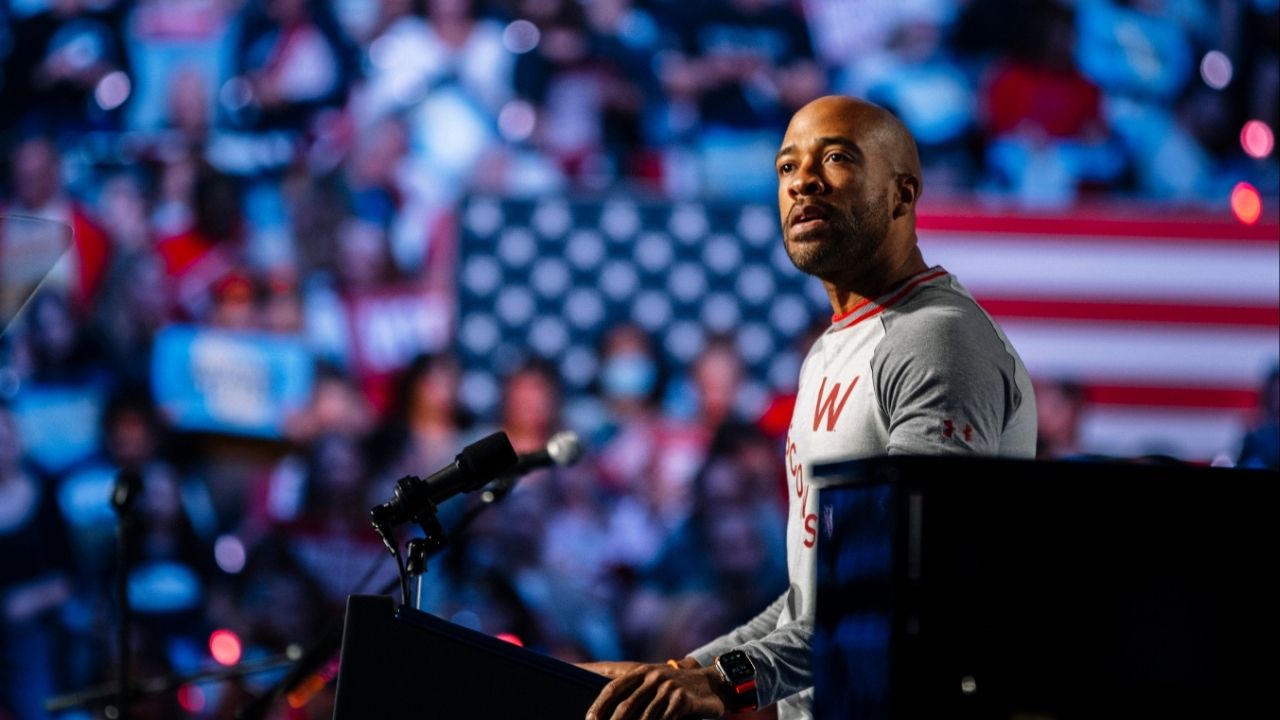
Mandela Barnes, a former lieutenant governor of Wisconsin who lost a close and expensive contest for the Senate in 2022, announced Tuesday that he was running for governor.
Barnes, 39, enters the race as the best-known Democrat in a field that includes several well-known candidates.
A progressive who has maintained a large fundraising network since his Senate race, Barnes is broadly well liked by fellow Wisconsin Democrats, though he faces some skepticism in the state’s political class about his ability to win a general election.

At stake in the contest to succeed Gov. Tony Evers, a two-term Democrat who announced in July that he would not seek reelection, is stewardship of the nation’s most closely divided battleground state.
In his announcement video, Barnes made overtures to the political middle, casting himself as a pragmatist focused on combating the high cost of living.
“It isn’t about left or right,” he said. “It’s not about who can yell the loudest. It’s about whether people can afford to live in the state they call home.”
Five of the past seven presidential elections in Wisconsin have been decided by a percentage point or less. When Evers won reelection in 2022 by 3 points, he declared it a landslide.
But it was Barnes’ defeat to Sen. Ron Johnson, a Republican, on that same ballot that has left some Wisconsin Democrats cool to the idea of his running for governor in 2026. In October, The Milwaukee Courier, a Black-owned newspaper, published an editorial with the headline: “We Can’t Afford to Lose in 2026 — And We Can’t Risk Another Mandela Barnes Loss.”
Other Democrats running for governor include David Crowley, the Milwaukee County executive; Francesca Hong, a state representative from Madison; Missy Hughes, who served as Evers’ top economic adviser; Lt. Gov. Sara Rodriguez; and state Sen. Kelda Roys of Madison.
Joel Brennan, a Milwaukee business executive who served in Evers’ Cabinet, is also likely to join the race.
The leading Republican in the race is Rep. Tom Tiffany, whose district covers Wisconsin’s north. Josh Schoemann, the Washington County executive, is also running.
In his announcement video, Barnes sought to draw contrasts with Republicans in Washington instead.
“Seems like the harder you work, the more Washington looks the other way,” he said. “Lower taxes for billionaires, higher prices for working people.”
Since 2023, when Barnes left office after his defeat in the Senate race, he has run a progressive political action committee called Power to the Polls Wisconsin. As speculation built this fall about Barnes’ potential run for governor, the group announced it had knocked on 1 million doors in the past three years, and claimed credit for voter turnout increases in Milwaukee for the state Supreme Court election last April. A liberal candidate easily won that race.
Barnes has the potential to raise far more money than any of his primary rivals. His Senate campaign raised more than Johnson’s did, but he was swamped by advertising paid for by Johnson-aligned outside groups. Still, it has long proved more difficult for Democratic candidates running for state office to raise large sums from out-of-state donors than it is for House and Senate candidates, whose elections affect national politics.
The general election would be a different story. Wisconsin campaign finance law allows for unlimited contributions to its state parties, which can in turn transfer unlimited funds to candidates it has endorsed.
That loophole in standard candidate fundraising limits has transformed the state’s politics and led to some of the most expensive general-election campaigns in modern times.
More than $100 million was spent on the state’s Supreme Court election in April, the most ever spent on a judicial contest. The previous record was set by Wisconsin’s 2023 Supreme Court election.
The Democratic Party of Wisconsin has already begun fundraising for the general election. In September, the state party chair, Devin Remiker, and Evers announced the Wisconsin Governor Readiness Project, a program that aims to tap major donors to build a multimillion-dollar nest egg to transfer to the winner of the primary race for governor.
—
This article originally appeared in The New York Times.
By Reid J. Epstein and Katie Glueck/Jim Vondruska
c. 2025 The New York Times Company